
Society & Animals Journal of Human-Animal Studies
Logo - Society and Animals Journal
Volume 9, Number 2, 2001

Wild Animals and Other Pets Kept in Costa Rican Households: Incidence, Species and Numbers

Carlos Drews

Keywords: captivity, pet, psittacid, wildlife, culture, illegal, biodiversity, conservation, animal protection, welfare

ABSTRACT
A nationwide survey that included personal interviews in 1,021 households studied the incidence, species, and numbers of nonhuman animals kept in Costa Rican households. A total of 71% of households keep animals. The proportion of households keeping dogs (53%) is 3.6 higher than the proportion of households keeping cats (15%). In addition to the usual domestic or companion animals kept in 66% of the households, 24% of households keep wild species as pets. Although parrots are the bulk of wild species kept as pets, there is vast species diversity, including other birds, reptiles, mammals, amphibians, fishes, and invertebrates? typically caught in their natural habitat to satisfy the pet market. The extraction from the wild and the keeping of such animals is by-and-large illegal and often involves endangered species. Costa Ricans, in a conservative estimate, keep about 151,288 parrots as pets. More than half the respondents have kept a psittacid at some point in their lives. Pet keeping is a common practice in Costa Rican society, and its incidence is high by international standards

Pet keeping habits are one manifestation of the relationship between society and nature. Nonhuman animals commonly are kept as companion animals (domestic pets) in many societies, but data about the incidence of this habit and the species involved are available for just a few of them. Surveys conducted in the United States suggest that a little more than half of the households keep a pet. Good Housekeeping Consumer Panel Report (1962) notes 58% of Americans; AVMA (1997), 59% of households. Similarly, about half of Dutch households keep at least one pet (Vinke, 1998). In a German sample of 1484 attendants to an adult education program, Schulz (1985) found that in the preceding two years 47.5% owned a companion animal, excluding birds or horses. About 64% of Australian households own pets (McHarg, Baldock, Heady, & Robinson, 1995; INEC, 1999).


Although the vast majority of pets are domestic animals? typically dogs, cats, or captive-bred birds, and fishes? there is a proportion of wild animals among them. Numerous wild animals are the subjects of legal and illegal international trade to satisfy the market of exotic pets (Inskipp, 1975; Nilsson, 1977, 1979, 1981; Nilsson & Mack, 1980; Poten, 1991; Fitzgerald, 1989; AWI & EIA, 1992; Hemley, 1994). Most of these species are native to tropical countries and wild caught (Clapp & Banks, 1973; Clapp, 1975). Some are kept as pets in their countries of origin as well, but the incidence of this habit is much more poorly documented there than in the importing countries. International wildlife trade has been the focus of attention from the perspective of species conservation and animal protection considerations. The same concerns apply to trade of animals for the pet market within tropical countries, but the evident lack of data has obscured thus far the magnitude of the phenomenon (Pérez, 1999).


The occurrence of wild species among pets has been studied, at least in the United States, Germany, and England. In a sample of U.S. students, 22.5% reported keeping wild animals at home (Pomerantz, 1977; Kellert, 1980). Aney and Cowan (1974), cited in Kellert (1980), report that 8% of Oregonians keep a wild animal native to the United States as a pet. In a nationwide survey of American adults (Kellert, 1980), 13.3% reported owning a wild animal pet other than a bird during the 10 years preceding the study. In Germany, 9.2% of the interviewees reported having kept a wild animal at home at some point during the preceding ten years (Schulz, 1985). In a survey of 2530 school students from South East England, 10% reported having kept reptiles or amphibians as pets, 60% of which had been caught from the wild rather than bought from a pet shop (Smart & Bride, 1993).


The majority of non-domestic species kept as pets are birds, mostly parrots. Captive-bred parakeets, such as budgerigars and cockatiels, commonly are kept as pet birds (Nilsson, 1981). In 1962, 13% of American households were reported to keep a pet bird (Good Housekeeping Consumer Panel Report, 1962). Almost all were psittacids (81% parakeets and 2 % parrots), and the rest were canaries (17%). In 1978, 10% of American respondents of a nationwide survey reported owning a pet bird during the preceding two years, whereas 42% owned a pet bird at some point in life (Kellert, 1980). In that study, the majority of bird species ever owned were parakeets (60%), followed by canaries (19%), and parrots and cockatoos (5%). A preference shift among Americans from psittacids bred locally toward exotic parrots can be inferred from a more than ten-fold increase in the number of imported macaws between 1970 and 1978 (Nilsson, 1979).


Similarly, Kellert (1980) finds that species kept by Connecticut children also suggest a shift from parakeets toward exotic parrots and mynahs (genus Acridotheres, Gracula or Ampeliceps). The majority of such exotic birds are typically taken from the wild (Clapp & Banks, 1973; Clapp, 1975). A bird was kept by 30% of the German respondents during the two years preceding the survey (Schulz, 1985), whereas 18% of Australian households owned a pet bird at the time of the study (www.petnet.com.au/statistics.html, 17.3.2000).


There are no nationwide studies about pet-keeping habits in the countries that supply most wild species for the international pet market (Fitzgerald, 1989). Although Costa Rica traditionally has not been an exporting country for wildlife (Gómez & Drews, 2000), many of the Central American species that enter international trade occur there. This study aims at a characterization of pet keeping habits in Costa Rican society, with an emphasis on wild animals. In this report, I present the incidence of pet keeping for various species of wild and domestic animals.


Methods


The nationwide sample consisted of 1021 Costa Rican adults and their households. The primary sampling unit was the census segment, a predefined set of about 40-60 households used as the basic unit for the logistical planning of a national census. A total of 278 (2.6%) such segments were randomly selected from the national total of 10,535 segments of the 1984 population census with a probability proportional to their size. The secondary sampling units were the households within each segment. The interviewer visited these systematically and clockwise from a random starting point until the sex and age quota for that segment was covered. This system usually yielded five households sampled by each interviewer per segment in a day. Only one adult was interviewed in each household. The maximum sampling error associated to the 1021 adults or households was 3.1% for a 95% confidence interval.
The source of demographic information about Costa Rica for the validation of the sample was the 1999 population projection of the Central American Population Program of the University of Costa Rica (http://populi.eest.ucr.ac.cr). Proportions of demographic groups among the Costa Rican population are shown in brackets next to the proportion of that group in the sample. Households representing urban and rural segments were chosen according to a quota based on the national distribution of these characteristics, yielding 47.8% (48.3%) urban and 52.2% (51.7%) rural households.


A pre-established quota for sex and age classes contributed to the similarity between the sample and the national demography. Quotas for adults were balanced with respect to sex ratio in each age class. The resulting overall sex ratio among adults interviewed was 48.8% (50.0%) male and 51.2% (50.0%) female. Age classes were distributed as follows: 35.7% (36.3%) of 18-29 years, 51% (47.6%) of 30-49 years, and 13.3% (16.1%) of 50 years or more. The distribution of age classes departed slightly, but significantly, from the national 1999 population projection. Analyses discriminating between age classes were weighed accordingly.
The socioeconomic level of each household was determined from a modification of Duncan's socioeconomic index, which integrates information about the adult interviewed? appliances and the total number of light bulbs found in the household (C. García, January 1999, personal communication). This study distinguished three levels with the following representation in the sample: 57.9% low/middle-low, 35.3% middle, and 6.9% middle-high/high. There is no comparable estimate of the nationwide Costa Rican distribution of these strata; hence, validation of these proportions is not possible.


The questionnaire included questions about knowledge, attitudes, and practices with respect to various topics related to wildlife. Sociologists, Emilio Vargas and Isabel Román and personnel from Unimer Research International reviewed the content, form, and structure of the questionnaire. The drafting stage included several trials and a pilot study by the interviewers who were to collect the field data. The final version of the questionnaire was applied through personal interviews with adults of the national sample of households. Most of the questions were closed. In some of the questions, cards were used to visualize the options available to the respondent.


For the purposes of this study, wildlife was defined to the respondents as any animal that usually lives in the forest, rivers, lakes, or the sea: mammals, birds, reptiles, amphibians, fishes, and invertebrates. The respondent was asked to say which species from a list of domestic and wild animals were kept currently or previously at home. The domestic species read out by their vernacular names were dog, chicken, cat, cattle, budgerigar or cockatiel, horse, pig, canary, rabbit, duck, goose, turkey, hamster or guinea-pig, goat, pheasant, sheep, peacock, canary bird, and goldfish. The wild species listed were macaw, parrot, toucan, green parakeet, "other wild bird," snake, iguana or ctenosaur, raccoon, coatimundi, agouti, white-face capuchin monkey, spider monkey, howler monkey, squirrel monkey, felids, deer, turtles in aquarium, tortoises, fishes other than goldfish, frogs or toads in terrarium or aquarium, and "other wild species". Color plates with Costa Rican species of psittacids and felids were shown to respondents for species level identification if any of these were kept at home. In addition, respondents were asked to name the species of the other wild bird, the fishes, and the other wild species kept.


Personnel from Unimer Research International collected the data in the field, prepared the digital database, and performed some of the analyses under the supervision of the author. Before departing to the field for the pilot study, the 16 interviewers and 5 group supervisors allocated to this project underwent a training session led by the author and Unimer's project manager. Teams composed of four interviewers and a group supervisor visited households in the locations predetermined in the sample. This investigation was introduced to the potential respondent as "...a study about the relationship between Costa Ricans and nature". In 5.7% of cases, the interview was refused up-front. Eight interviews (0.7%) were interrupted and, therefore, excluded from the sample. In 9% of cases, no one opened the door (a maximum of three revisits were made in such cases). Substitute, additional households were visited to complete the target sample. The interviews lasted on average 34 minutes (range 20-55 minutes) as established from a random sub-sample of 55 cases. The data were collected over a 52-day period, between March 16 and May 6, 1999.


The filled questionnaires were subject to an initial revision by the group supervisor in the field. The project manager, through telephone calls to respondents, confirmed about one - third of the interviews. Open questions were codified and the questionnaire checked again for completeness and consistency before their entry into a digital database in SPSS Inc. format. The database was checked both for outlying and extreme values and inconsistencies. In addition, the contents of the database and the questionnaires were crosschecked in a random sub-sample of 30 cases. The statistics software package SPSS Version 8.0 was used for the analyses. A confidence interval of 95% was used in all tests (alpha=0.05). Confidence intervals were not calculated for percentages based on number of mentions and? given that some respondents contributed with several mentions to the sample? were not statistically independent.


Results


Incidence is expressed as percentage of the 1021 sampled households unless otherwise indicated, and the corresponding 95% confidence interval is shown in brackets. The incidence of households that kept some animal (domestic, wild, or both) was 70.6% (67.8-73.4%). In 721 households with animals, 92% kept domestic species, whereas 33.3% kept wild species. Respondents in 68.3% (65.4-71.2%) of all households reported keeping a pet (domestic or wild). The incidence of households that kept exclusively domestic species was 47.1% (44.0-50.2%). The incidence of households that kept exclusively wild species was 5.0% (3.7-6.3%). The incidence of households that kept both domestic and wild species was 18.5% (16.1-20.9%). At the time of the study, 65.6% (62.7-68.5%) of the households kept domestic animals. The most commonly kept domestic species are dogs, chickens, and cats (Table 1).
------------------------

Table 1. Incidence of various species of domestic animals in Costa Rican households. Percentages do not add up to 100 since a given household may have more than one of the listed species. Statistical significance levels of chi-square tests for the association between domestic species and the occurrence of wildlife pets in the same household are shown by * (** = p<0.01, *** = p<0.001). Significant, positive association (+) indicates that the proportion with wildlife was significantly higher among households keeping the particular domestic species than among those without it.

Animal

% households (n=1021)

Association with wildlife pet


Dog

53.0

+ (***)

Chicken

20.3

+ (**)

Cat

14.8

+ (**)

Cattle

6.2

n.s.

Budgerigar or cockatiel

4.8

+ (**)

Horse

4.5

n.s.

Pig

4.4

n.s

Canary

4.1

+ (***)

Rabbit

3.2

n.s.

Goldfish

2.7

+ (***)

Duck

2.5

+ (***)

Goose

1.8

+ (**)

Turkey

1.6

n.s.

Hamster or guinea-pig

1.1

n.s.

Goat

1.1

n.s.

Pheasant

0.6

n.s.

Sheep

0.4

n.s.

Peacock

0.3

n.s.


-------------------------
A little more than half the households kept dogs or cats (Table 2). The proportion of households keeping dogs is 3.6 higher than the proportion of households keeping cats. The proportion of households that keep any species of livestock (cattle, horses, pigs, goats, sheep, chickens, geese, ducks, or turkeys) was 25.5% (22.8-28.2%). Mammals account for 69.6%, birds for 28.2%, and goldfishes for 2.2% of the 1,300 mentions of domestic species kept.
------------------------

Table 2. Incidence of various species of pet animals among households in Costa Rica, Australia and U.S.A., expressed as percentages of all households.

Animal

Costa Rica 1

Australia 2

U.S.A.


" a pet "

68.0

64.0

58-59 3

dog

53.0

39.7

32-39 4

cat

14.8

26.5

27-32 4

dog or cat

57.2

52.9

46-55 5

bird

23.3

17.6

5-13 6


Sources:
1 this survey (± 3.1% maximum sampling error)
2 www.petnet.com.au/statistics.html, 17.3.2000
3 Good Housekeeping Consumer Panel Report (1962), AVMA (1997)
4 AVMA (1997), APPMA (2000)
5 AVMA (1997), Wilbur (1976)
6 AVMA (1997), Good Housekeeping Consumer Panel Report (1962)
-------------------------
The probability that wildlife was kept at home was significantly higher in households that kept domestic species than in those that did not (Chi-square=23.9, DF=1, p<0.001). At the time of the study, 670 households with domestic animals, 28.2% (24.8-31.6%) kept wildlife, whereas only 14.5% (10.8-18.2%) of 351 households without domestic animals kept wildlife. Several domestic animals were significantly, positively associated with the keeping of wild species in the same household (see Table 1).


At least one wild animal was kept in 23.5% (20.9-26.1%) of the 1021 households at the time of the interview. The proportion of households in which the respondent kept wildlife at some point was 43.8% (40.8-46.8%). In the sample of 1021 adults, 64.7% (61.8-67.6%) said they had kept a wild animal at some point in their lives. Among 240 adults who kept wildlife at the time of the study, 98% (97.1-98.9%) reported that the animal was kept as a pet, whereas only 2% (1.1-2.9%) kept the animal for consumption, to give as a gift, or to sell. This coincides roughly with the finding that upon being asked, "Is there a pet in this household?" only 5% responded "No," when later in the interview it was documented that they did keep wildlife at home.


At least 18.7% (16.3-21.1%) of the 1021 households kept wild species of birds, 3.3% (2.2-4.4%) kept reptiles, 2.6% (1.6-3.6%) kept fishes, 0.4% (0-0.8%) kept mammals, and 0.1% (0-0.3%) kept invertebrates at the time of the study. There were no households with amphibians in the sample. The proportion of households that kept pet birds, including canaries, budgerigars, cockatiels, and wild species was 23.3% (20.7-25.9%), poultry excluded. The incidence and numbers of wild animals kept by Costa Ricans from the list of species in the questionnaire (cf. Methods) are shown in Table 3.


-----------------------

Table 3. Incidence of various wild species kept in Costa Rican households at the time of the study, from a list of animals read out to the respondents (see Methods). Percentages do not add up to 100 since a given household may have more than one of the listed species. Median (and maximum) number of individuals kept per household are shown for species kept in more than two households.


Species

Mentions of households with the species

% of households with wildlife (n=240)

% of all households (n=1021)

Median (and maximum) number of individuals per household

Total (and percentage) of individuals kept


1. Parrots (Psittacidae)

185

77.1

18.1

1 (3)

215 (27.5%)

2. Other wild bird

21

8.7

2.1

2 (30)

116 (14.9%)

3. Fish in aquarium (not goldfish)

27

11.3

2.6

4 (70)

351 (44.9%)

4. Turtle in aquarium ( Trachemys scripta )

19

7.9

1.9

1 (10)

34 (4.4%)

5. Tortoise

15

6.3

1.5

1 (3)

25 (3.2%)

6. Iguana ( Iguana sp . Or Ctenosaura sp .)

2

0.8

0.2

-

5 (0.6%)

7. Agouti ( Agouti paca )

2

0.8

0.2

-

4 (0.5%)

8. White-tailed deer ( Odocoileus virginianus )

2

0.8

0.2

-

11 (1.4%)

9. Toucan (Ramphastidae)

1

0.4

0.1

-

1 (0.1%)

10. Spider monkey ( Ateles geoffroyi )

1

0.4

0.1

-

2 (0.3%)

11. Howler monkey ( Alouatta palliata )

1

0.4

0.1

-

1 (0.1%)

12. Squirrel ( Sciurus sp .)

1

0.4

0.1

-

1 (0.1%)

13. Spiders or insects in terrarium

1

0.4

0.1

-

1 (0.1%)

14. - species not reported

14

5.8

1.4

-

19 (1.8%)

Total

292

-

-

1 (70)

781 (100%)


------------------------
The median number of individuals kept per species in each household, the proportion of all households that keep the species as a pet (Table 3), the sampling error of ±3.1%, and the number of Costa Rican households allow a rough calculation of the national pet population of each species. The estimated number of Costa Rican households in 1999 is 835.848 (INEC, 1999). For example, since 18.1% (15.7-20.5%) of households kept psittacids, the national population of pet parrots in Costa Rica is in the order of at least 151.288 individuals (95% confidence interval: 131,228-171,348 parrots). This is a conservative estimate given that 13.3% of households with psittacids keep more than one individual, but the median used for the calculation was 1.0 individual per household. The total number of parrots kept accounts for 27.5% of all wild animals kept as pets in Costa Rica (Table 3). Birds and fishes, in similar proportions, make up about 87.3% of all pets kept at the time of the study.


Of the 292 mentions of wildlife kept in households (see Table 3) 75.7% were birds followed by reptiles (12.3%), fishes (9.2%), mammals (2.4%), and invertebrates (0.3%). Among households with wild bird species, the mean number of birds kept was 1.7 and the median 1.0. Psittacids corresponded to 83.2% of mentions of birds kept in households. Thirteen species of native psittacids were found in the sample (Table 4). The genus Amazona accounted for 47.9% of all mentions of psittacids kept as pets, followed by Brotogeris jugularis and Aratinga nana. These three genera account for 87% of all mentions of psittacids kept. The proportion of households with captive-bred psittacids, such as budgerigars and cockatiels (considered as “domestic species” in this study), was less than one third of the proportion of households with wild-caught, native parrot species (Table 1 cf. Table 3). Turtles were the most commonly kept reptiles. Deer, agoutis, and monkeys represented the majority of mammalian species kept, but the sample size of mammals was too small to assess their corresponding, relative importance. Less than 1% of the Costa Rican households kept wild mammals or invertebrates as pets at the time of the study.


------------------------

Table 4. Relative proportions of various parrot species among the sample of parrots kept in Costa Rican households, for cases in which an identification with color plates was made by the respondent.

Species

Cases

Percent (%)


Orange-chinned parakeet ( Brotogeris jugularis )

48

29.1

"Parrot" ( Amazona sp .)

27

16.4

Red-lored parrot ( Amazona autumnalis )

16

9.7

Olive-throated parakeet ( Aratinga nana )

16

9.7

White-fronted parrot ( Amazona albifrons )

15

9.1

Yellow-naped parrot ( Amazona auropalliata )

14

8.5

Mealy parrot ( Amazona farinosa )

7

4.2

Red-fronted parrotlet ( Touit costaricensis )

5

3.0

Barred parakeet ( Bolborhynchus lineola )

5

3.0

White-crowned parrot ( Pionus senilis )

4

2.4

Scarlet macaw ( Ara macao )

2

1.2

Brown-hooded parrot ( Pionopsitta haematotis )

2

1.2

Sulfur-winged parakeet ( Pyrrhura hoffmanni )

2

1.2

Blue-headed parrot ( Pionus menstruus )

2

1.2


Total mentions of species

165

99.9

-------------------------
Table 5 illustrates the species richness of wild animals kept in Costa Rican households, listing the species kept by the respondents either in childhood or in the sampled household. Table 5 includes amphibians, snakes, felids, raccoons, coatimundis, and white-faced capuchin monkeys who were not mentioned in the sample of animals kept at the time of the study (Table 3). In addition, Table 5 breaks up the category, “other wild birds,” by species. It illustrates that, next to psittacids, the list of bird species kept as pets includes the families Emberizidae, Ramphastidae, Turdidae, Fringillidae, Thraupidae, Anatidae, Strigidae, Icteridae, Phasianidae, Accipitridae, Picidae and Cracidae, in that order. In total, the sampled Costa Ricans at some point kept at least 45 species of native wildlife.

------------------------

Table 5. Wild species kept at home by Costa Rican respondents either during the study, previously or during childhood. * = species or genus uncertain.

Species

Mentions

% within taxonomic group

% of total


Birds:

894

100.0

67.4

Parrots (Psittacidae) 1

776

86.8

58.5

Other wild birds:

118

13.2

8.9

Seedeater ( Sporophila sp .)

20

2.2

1.5

Yellow-faced grassquit ( Tiaris olivacea *)

19

2.1

1.4

Toucan (Ramphastidae)

18

2.0

1.4

Black-faced solitaire ( Myadestes melanops )

10

1.1

0.8

Siskin, goldfinch ( Carduelis sp .)

9

1.0

0.7

Euphonia ( Euphonia sp .)

7

0.8

0.5

Whistling-duck ( Dendrocygna autumnalis *)

4

0.4

0.3

Owl (Strigidae)

3

0.3

0.2

Cacique, oriole ( Cacicus sp./Amblycercus sp./Icterus sp .*)

3

0.3

0.2

Robin ( Turdus sp .)

2

0.2

0.2

Bobwhite, quail ( Colinus sp./Odontophorus sp .*)

2

0.2

0.2

Wood-partridge, quail ( Dendrortyx leucophrys */ Odontophorus sp .*)

1

0.1

0.1

Yellow-eared toucanet ( Selenidera spectabilis )

1

0.1

0.1

Raptor (Accipitridae)

1

0.1

0.1

Woodpecker (Picidae)

1

0.1

0.1

Blue-gray tanager ( Thraupis episcopus *)

1

0.1

0.1

Chachalaca ( Ortalis sp .)

1

0.1

0.1

Other

15

1.7

1.1


Reptiles:

208

100.0

15.7

Tortoise

89

42.8

6.7

Turtle in aquarium ( Trachemys scripta )

76

36.5

5.7

Iguana, ctenosaur ( Iguana iguana , Ctenosaura similis )

30

14.4

2.3

Snake (Ophidia)

13

6.3

1.0


Mammals:

142

100.0

10.7

Agouti ( Agouti paca )

41

28.9

3.1

Racoon ( Procyon lotor )

23

16.2

1.7

Coatimundi ( Nasua narica )

17

12.0

1.3

White-tailed deer ( Odocoileus virginianus )

16

11.3

1.2

Red-backed squirrel monkey ( Saimiri oerstedii )

15

10.6

1.1

Central American spider monkey ( Ateles geoffroyi )

10

7.0

0.8

White-faced capuchin monkey ( Cebus capucinus )

9

6.3

0.7

Mantled howler monkey ( Alouatta palliata )

8

5.6

0.6

Felids (Felidae)

3

2.1

0.2


Amphibians (frogs or toads in terrarium or aquarium):

4

100.0

0.3


Fishes (other than goldfish) 2 :

75

100.0

5.7


Invertebrates (spiders or insects in terrarium):

4

100.0

0.3


Total of mentions:

1327


100.0

Base (respondents who mentioned at least one species):

661


1 see Table 4 for a list of species of psittacids.
2see text for a list of species of fishes.
------------------------

An estimated 6% (4.5-7.5%) of the 1021 households kept an aquarium with fishes and/or turtles. Fishes were kept in 55 cases corresponding to 5.4% (4.0-6.8%) of the households. Turtles? the majority probably Trachemys scripta? were kept in 19 cases corresponding to 1.9% (1.1-2.7%) of the households. The mean numbers of fishes and turtles kept per household were 13 and 1.8, respectively. Goldfish (Caracinidae, Carassius auratus) were kept in 51% of the cases reporting fishes in a tank, whereas the remainder included Old World species, such as tilapia (Ciclidae, probably Tilapia rendalli), Siamese fighting fish (Anabantidae, Betta splendens), and koi (Caracinidae, Cyprinus carpio), in addition to Neotropical species such as catfish (Loricaridae, probably Pseudoplatystoma fasciatum), guppies (Poecilidae, Poecilia reticulata), kissing gourami (Anabantidae, Helostoma temmincki), oscar (Ciclidae, Astronotus ocellatus), tetra (Caracidae, probably Paracheirodon axelrodi), cory (Calictidae, probably Corydoras narcissus), and angel fish (Ciclidae, Pterophyllum scalare). In the 240 households with wildlife at the time of the study, 18 (7.5%) corresponded to cases in which the only wild animals in the house were fishes in a tank.


Discussion


Animals at home are part of Costa Rican culture. More than two thirds of Costa Rican households keep at least one animal. Almost all these households keep domestic species. By international standards, the incidence of households with pets in Costa Rica is high. It is higher than in Australia and the United States (Table 2), as well as in the Netherlands and Germany, where only about half the households keep at least one pet (Vinke, 1998; Schulz, 1985). The proportion of households that keep pet birds in Costa Rica is higher than in Australia and in the United States. (Table 2). Every fourth Costa Rican household keeps wild animals, typically extracted from their natural habitat. By contrast, the overall rate of specialty and exotic pet ownership in the United States is only 11% (AVMA, 1997). This includes rabbits, hamsters, guinea pigs, pigeons, poultry, and livestock species. Therefore, the rate of ownership of wild species in the United States is expected to be even lower.


Dogs, followed by chickens and cats, comprise the majority of domestic species kept in Costa Rican households. Costa Ricans have a stronger preference for dogs over cats than do Americans or Australians (Table 2). Dogs are kept 1.2 to 1.3 times more often than cats in American households (AVMA, 1997; APPMA, 2000), and 1.5 times more often than cats in Australian households (www.petnet.com.au/statistics.html). In Costa Rica, however, the proportion of households keeping dogs is 3.6 higher than the proportion of households keeping cats.


The proportion of households that keep livestock is higher in Costa Rica than in the United States or Germany. While 6.4% of American respondents and 10% of German respondents raised livestock in the preceding two years (Kellert, 1980; Schulz; 1985), at the time of the survey every fourth household in Costa Rica kept livestock. The proportion of households that keep horses in Costa Rica is three times higher (1.5%) than in the United States (AVMA, 1997).


Keeping wild animals as pets is common practice in Costa Rica. At some point, almost half the families have kept wildlife. Wild species are rarely kept for consumption or business. The majority of wild animals kept in Costa Rica are birds, mostly wild-caught parrots. The thirteen species of native parrots found in the sample correspond to 81.3% of all Costa Rican psittacids (Stiles & Skutch, 1989). The preference for parrots as pet birds in Costa Rica is in line with such preference in other societies. In the United States, for example, psittacids correspond to 65% of species of pet birds kept (Kellert, 1980). More than half the Costa Rican respondents have kept a psittacid at some point in their lives. Other wild birds ever kept by Costa Ricans include at least 17 species of passerines, toucans, ducks, raptors, chicken-like birds, and woodpeckers. In contrast to the prevalence of mammalian species among domestic animals, mammals are but a small minority among wild animals kept as pets. These have included monkeys, deer, agouti, squirrels, raccoons, coatimundis, and felids.


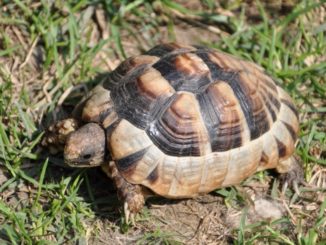
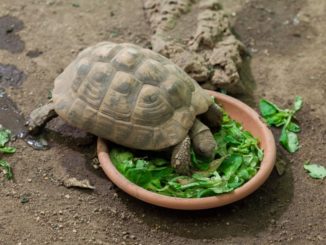
Turtles are, after birds, the most commonly kept wild animal in Costa Rican households. About 14% of households with wildlife keep a turtle in an aquarium or a tortoise (calculated from Table 3). Although the mean number of turtles kept in Costa Rican households is the same as in American households, fewer households (only 0.5%) keep a turtle in the United States than in Costa Rica (AVMA, 1997). In a Costa Rican sample of 1,000 secondary school pupils, Castillo (1986) found that 17% kept turtles at home. The majority (61%) kept just one individual. In 88% of the cases, the turtles