|
Animals
in Experimental Reports: The Rhetoric of Science
Lynda Birke
1
Centre for the Study of Women and Gender,
University of Warwick, United Kingdom
Jane
Smith
University of Birmingham, United Kingdom
In
this paper, we analyze the ways in which the use of animals
is described in the "Methods" sections of scientific papers.
We focus particularly on aspects of the language of scientific
narrative and what it conveys to the reader about the animals.
Scientific writing, for example, tends to omit details of
how the animals are cared for. Perhaps more importantly, it
is constructed in ways that tend to minimize what is happening
to the animal; thus, animal death is obscured by euphemisms,
omission, or circumlocutions. What is done to animals is,
moreover, often subordinate in the text to the details of
experimental procedures and apparatus. We consider how such
writing supports a particular kind of image of the "animal"
in science, and also creates an impression that what happens
to animals is somehow devoid of human agency. This impression,
we argue, contributes to the way science is perceived by a
wider public.
Amid
renewed controversy around animal use in experimental science,
both scientists and their critics must respond to public opinion.
Since the mid-1970s, there has been such growth in antivivisectionist
feeling that we can speak of a new social movement for animal
rights, and scientists can no longer dismiss the opposition
as merely a lunatic fringe, as they might once have done. Increasingly,
they must act to protect their laboratories and animal houses,
and engage in public rhetoric. They must, then, "engage in a
battle for public opinion, seeking to undermine the animal rights
movement by associating it with violence and terrorism, and
to improve their own public image by defending the value of
their work. And they try to steal back the moral high ground
with emotional rhetoric. In effect the scientists have developed
a counter-crusade" (Nelkin and Jasper, 1992, p. 38).
As
part of that counter-crusade, more than 1,000 people signed
a declaration in 1990 on scientists' use of animals, organized
by the British Association for the Advancement of Science. The
subsequent short report (BAAS; 1993) stressed the benefits to
medicine of animal research, and included a special section
on the importance of using primates for certain areas of research
such as vaccines (AIDS is mentioned here) and Alzheimer's disease.
A
key strategy of the report is to emphasize that scientists have
clear responsibilities in using animals. "If there were a Hippocratic
oath for scientists," the report argues, "it would surely include
two primary responsibilities that a research worker must accept
when planning animal-based studies. The first is to use animals
only for research intended to contribute to the advancement
of knowledge. The second is to minimize any possible pain or
distress that an animal in the scientist's care may experience.
Those are two of the key criteria taken into account when deciding
the scientific merit of a research project and before a request
is made for funds for the research" (BAAS; 1993, paragraph 5).
The
BAAS scientists' rhetorical counter-strategy employs two clear
tactics. One is the stress placed on responsibility and on using
animals only for certain purposes and under certain conditions.
Such rhetoric is designed to reassure waverers in the controversy
that animal experiments are not done for trivial reasons (as
is often claimed by animal rights protesters).
A
second tactic is to attribute lack of understanding of science
to the public. Many of those scientists most outspoken in defense
of animal use for biomedical research believe this increase
in concern to be part of a wider anti-science feeling (or even
anti-intellectualism). This complaint is frequently linked to
the belief that the general public does not know, or understand,
what science is about - and specifically how laboratory animals
are kept or what happens to them (Arluke, 1992; Birke and Michael,
1992). In other words, if the public is ill-informed, then it
must be better informed. Thus, a letter to the British Medical
Journal , defending animal use, remarked that "It is now
time for the public to be continually reminded by doctors that
the tremendous developments of modern medicine in the past 50
years...would not be available but for animal experimental work"
(Drury et al., 1990). Similarly, Mark Matfield, Director of
Britain's Research Defense Society, suggested that the medical
benefits "are quite apparent to those engaged in biomedical
research but are not appreciated by the general public at large.
This lack of understanding leaves them prey to the propaganda
currently being produced by the animal rights movement" (Matfield,
1989).
Yet
if "the public" is being misled, as is claimed, where would
it get better information? Clearly, propaganda from either side
is one potential source; so too are media stories, lurid or
otherwise. In turn, both journalists and the antivivisectionist
organizations base much of their information on the written
accounts, the scientific papers that emerge in the published
journals. Unlike brief conference presentations, published journal
accounts give at least some details of the methods employed
in animal-based research.
For
example, the antivivisectionist organization Animal Aid produced
a detailed, and critical, report of animal use in British university
laboratories, based on an analysis of over a thousand scientific
papers (Wojtas, 1993). Scientific reports in journals are of
course written in specialist language, aimed at the small number
of scientists who are engaged in similar research. 2 Nevertheless,
they do in some ways represent a particular part of the public
face of science - a face which is increasingly analyzed by those
organizations, such as Animal Aid, who wish to present to the
public particular images of both animals and science.
Analyzing
the Writing of Science
If
written accounts do play a role in communicating science, albeit
to a relatively small audience, then how they describe what
happens to animals is an important issue. By analyzing written
accounts, it is possible to assess what scientists (and journal
editors) consider important to communicate, as well as what
they have omitted for whatever reasons.
To
do this, we decided to analyze a sample of journals publishing
research in biomedicine to determine what was said about procedures
using animals in the "methods" section. There are two reasons
for focusing on the methods: first, this is the part where what
is done to the animals used should be set out. Indeed, some
journals now specifically issue guidelines to authors indicating
what should be spelled out in terms of animal care and procedures.
Secondly, it is the methods section that, in principle, sets
out the details of methods followed so that others could follow
the procedure and perhaps replicate the experiment.
What
is published eventually is influenced by journal (and editorial)
policies, as well as by the assumptions made by reviewers in
the process of review. Yet there is also likely to be some convergence
in the way the methods are described: as Gross (1990) has pointed
out, scientific papers reflect conversations among scientists,
thus revealing much about the assumptions they make. They also
reflect traditions in learning how to "write science" - the
habitual use of the passive voice, for example. Gross describes
scientific papers as "the most visible products of verbal interaction
within the community, posed photographs of a continuous activity
captured at certain ritually significant moments" (p. 129).
They are also, he notes, "photographs" that are written after
the event, and may omit or transform many of the events. These
"photographs," and their arcane style, can be analyzed not only
for the language they use to describe the practices of science,
but also for how their language positions the reader: how are
these texts supposed to be read by other scientists?
The
Study
This
paper is based on a qualitative analysis of the language used
to describe experimental procedures using animals in a series
of scientific papers. We have also analyzed these papers quantitatively,
to assess how well codes of practice were adhered to, at least
in the way the experiments were reported. These data showed
that many papers failed to give important information on the
methods, such as the numbers of animals used or the conditions
of husbandry (Smith, Birke and Sadler, in press). Here, our
concern is with a qualitative analysis of the use of language:
3 what is being stated in these papers about how animals are
used, and what impressions do they create about laboratory practice?
What we are concerned with, then, is the power of this particular
narrative (scientific writing) to construct particular images
of what happens to animals.
For
these studies, we sampled a total of 152 papers from eight journals
published in 1990-91. The papers sampled were from the following
journals: Life Science, Journal of Neuroscience, Journal
of Immunology, Journal of Comparative Psychology, Journal of
Experimental Biology, Journal of Surgical Research, Cardiovascular
Surgery, and Laboratory Animals. 4
In
doing this, we made the assumption that these papers would be
broadly representative of scientific writing as a whole (although
there might also be important differences between them); we
have no reason to believe they are unrepresentative, and have
no wish to single out individual papers. For this reason, we
chose not to identify particular papers or authors here. 5
We
selected journals for sampling that, in our judgement, provided
a range of different kinds of experimental approach in biomedical
research. Once a journal was selected, the choice of volumes
was random (volume number being selected in advance). Within
each journal, we analyzed all articles that reported animal
use. The papers sampled originated in several different countries,
with rather different controls over the use of animals in research.
6 Some of our material reflects these differences; other material
probably does not. Scientists, after all, submit papers to journals
based in other countries, whatever the constraints have been
on the original practice. This, at least, might be expected
to reduce differences between reports.
Descriptions
of How Animals Are Used
Recent
work in the sociology of science has emphasized the central
role of the scientific paper - not as a post hoc report of "what
really happened," but as a product, an end in itself. The writing
of a paper, moreover, does not follow faithfully what happened,
but is constructed to answer particular critics (see Latour,
1987). Yet at the same time, this research emphasizes that "doing
technical work in science entails a kind of craft, or embodied
expertise, which is not incorporated into the mode of methods
reporting that is characteristic of scientific literatures"
(Lynch et al., 1983).
Similarly,
in a study of scientists working with chimpanzees, Wieder (1980)
noted how researchers led a double life, assuming consciousness
in the animals when interacting with them but denying it through
the detachment of scientific writing. The informal, or craft,
knowledge of chimp behavior had to be assumed in the design
of experiments: yet these details were "likely to have no place
in the standard report of the experiment" (ibid., p. 97).
Several
themes emerged from our qualitative analysis of research papers;
one is the way in which relevant details about the care of the
animals were left out - precisely the kind of "craft expertise"
of animal care to which Lynch and his co-workers referred. Perhaps
more importantly, the deaths of the animals were minimized or
omitted, even when this was a critical detail. Other themes
were the ways in which "mistakes" in procedures involving animals
were dealt with in reporting, and the ways in which the experiences
of the animal become subordinated in scientific texts to the
descriptions of the technical procedures.
Omitting
Details
One
striking point about these papers emerged from the quantitative
analyses: relatively few gave full details of numbers of animals
used, or how they were housed. We give details of these numerical
data elsewhere (Smith, Birke and Sadler, in press). Omission
is, rhetorically, one way of obscuring; what it does is to gloss
over both the exigencies of what happens to the animals and
any methodological deficiencies. It is difficult, for example,
to decipher what is happening, and to how many animals, when
a paper refers only to "rats ...were decapitated." Sometimes,
we could infer numbers from results; in this particular example,
that inference was impossible, and results were presented only
in terms of quantity of molecular binding. Omitting details
matters, too, in terms of scientific quality. Immunological
studies that refer vaguely to some animals being infected "in
another lab," for example, fail to tell the reader how the animals
were transported between labs, and when. Yet transport is likely
to be stressful, and therefore to have an effect on immune responses.
7
Obscuring
Death
One
aspect of scientific narrative that has attracted attention
is the use of euphemisms and other devices for minimizing or
altering the significance of the death of animals. First, several
studies have noted how often scientists (and animal technicians)
refer to "sacrifice" rather than killing (at least in written
accounts), drawing the parallel with ritual sacrifice (Arluke,
1988; Lynch, 1988; Phillips, 1994). The point here is not only
that the word "kill" is avoided, but also that invoking the
concept of "sacrifice" changes the meaning. The "sacrifice"
of laboratory animals symbolically transforms them; they are
sacrificed in order to create scientific data.
In
our study, we found that approximately half the papers used
the word "killed" if animal death was explicitly mentioned.
Where this word did occur, it was usually followed by the method
or treatment immediately following death: thus, animals might
be "killed by cervical dislocation," "killed by carbon dioxide,"
or "killed and perfused." In other papers, the method of "sacrifice"
was noted - by decapitation or dislocation, for example. More
commonly, however, animals were simply "sacrificed." An alternative
form of euphemism was simply not to refer directly to death
at all. Thus, animals might be "anaesthetized and then exsanguinated,"
or perhaps "bled and ... sacrificed."
One
interesting euphemism was "harvested," used occasionally to
describe collection of bodily tissues, such as lymph nodes.
Like "sacrifice," it carries particular cultural connotations;
"harvesting" seems rather benign, conveying images of rural
bounty. Yet this, too, obscures and changes meaning. Consider,
for example, the paper that tells us that amniotic fluid "was
harvested from CO2-killed donors" near the end of pregnancy.
Here, the pregnant female becomes a donor; her fetuses inevitably
die in the process, but their deaths are obscured by the language
of harvests.
Terms
invoking sacrifice were predominantly used to describe experiments
in which death was a necessary precondition to experimental
procedures (in other words, the experiment was concerned primarily
with the tissues that were removed from the animal after death
- as in biochemical investigations). Other experiments, however,
may involve physiological investigations of the animal under
terminal anesthesia (the animal is usually given an overdose
of the anesthetic at the end of the experiment); such studies
may or may not entail subsequent removal of particular tissues.
Descriptions
of these experiments reveal a second form of minimizing death.
In describing experiments using terminal anesthesia, the papers
were not euphemistic; they simply did not specify that the animal
had died. In some cases, it is quite obvious that the animal
was dead, because procedures are described that are incompatible
with life. One paper, for example, tells the reader, for example,
that "following anaesthesia with pentobarbital sodium...heparin
was injected into the inferior vena cava. The heart was rapidly
excised, and the aorta cannulated." The animal obviously died
during these procedures, but its death is hidden by the language
used.
In
other cases, the death of the animal is less obvious. One, for
instance, states that "mice were reanesthetized with methoxyfluorane
.. and the soleus muscle with a 4mm length of motor nerve was
removed for study." Another experiment reports the use of silicon
implants into guinea pigs: at the end of the experiment the
"implant and its surrounding tissue" were removed en bloc and
examined histologically.
The
third device for minimizing the impact of death on the reader
is to use circumlocutions; thus one paper informs us, for example,
that "the 10-day mortality of this local bowel insult is approximately
50%" - that is, half of the animals (10) were dead by 10 days
after the surgical procedures. Another paper reported that 24
hours after surgery, all animals "appeared clinically septic."
The results section of the same paper, however, revealed that
seven of the animals were dead. Similar - if curious - circumspection
is revealed by the paper that referred to "sacrificing" the
animals by craniocervical dislocation when "they were moribund."
Sometimes,
circumlocutions help to gloss over both the severity of the
operative procedures used and the deaths of animals; one way
of doing this is to use the passive tense, combined with words
of Latin origin. Thus, one paper reporting a new surgical technique
referred to 31 dogs, of which four were "lost" through "intraoperative
exsanguination." Of the remaining 27, only one survived more
than a few days. This animal was then "electively sacrificed"
after three years.
A
further example of the use of the passive voice is the phrase
"animals were allowed to survive." Thus, rats in one study "were
allowed to survive" for three to five days after injection of
radioactive tracers directly into the pancreas. In another,
mice were "allowed to survive" for variable amounts of time
following limb amputation.
Mistakes
and the Language of Procedures
Using
euphemisms for death, not mentioning it at all, and circumlocutions
all have the effect of reducing the impact on the reader. The
death of the animal is somehow downplayed; it has to be actively
read into the text by the reader. On the one hand, this strategy
may simply be part of taken-for-granted practice; much of what
happens to laboratory animals is part of the "tacit knowledge"
of science. But on the other hand, the rhetorical denial of
animals' deaths is also a response to an ethical dilemma.
Scientists
may use similar devices to describe the potentially painful
procedures that are carried out on the living animal. Here however,
rather more information may be given: there is less omission
because these are procedures that are critical to the experiment
itself (contrast the example of terminal procedures where the
death of the animal is incidental to the experimental protocol).
Even
so, two aspects of the style used in description of experimental
methods are striking. First, what is done to the living animal
typically merits far less detailed description than what happens
to its tissues after removal. Then, the tissues go through various
processes of preparation (depending on the experiment) which
require technology - they may need to be centrifuged, or fixed
and stained, for example. At this point, fine details of the
apparatus are given - model, running speed, and so on. 8 Omitting
details of what happens to animals may entail the device of
referring to previously published methods. Thus, a paper might
describe how "single intracerebroventricular injections were
performed in conscious rats following the methods of X and Y"
before giving all the technical details of the stereotaxic apparatus
used to hold the animals' heads.
Secondly,
the experience of the animal itself may be obscured by descriptions
of methods of measurement and surrounding apparatus. In one
example, of a study of analgesics:
...Rats were placed in .. holders and their tail was [sic]
secured on the laboratory table with masking tape. The pain
threshold was determined by electrical stimulation of the
tail via intracutaneous electrodes .... The electrodes were
two hypodermic needles ...[which] remained in place for the
six hour measurement period ...[the voltage was increased]
until a vocalization was elicited.
Another
study referred to preparation of rats for chronic recording
involving electrical wires that were "exteriorized at the
head, and the connector was bonded to the cranium." It is
noteworthy that, in both these instances, what is actually
happening to the animal is subordinated to the descriptions
of what was done in order to make measurements.
The
descriptions of procedures also included several instances of
carelessness, or mistakes. To become part of data, animals have
to die as part of the experimental procedures: animals that
merely "upped and died" cannot be counted as contributing towards
data (Lynch, 1988). 9 So, animals that cannot contribute to
results have to be accounted for. There were several examples
of "mistakes" noted in the papers we sampled. One surgical paper,
for example, described work involving the use of carbon dioxide
injected into blood vessels as a contrast agent (a technique
used in clinical angiography). Carbon dioxide is soluble in
plasma, and is therefore relatively harmless (under specified
conditions of partial pressure and volume). Yet one dog received
an injection "of room air into the ascending aorta." Not surprisingly,
it died very shortly after.
Another
example had less to do with mistakes in procedure than with
failures of planning: thus, "the final N was less by 1-2 in
some cases due to an inability to assay every sample." Some
animals, presumably, were killed but their tissues not used,
for reasons unspecified. 10
The
difference between reporting and not reporting such events may
partly depend upon the design of the experiment, and the stage
in its execution at which the mistake occurred. Thus Lynch (1985)
described one instance in which a researcher had ruptured an
artery while lesioning a rat's brain; because he succeeded in
stemming the bleeding and doing the lesion, the animal would
later become part of the data and, presumably, the accident
not recorded. But in some instances, a mistake may alter the
total number in that group (which could unbalance the overall
design or alter the statistical analyses). So, in that case,
it may be preferable to note the mistake (as in the examples
we found).
Implicit
ideology may also affect the decision. In two of the examples
we looked at, the problem occurred after the animals' deaths
(such as "inability to assay"). In these cases, the ethical
problems concern wastage rather than potential suffering caused
to the animals. But what is important here is not so much the
squandering of animals per se, but the emphasis that is placed
on wastage of potential data. Lynch has described how biologists
make use of two concepts of "animal" in their work (often interchangeably).
One recognizes the "naturalistic animal, the animal of common
sense" (1988); this is not the "animal" whose waste is at issue
in the papers we analyzed. The other is that of the "analytic
animal," transformed into data (or into artifacts such as electronmicrographs):
this is the animal whose waste is noted. 11 The use of the word
"animal" often confounds the two meanings. Consider the impact
on a non-scientific reader of the language used in the following
extract:
After sacrifice,
the injections were verified; animals not showing the trace
of the needle inside the ventricle were discarded (5-10%).
We
read here that some animals were subsequently "discarded," not
used as data (helpfully, a percentage appears: as the number
of animals used in the experiment was not given in this paper,
however, it is not clear what the percentage represents). What
this means is that the scientists examined the slices of brains
for needle traces. If some did not show traces (that is, the
scientists failed to penetrate the required part of the brain),
then all slices from that animal were thrown away. The animal,
in short, died in vain.
One
characteristic of the animal-as-data is that it is less variable,
less messy, than real, naturalistic animals. Gross (1990) notes
how the use of tables, figures and so forth in scientific reports
imposes invariance on the picture of nature that is being constructed.
12 These form a pictorial representation that is "a triumph
of simplification...; not mice, but their brain cells...In tables
and figures most of the properties of the actual physical objects,
of mice or men, have been discarded, and all that remain have
been normalized, ideally through quantification" (pp. 74-5).
Animals
and Readers in Scientific Text
In
general, animals appear in scientific writing as "analytic animals";
they are described as "preparations," or "animal models," for
example. Where they do appear as subjects, it is typically in
experiments studying the behavior of the living animal. The
contrast between "animal" and "subject" was striking in one
paper, whose methods section had separate headings for each.
In this case, the investigation involved comparison between
different species: "subjects" here were humans, while animals
included several species of Macaque monkeys and rats.
The
methods section of scientific papers is, in principle, included
for two reasons. The first is that it allows readers to check
the veracity of any claims made elsewhere in the paper. Secondly,
by describing the methods employed, scientists allow the possibility
of replication. Complete replication is perhaps rare; but its
possibility is always assumed in science.
Yet
the methods sections that we analyzed rarely gave enough information
for replication to be easily achieved. In particular, too little
information was given in many cases about the origin of the
animals and how they were maintained: details, for example,
of humidity and ambient temperature were frequently not given
(Smith, Birke and Sadler, in press). Partly, this reflects an
unwritten assumption that animals are maintained in standard
conditions (also unwritten, at least in scientific papers);
in this sense, it is testimony to the tacit knowledge that underpins
science and to the assumption that animal laboratories house
standardized, invariant, tools of the trade.
To
write of animals as though they are laboratory artifacts is
made easier by the temporal and spatial separation of animal
and scientist. Once the experiments are completed it is only
"useful" data that count; it is these which will be included
in the written text. The methods, moreover, are purged of the
contexts that give them meaning, and particularly of the process
of decision-making that, in practice, govern laboratory activities:
all that is left is a residual description of uncontested features
(such as the brand of equipment used: see Knorr- Cetina,1983).
The animals that gave rise to these data are (usually) long
since dead.
There
is spatial separation, too. Many laboratories share a centralized
area maintained by specialist staff. Scientists themselves may
spend little or no time in that facility; instead, animals or
their parts may be sent to laboratories or collected from the
animal unit. 13 In that context of separation, it is hardly
surprising that what emerges in written reports bears little
resemblance to the living animals "of common sense." 14
Diminishing
Tactics
One
characteristic of scientific writing lies in its appeal to authority,
typically through extensive citation and appeals to allies (Latour,
1987). In addition, scientific papers comprise a network of
defenses against possible criticism. "Transformation of linear
prose into... a folded array of successive defense lines," notes
Latour, "is the surest sign that a text has become scientific"
(1987; p. 48). A clear example of both appeals to authority
and the construction of "lines of defense" found in the papers
we analyzed was the use of references to scientists adhering
to guidelines set down by, for example, animal care committees.
These rarely gave further information, but simply stated that
guidelines were followed. This line of defense makes implicit
reference to ethical questions concerning the use of animals
in research. Yet nowhere else in the construction of scientific
papers are ethical issues made explicit. Instead, the writing
is itself constructed in ways that diminish the significance
of the animal.
Gross
(1990) suggests that the widespread use of the passive in scientific
papers "is a routine means for making physical objects and events
the subjects of scientific sentences" (p. 73). Phrases such
as "the animals were injected..." are typical. Here, the animals
are indeed the subject of the verb: but they do not become "subjects"
in the more philosophical sense. What the passive voice does
is to remove the scientist from the sentence, so reducing the
emotional impact on the reader of what is done to the animal.
This technique might, moreover, be combined with language that
focuses the reader on some particular bodily part, so shifting
attention from the whole animal. Consider, for example, the
text of a paper noting that "When the nerve was crushed repeatedly
with forceps...it became transparent." Here, we might imagine
what the nerve tissue looks like. Only later do we learn (through
the phrase "mice were allowed to survive") that these nerves
were located in living animals.
Scientists
do all kinds of things with the animals they use, and with their
tissues; but, in the written account, human agency disappears.
It is noteworthy, however, that in an analysis of the content
of scientific papers, Bazerman (1988) noted that the uses of
active verbs occurred almost entirely in connection with intellectual
processes. The scientist may actively think and generate hypotheses;
meanwhile, the animals are miraculously anesthetized or injected
by an invisible hand.
Another
diminishing tactic is to talk in phrases such as "the guinea
pig gut." In this case, a small fragment of an animal is isolated,
and measurements taken; what constitutes data are the product
of the various machines that are linked up to the animal fragment
(Latour, 1987, p. 66). The scientific paper must be written
in such a way that the central role is given to these machine
artifacts - the data. The living animal, whose "sacrifice" provided
the fragment of gut, is unimportant.
In
our study, similarly, priority was given in many papers to what
happened to cells or tissues after scientists had removed them
from animals. Few details might be given of animals and their
housing; yet detailed accounts typically followed of how solutions
were made up, at what temperature, how cultures were maintained,
for how long, what type of centrifuge was used, and so on. We
did find one entertaining slippage between animals and their
cells in one paper. This reported an immunological study, using
"nude" mice, from which the scientists took cells after the
animals' deaths; typically, descriptions of what happened to
the cells took precedence over the whole animals. After stating
what animals were used, the report tells the reader that "At
three months they were lethally irradiated with 900 rad from
an X-ray source and reconstituted 4-6 hours later" - no doubt
a feat that many scientists would wish to emulate.
The
use of the passive voice implies a missing agent: there is no
person who failed to use all the rats, merely "an inability
to assay." Another paper similarly noted that "data were not
utilized from any heart preparation if more than 15 seconds
elapsed from excising the heart." There is no one in this sentence
who has failed to excise the heart promptly: 15 seconds merely
elapsed.
This
kind of construction not only leaves out the "missing agent."
It also positions the reader. As Latour has argued (1987), scientific
reports are written in ways that carefully hedge the writers'
bets about critical comments. The examples we quote above illustrate
this; a determined critic might note that the N was less than
it should be. So, a comment must be included to ward off that
criticism. But there is also the possibility of criticism because
of mistakes; to deflect this one, the writer refers to an "inability
to assay." The reader is, one assumes, supposed to infer some
unforeseen catastrophe that prevented the scientists from carrying
on. We are not supposed to infer that they went off for coffee.
Lynch
(1985) notes how research reports are written so that "agency
is left implicit, and if we read the passage literally we get
the sense that a 'lesion' or 'sacrifice' is accomplished through
an autonomous technology freed of the vicissitudes of human
agency" (pp. 151-2). And not only is it freed of human agency:
omitting agency also glosses over the exigencies of particular
experimental procedures - the messiness of day-to-day science.
Doing
Versus Writing Science
Ethnographic
studies of scientists, and their conversations while they carry
out procedures, have underlined the disparity between day-to-day
science and the subsequent written reports. In one example,
a perfusion failed partly because the animal was squirming and
trying to bite the experimenter, leading to much swearing at
the rat. In cutting open another animal, the experimenter severed
a membrane around the heart. During these experiments, researchers
made several "stabs" at animals with the syringe, or had to
deal with leaks in the apparatus during perfusion. Yet, the
research reports were written up to describe animals "sacrificed
under nembutal anesthesia by intracardial perfusion utilizing
a mixed aldehyde fixative media" (Lynch, 1988 p. 74). Similarly,
when scientists leave animals anesthetized overnight, without
supervision (in this case, the cat died: Phillips, 1993), such
details are unlikely to find their way into research reports.
Gross
(1990) has emphasized the construction of scientific papers
as fictionalized, idealized accounts in which "style . . is
not a window on reality, but the vehicle of an ideology that
systematically misdescribes experimental and observational events"
(p. 84). These records bear little relation to what is spoken
in the laboratory. Conversation, unlike written records, typically
makes reference to "what can go wrong."
Many
journals do, of course, require that authors explain how many
animals they used, of what species, and so on, in some detail.
Some now insist that submitted papers adhere to published guidelines
regarding how animals are kept or used. Thus journals specializing
in the scientific study of laboratory animals, say, or in their
behavior, are more likely to give details of animal housing
and maintenance; they are also more likely to note the need
to follow guidelines (see Smith, Birke and Sadler, in press).
Such journals focus on the animal itself, rather than its tissues
or organ function, so greater attention to details of animals
and their husbandry is perhaps unsurprising. Nevertheless, these
descriptions do help to make the animal more present. Few papers
in other journals, however, give full details of the housing
and husbandry conditions of the animals (even though these might
be significant variables in experimental design, influencing
the animal's physiology and thus the experimental outcome).
Moreover, producing papers according to strict formats - introduction,
methods, results, conclusion - may serve further to reduce the
significance of the animals.
Bazerman
(1988) points out, for instance, how increasingly prescriptive
requirements for publication in the American Psychological Association
journals may lessen "the likelihood that researchers will consciously
consider the exact significance of ...information, whether it
and other possible information should be included, and exactly
how this information should be placed in the structure of the
whole article" (p. 260). In other areas of biological research,
where the animal is even less of a "subject," the impact of
such unconscious choice of linguistic structure may be considerable.
Thus, the centrality of "the gut" rather than the guinea pig
is reinforced by the way the paper is written: it is the readout
from machines that will dominate the methods section, not the
animal who lost its life.
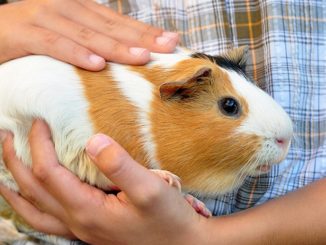
"The
animal that lost its life" connotes a furry creature, a guinea
pig, similar to the kinds of animals some people keep as pets.
Not surprisingly, this kind of image is not likely to be invoked
in scientific reports. It is the "common sense" image of an
animal, to which most of us might refer when we talk about animals
conversationally. It can be found in the practice of science
- technicians may use this sense of "animal" in their work,
for example - even if it rarely finds its way into journal articles
(Arluke, 1988).
Scientific
writing has become increasingly codified, particularly since
the 19th century (Bazerman, 1988). Although it is not explicitly
stated, it seems reasonable to suppose that this formalization
- through which the presence of the real, live animal is obscured
in the writing - has been in part a response to criticism of
the use of animals. This may be partly unconscious, or authors
may play down what they did to animals because of their own
ambivalence, or their fears of reprisals. It may partly be the
result of pressure from journal editors: Lederer (1992) has
noted how, even in the first part of this century, when antivivisectionist
activity was less obvious, journal editors rephrased submitted
papers so as to reduce the emotional impact of what had been
done to the animals.
It
is not our purpose in conducting these analyses to imply that
scientists are somehow bent on obscuring the truth about animal
experiments. What sociological studies suggest is that scientists
are often well aware of at least some of the dilemmas involved
(Arluke, 1988; Michael and Birke, 1994). They may respond to
these dilemmas by drawing the line (not using certain species,
for example, or avoiding particular techniques), or by assuming
that abuses of animals in laboratories always occur elsewhere
(Birke and Michael, 1992).
The
ways in which concepts of "animals" are used in Western culture
are complex and multiple. Scientists, no less than other people,
must deal with that complexity. They must, for example, treat
pets differently from the "animal models" of the lab. Given
these multiple meanings and nuances of "animals," it would be
surprising indeed if scientists were not ambivalent.
The
Public Face of Science?
The
rhetoric of science, and the peculiar and particular construction
of the scientific paper, have evolved over centuries. Certainly,
in the course of that history, styles of writing have developed
that do indeed reduce the significance of the animal (or of
the scientist or reader). What is important, then, is to understand
how that has happened, and what it signifies. Some of it may,
no doubt, be a response to antivivisectionist feeling, as Lederer
(1992) has pointed out. Obscuring the animal may, however, be
partly incidental to other changes in the practice and narratives
of science. Science claims to study nature; yet what enters
the laboratory (including the animals) is highly artifactual.
Knorr-Cetina (1983) notes that 'raw' materials which enter the
laboratory are carefully selected and 'prepared' before they
are subject to 'scientific' tests...To the observer from the
outside world, the laboratory displays itself as a site of action
from which 'nature' is as much as possible excluded rather than
included" (p. 119).
What
scientists are writing about, then, is a particular construction
of reality, founded upon the laboratory and its apparatuses.
The animals - their bodily integrity, their sentience, their
possible suffering - are in many ways incidental to that construction.
Scientists are increasingly invoking counter strategies against
the animal rights lobby, by pointing to the medical benefits
accruing from animal-based research. They do so, amid rhetoric
that describes "the public" as ignorant of the truth.
We
doubt that "the public" is so "ignorant" of the claims for medical
benefits. What people may be responding to is what can be called
the body language of science. Scientific papers create a strange
narrative that obscures both animals and people, and that focuses
on abstractions and apparatus. Public antagonism to science,
insofar as it exists, may well be a response to such narratives.
There is no evidence (at least from public opinion polls) that
people are "anti-science," but trust in science and scientists
may be less than it was some decades ago (La FoIlette, 1990).
The public may be now skeptical of the authority of science,
or claims that it can solve all our ills. They may, too, be
skeptical of assumptions that animals used in laboratories do
not suffer unduly. A language that obscures the realities of
life in the lab is likely only to fuel that skepticism.
Notes
1.
Correspondence should be sent to Lynda Birke, Centre for the
Study of Women and Gender, University of Warwick, Coventry,
CV4 7AL, United Kingdom.
2.
Latour (1987) notes that scientific papers possibly constitute
the only form of literature that is designed deliberately to
be obscure and intelligible only to a tiny minority. Most non-scientific
writing is, by contrast, intended to convey a wider message,
perhaps to convince others of the argument. In his analysis
of scientific writing, he stresses how arguments in a written
paper are constructed so as to deflect potential criticism of
the science.
3.
This draws on discourse analysis; for example, see Potter and
Wetherell, 1987.
4.
Specifically, the following numbers of papers were sampled from
each journal: Life Science (1990) vol. 46, parts 3,10,17,22
(26 papers); J. Neuroscience (1990) vol 10, no. 5
(20 papers); J. Immunology (1990) vol. 145, no. 8
(20 papers); J. Comparative Psychology (1991) vol.
105, nos. 1 and 2 (26 papers); J Experimental Biology
(1990), vol 148 (20 papers); J. Surgical Research
(10 papers); Cardiovascular Surgery (10 papers); Laboratory
Animals (20 papers).
5.
We appreciate the irony of doing this, given our conclusions
about omitting details. However, we feel strongly that none
of these authors are behaving atypically in the way they write,
and it would be invidious to single any one writer out for particular
blame.
6.
As several papers were jointly authored, we cannot give precise
numbers. Approximately 50 per cent of these came from North
America; approximately ten percent from Japan; and approximately
25 percent from Europe, and others from Hong Kong, Israel, and
Australia. There are, however, large differences within each
area; controls in Britain are particularly strict, for example.
7.
The possible effects of stress on the variable being measured
and how often it is ignored in research reports need further
investigation. One paper we examined (ironically, investigating
effects of stress) seemed to involve subjecting experimental
animals to stress through restraint, then killing them (LSM4).
Are controls, in the same room, likely to be unaffected by these
procedures?
8.
One rather graphic example of this was a paper referring to
killing rats by microwave irradiation, giving the precise model
of domestic microwave, the number of kilowatts, and the duration
of exposure in seconds (paper JL3).
9.
There is an interesting parallel in that animals must be killed
to become meat; animals that just die are not culturally acceptable.
See Fiddes, 1991.
10.
There may be many more "mistakes" that are obscured simply by
the failure of many reports to give the number of animals used;
see Smith et al., in press.
11.
There is, by contrast, a striking lack of reference in scientific
writing to wastage of laboratory animals that do not make it
to become data. Large numbers of animals are culled as part
of routine maintenance of animal holding facilities, because
they are surplus, too old, etc. But these animals never would
become "analytic" in Lynch's sense.
12.
Knorr-Cetina (1983) makes the point that scientists work within
a highly constructed and artificial environment, from which
nature itself is systematically excluded. Even the laboratory
animals are a construct.
13.
In one case we have encountered, the laboratory (which used
tissue samples for cancer research) was some miles from the
animal house. Communication of protocols was sent to technicians
by fax; animals' tissues were sent back by courier.
14.
Wieder (1980) notes, however, that for scientists working closely
with some species, such as chimpanzees, there is a chasm between
scientists' attitudes and behavior toward the animals they work
with, and the more constrained way in which scientific reports
are subsequently constructed.
References
Arluke,
A. (1988). Sacrificial symbolism in animal experimentation:
object or pet? Anthrozoos , 2, 97-116.
Arluke,
A. (1992). Trapped in a guilt cage. New Scientist ,
134, 1815, 33-35.
Bazerman,
C. (1988). Shaping written knowledge: The genre and activity
of the experimental article in science . Madison: University
of Wisconsin Press.
Birke,
L. and Michael, M. (1992). Views from behind the barricade.
New Scientist , April 4, 29-32.
B.A.A.S
(British Association for the Advancement of Science), (1993).
Animals and the advancement of Science . London: British
Association.
Drury,
M., Wade, O., Kuenssberg, E., Howie, J., Horder, J., Lawson,
J., Carne, S., and Hull, R. (1990). Benefits of medical research
and the doctor's responsibility. British Medical Journal
. 300, 538.
Fiddes,
N. (1991). Meat: A natural symbol . London: Routledge.
Gross,
A. G. (1990). The rhetoric of science . Cambridge,
MA: Harvard University Press.
Jasper,
J. and Nelkin, D. (1992). The animal rights crusade .
New York: The Free Press.
Knorr-Cetina,
K. D. (1981). The manufacture of knowledge: An essay on
the constructivist and contextual nature of science . Oxford:
Pergamon.
Knorr-Cetina,
K. D. (1983). The ethnographic study of scientific work: towards
a constructivist interpretation of science. In: K. D. Knorr-Cetina
and M. Mulkay (Eds.), Science observed: Perspectives on
the social studies of science . London: Sage.
LaFollette,
M. (1990). Making science our own: Public images of science
1910-1955 . Chicago: University of Chicago Press.
Latour,
B. (1987). Science in action . Milton Keynes, UK: Open
University Press.
Lederer,
S. (1992). Political animals: the shaping of biomedical
research literature in twentieth century America , Isis,
83, 61-79.
Lynch,
M. (1985). Art and artifact in laboratory science: A study
of shop work and shop talk in a research laboratory . London:
Routledge.
Lynch,
M. (1988). Sacrifice and the transformation of the animal body
into a scientific object: laboratory culture and ritual practice
in the neurosciences, Social Studies of Science , 18,
265-89.
Lynch,
M., Livingston, E., and Garfinkel, H. (1983). Temporal order
in laboratory work. In: K. D. Knorr-Cetina and M. Mulkay (Eds.),
Science observed: Perspectives on the social studies of
science . London: Sage.
Matfield,
M. (1989). The animal rights threat to biomedical research.
Biologist , 36, 238-240.
Michael,
M. and Birke, L. (1994). Enrolling the core set: the case of
the animal experimentation controversy. Social Studies of
Science , 24, 81-95.
Nelkin,
D. and Jasper, J. (1992). The animal rights controversy. In:
D. Nelkin (Ed.), Controversy: Politics of technical decisions
. London: Sage.
Phillips,
M. T. (1993). Savages, drunks and lab animals: The researcher's
perception of pain. Society and Animals , 1, 61-81.
Phillips,
M.T. (1994). Proper names and the social construction of biography:
the negative case of laboratory animals. Qualitative Sociology
, 17, 119-142.
Potter
J. and Wetherell, M. (1987). Discourse and Social Psychology
, London: Sage.
Smith,
J., Birke, L., and Sadler, D. (in press). Reporting animal use
in scientific papers. Laboratory Animals .
Wieder,
D. L. (1980). Behavioristic operationalism and the life-world:
chimpanzees and the chimpanzee researchers in face-to-face interaction.
Sociological Inquiry , 50, 75-103.
Wojtas,
O. (1993). Researchers pilloried by animal rights group. The
Times Higher Educational Supplemen t, Oct. 15, p. 2.
For
abstracts of all issues, including the most current, click
Article
Abstracts
To
order Society & Animals Journal, go to our secure online
ordering page
You
can Search the online issues of Society & Animals, as well
as the entire Society & Animals Forum (formerly PSYETA)
website,
for topics and keywords of your interest:
|