
The
Law is an Ass: Reading E.P. Evans' The Medieval Prosecution
and Capital Punishment of Animals
Piers
Beirne 1
University of Southern Maine
In this essay
I address a little-known chapter in the lengthy history of
crimes against (nonhuman) animals. My focus is not crimes
committed by humans against animals, as such, but a practical
outcome of the seemingly bizarre belief that animals are capable
of committing crimes against humans. 2 I refer here to the
medieval practice whereby animals were prosecuted and punished
for their misdeeds, aspects of which readers are likely to
have encountered in the work of the historian Robert Darnton
(1985).
In
his book The Great Cat Massacre , Darnton (chapter 2) describes
the informal justice meted out to offending neighborhood cats
some of whom were owned and adored by their master's wife
by a group of young male printer's apprentices in Paris
during the late 1730s. One night the boys, who felt themselves
wronged by the many cats who begged for food from their workshop
and who kept them awake at night with their screeching, "gathered
round and staged a mock trial, complete with guards, a confessor,
and a public executioner. After pronouncing the animals guilty
and administering last rites, they strung them up on an improvised
gallows" (p. 77). The boys were at once delirious with
joy and erupted in gales of laughter much to the dismay
of the owner and his wife, who arrived only after the proceedings
had ended.
How
can we understand this grotesque legalism? Darnton himself is
concerned less with recounting an episode of human cruelty to
animals than he is with confronting the difficult interpretive
problem of how a riotous cat massacre seemed to their eighteenth-century
participants as an affair of great merriment. Why do we not
get the joke that the apprentices so obviously did? One answer
is that the apprentices suffered appalling working conditions,
low pay, and poor prospects, and that the killing of her cats
was a low-risk method of causing great emotional distress to
Madame and to her husband.
But why
cats ? According to Darnton, cats have traditionally
been invested with a cultural repertoire of deep symbolic significance.
To the apprentices, they were in league with the devil. Their
occult powers were to be feared by sensible folk. At carnivals,
they were thrown onto bonfires in the belief that this would
bring good luck. Cats, too, have long represented female genitalia,
and so they have been associated with the cuckolding of men.
To the apprentices the killing of her cats was thus to take
exquisite revenge on Madame and on her as her husband's property.
It was to defile Madame's body, even to rape her, which to the
apprentices was an act of justice, and thus worthy of joyous
celebration. The joke, we learn, was therefore less on her cats
than on Madame herself.
Darnton's
tale illustrates very well the epistemological barriers that
impede our understanding of social practices in other cultures
and times. His annotations help us to get the joke that was
obviously funny to the apprentices. However, given the particular
configuration of time, site and class relations embedded in
its narrative, The Great Cat Massacre lacks wider empirical
referent. In fact, it is only one tale within a broader cultural
and social matrix of animal trials, the practice of which had
existed for several centuries.
My
discussion of this broader matrix is unusually dependent on
one source, a remarkable book of 1906 by E.P. Evans entitled
The Criminal Prosecution and Capital Punishment of Animals and
which occupies a pivotal role in the small English-language
literature devoted to the subject. As such, much of what follows
is a dialogue with Evans' book, to whose thesis I now turn.
Bugs
and Beasts Before the Law: E.P. Evans and Medieval Animal Trials
If
an ox gore a man or a woman that they die, then the ox shall
be surely stoned, and his flesh shall not be eaten; but the
owner of the ox shall be quit.
Exodus , xxi, 28
From
the later Middle Ages until the eighteenth century, certain
peoples in Europe held the anthropomorphic notion that animals
could commit crime. Indeed, those animals that were officially
suspected of so doing were prosecuted for their misdeeds in
secular courts and, if convicted, were subject to a variety
of punishments, including public execution. It is very likely
that this medieval belief in animal criminality originated in
Judaeo-Christian biblical dictates deeply imbricated in both
legal practice and popular culture. In medieval times, secular
and ecclesiastical authorities interpreted literally the Hebrew
injunction in Exodus that goring oxen should be stoned
to death. Additional biblical support for the prosecution of
offending animals was found to lie in the prescription in Genesis
(ix, 5) that animals are accountable for the shedding of human
blood, in the cursing of the serpent in the Garden of Eden (
Genesis , iii, 14-15), in David's cursing of the rocks and mountains
of Gilboa (2 Samuel , i, 21), and elsewhere in the treatment
of other recalcitrant inanimate objects (see Hyde 1916, p. 700,
n. 17).
The overriding
ontological context of animal trials in early medieval Europe
stemmed from the belief that the cosmological universe was based
on a rigid hierarchical chain of being. At the summit of this
hierarchy was the male God of Judaeo-Christendom, followed by
His earthly representatives and interpreters (Church and State),
then by the multitiered social strata of feudalism, all of which
in their respective positions in the human hierarchy sat atop
the nonhuman animal kingdom in theirs primates, quadrupeds,
the "lower" animals and vermin, and vegetative and
plant life. At the core of this religious tradition was the
belief that, alone among all the animals, humans were made in
the image and likeness of God, possessed free will, could be
forgiven for their sins, and had the opportunity to join their
Maker in the next world.
As the
medieval period progressed from its early to its later stages,
attempts were made squarely to confront the issue of the moral
and legal responsibility of animals for their actions, though
there is no solid evidence of a general belief that the volition
and intent of animals was of the same order as those of humans.
3 The first prominent medieval theologian to examine the grounds
on which animals might be prosecuted and punished for their
misdeeds was the Italian scholar Thomas Aquinas (1225-1274)
(Evans, 1906, pp. 53-55). He reasoned that if the lower animals
are God's creatures and they are employed by Him for His purposes,
then it would be blasphemy to curse them. If they are regarded
merely as brutes, then a malediction (or legal curse) would
be odious, vain, and unlawful. The only possible justification
for trying and punishing animals, Aquinas argued, was that the
guilty ones must be agents of Satan. The disposition of such
cases, therefore, should not be seen as ending in the punishment
of animals but in the hurling of them at the Devil, who makes
use of irrational creatures to our detriment. While jurists
did not believe that animals could, like humans, form the necessary
legal intent to kill, it was held that the principle of the
goring ox entailed that the absence of legal intent
did not absolve animals from liability for having caused a wrongful
death. Thus, in 1666 an ecclesiastical court in Berne held that
"an ox is created for man's sake, and can therefore be
killed for his sake; and in doing this there is no question
of right or wrong as regards the ox" (quoted in Finkelstein,
1981, p. 70). Goring oxen were not to be executed because they
were morally guilty but because, as lower animals who had killed
higher animals, they threatened to turn upside down the divinely-ordained
hierarchy of God's creation.
Knowledge
of medieval animal trials was first secured for an English-language
audience by the labors of the American author Edward Payson
Evans (1831-1917), a member of that extinct Victorian species
whose scholarly interests were seemingly encyclopedic and which,
in his case, encompassed intellectual history, the study of
languages, German literature, oriental studies, animal psychology
and, surprisingly, animal rights, a subject which will require
attention later.
In The
Criminal Prosecution and Capital Punishment of Animals , Evans
convincingly documents that the medieval belief in the criminal
liability of animals was held both by secular and religious
authorities, whose sometimes colliding worldviews nevertheless
agreed on the need to prosecute certain animals in the medieval
courtroom and, in deserving cases, to pronounce sentence upon
them. Evans and we are ultimately indebted to Bartholomé
Chassenée, a distinguished French jurist whose records
of animal trials were published in 1531 and first popularised
by Evans (1884a, 1884b, 1906; and see von Amira, 1891; Ives,
1914 pp. 247-266) in the late nineteenth century. Evans relates
that Chassenée made his own reputation at the French
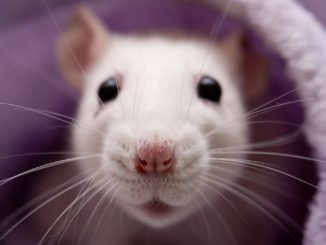
bar as counsel for an unspecified number of rats, which were
prosecuted in the ecclesiastical court of Autun for having feloniously
eaten and wantonly destroyed local barley.
On complaint
formally presented by the magistracy, the official or bishop's
vicar, who exercised jurisdiction in such cases, cited the culprits
to appear on a certain day and appointed Chassenée to
defend them. In view of the bad repute and notorious guilt of
his clients, Chassenée was forced to employ all sorts
of legal shifts and chicane, dilatory pleas and other technical
objections, hoping thereby to find some loophole in the meshes
of the law through which the accused might escape, or at least
to defer and mitigate the sentence of the judge. He urged ...
that inasmuch as the defendants were dispersed over a large
tract of country and dwelt in numerous villages, a single summons
was insufficient to notify them all; he succeeded, therefore,
in obtaining a second citation, to be published from the pulpits
of all the parishes inhabited by the said rats. (Evans, 1906,
pp. 18-19)
In this
case, it is no joke that neither the judge's sentence nor whether
the accused were put to the rack to extort a confession were
recorded, although Chassenée's legal acumen and the eloquence
of his plea established his fame as a criminal lawyer.
According
to Evans, the sentencing of guilty animals rigidly adhered to
contemporary legal precedent and established procedures. These
latter included a reprimanding knock on the head, the curse
of an anathema, excommunication or even, in the case of the
larger quadrupeds such as pigs and bulls, capital punishment.
Evans describes in great detail certain cases of the lex
talionis (the law of retaliation) in which capital punishment
was exercised by secular and ecclesiastical courts, among which
a notorious example is provided by the public execution in 1386
of an infanticidal sow in the French city of Falaise. Having
been duly tried in a court of law, presided over by a judge
with counsel attending, the sow was dressed in human clothes,
mutilated in the head and hind legs, and executed in the public
square by an official hangman (" maître des hautes
oeuvres ") on whom had been bestowed a pair of new
gloves befitting the solemnity of the occasion (p. 140). Sometimes
the condemned were even offered pardons or clemency. Evans (pp.
153-154; and see Westermarck, 1906, 1, p. 257) mentions how
youth could be grounds for acquittal, as was so in the prosecution
of a sow and her six piglets for having murdered and partly
devoured a child. Here, the sow was sentenced to death, but
the piglets were acquitted on account of their youth and their
mother's bad example.
Evans
records that in various parts of Europe between the ninth and
the nineteenth centuries the prosecution of animals encompassed
a great variety of major and minor crimes committed both by
domestic and wild animals, and by insects and other "vermin."
The original Notices of Indictment some displayed by Evans
refer to crimes such as homicide committed by bees, bulls,
horses and snakes; fraud by field-mice disguised as heretical
clerics; infanticide by pigs; and theft by foxes. Moreover,
Evans shows that judicial proceedings were instituted against
a veritable Noah's Ark of creatures, including horseflies, Spanish
flies and gadflies, beetles, grasshoppers, locusts, caterpillars,
termites, weevils, bloodsuckers, snails, worms, rats, mice,
moles, cows, 'bitches and she-asses,' horses, mules, bulls,
pigs, oxen, goats, cocks, cockchafers, dogs, wolves, snakes,
eels, dolphins and turtledoves.
Evans
thus provided quite straightforward and detailed information
about the range of crimes committed by animals and the precise
species which were formally accused of them. However, from different
parts of his book one can also reconstruct information about
the periodicity of animal trials and their location.
Let us
turn first, to the question of periodicity. Evans lists a total
of 191 animal trials, each trial in his list containing brief
entries about "sources of information", "types
of animal", "places" and "dates" (1906,
pp. 265-286). From the last of these entries it can be deduced
that animal trials were concentrated in the 15th (36), 16th
(57) and 17th (56) centuries. Without exception, the earliest
cases involved the excommunication or exorcism of wild animals
and, indeed, until the 13th century all cases cited by Evans
refer to "vermin" like moles, locusts, serpents, flies,
field-mice, caterpillars and eels. The year of the first trial
listed by Evans is 824, when moles were excommunicated in the
Valley of Aosta. Strictly speaking, this case was not an animal
trial but part of an entirely different process that resulted
in pronouncements of excommunication by an ecclesiastical court.
4 This said, the earliest authentic case of an animal trial
cited by Evans is that of a pig in Fontenay-aux-Roses near Paris
in 1266 (Finkelstein 1981, p. 67). Until the end of the sixteenth
century, moreover, when for some reason such creatures fell
out of vogue, pigs vastly outnumbered all other species of animal
subjected to prosecution. The last case of an animal trial cited
by Evans was in 1906 when, as reported in the New York Herald,
a dog was tried in Délémont in Switzerland.
It is
unclear what can be inferred from Evans' data about when animals
trials began and ended and why. As Evans himself knew, medieval
records were often poorly kept, or not kept at all, and most
have have not survived the ravages of time. To pile one complication
on another, the liturgical literature documents earlier cases
of excommunication than those identified by Evans, e.g., the
cursing and burning of storks at Avignon by St. Agricola in
666. Moreover, Evans' last case, in 1906, completed his list
only because it occurred as his book went to press. Yet 1906
was by no means the last year in which animals were prosecuted
and executed for crimes a fact which very much hinges
on what, sociologically, is to count as an "animal trial".
Evans
also provides useful information about the geographic location
of animal trials. His list of sites indicates that the belief
in animal criminality or, at least, in the need for animal
prosecutions was concentrated in the south and the east
of France and in adjacent parts of Italy, Germany and Switzerland.
But does this indicate the actual concentration of animal trials
or merely the initiative of local scholars who have been able
to access documents that are more plentiful there (Finkelstein
1981, p. 67; pace von Amira 1891, p. 559)? In the absence of
a thorough search of the records of other European nations,
it is possible that Evans found animal trials to have been concentrated
in France, Italy and Germany simply because his own efforts,
as reflected in his otherwise impressive bibliography (pp. 314-323),
were focused in those four countries. The German historian Karl
von Amira, for example, reported a small concentration of animal
trials in the Slavonic regions (Finkelstein 1981, p. 67) and,
once again, depending on what constitutes an animal trial, perhaps
they were also held in other countries. Evans himself cited
the existence of animal trials, with diminishing frequency,
in Belgium, Denmark, Portugal, Russia, Spain and Turkey. In
addition, he found two cases in England (a dog in Chichester
in 1771 and a cock in Leeds in 1861) and one each in Scotland
(a dog in the first half of the 1500s), Canada (turtledoves
in the late 1600s), and Yugoslavia (a pig in Pleternica in 1864).
Moreover,
Evans illustrates how the European practice of taking legal
proceedings against vermin was exported to the New World by
the ecclesiastical courts. In a case of 1662 originally reported
by Cotton Mather, in New Haven, Connecticut, animal trials intersected
with accusations of bestiality. Here a pious wretch named Potter,
aged about 60, was executed for "damnable Bestialities"
with a cow, two heifers, three sheep and two sows, which were
killed at the gallows before his eyes (Evans 1906, pp. 148-149).
In another case, in the Brazilian province of Piedade no
Maranhao , some Franciscan friars brought an action in
1713 against the ants "of the said territory, because the
said ants did feloniously burrow beneath the foundation of the
monastery and undermine the cellars of the said Bretheren, thereby
weakening the walls of the said monastery and threatening its
total ruin" (pp. 123-124; and see Frazer 1923, p. 410-411).
Counsel were named for both plaintiffs and defense and, after
learned arguments were provided by both sides, the judge, in
a mood of wise conciliation, ruled that the Bretheren should
appoint a neighborhood field suitable for habitation by the
ants and that the latter "should shift their quarters to
the new abode on pain of suffering the major excommunication"
( ibid .). But interesting as these cases are, we still
do not know how extensive animal trials were in the New World.
Clearly,
Evans did not say enough about variations in the national trajectories
of different European societies. Some societies must have had
a greater incidence of animal trials than others. How can these
differences be explained? Still others, such as England, appear
to have had very few such trials at all. Why was this so? Indeed,
as in many other areas of legal development so, too, in the
incidence of animal trials, England seems to have differed from
much of continental Europe. While animal prosecutions seem to
have been virtually unknown in England, perhaps from the twelfth
century and certainly from 1203 when the rule was first documented,
the old Anglo-Saxon institution of noxae deditio (noxal
surrender) was developed by the English eyre and assize courts
to the effect that the owner of any instrument, animate or inanimate,
that accidentally caused the death of a human, had to pay a
sum of money to the sovereign. In such a case the instrument
was declared deodand (Latin deo dandum :
"needing to be given to God") and its assessed value
had to be given in coin to the royal exchequer. While English
cosmology shared with its continental counterparts the axiom
that no creatures could transgress the boundaries of the divinely-mapped
universe, it thus differed in its response to animals who overstepped
the boundaries of their position by harming humans. Animal executions
and the English deodands , which lasted until the middle
of the nineteenth century, were thus mutually exclusive, an
important fact that was left untouched by Evans.
However,
as is true in so much of our understanding of animal trials,
the empirical evidence here is quite inconclusive. Authors such
as Finkelstein (1981, p. 74) are adamant that there were no
animal trials in England, but others take the opposite view.
Thus, the legal historian W.W. Hyde (1916, p. 709) has suggested
that animal trials were probably common in England during the
Elizabethan era. Similarly, Ives, referring to "Shakespeare,
who knew everything", divines the same probability from
an interesting passage in Shakespeare's Merchant of Venice ,
where Gratiano attacks Shylock (Act iv, scene 1):
Thy
currish spirit
Govern'd a wolf, who, hanged for human slaughter
Even from the gallows did its fell soul fleet (1914, p. 256).
Understanding
the Rise and Decline of Animal Trials
Quite
apart from the empirical inadequacies in his account described
above, Evans' amusing and superficially uncontentious descriptions
of medieval animal trials should not be accepted at face value.
Indeed, by Evans and others (e.g., Frazer 1923) trial records
tend to have been resurrected in the context of prior discussions
about the evolutionary development and eventual decay of various
irrational practices, including witchcraft accusations in seventeenth-century
Europe and animism among supposedly primitive peoples.
No less
interesting than Evans' descriptions of the objective reality
of animal trials are the discursive ends to which his book was
directed, including his acceptance of ideological assumptions
about evolution. It is true that his chief objective was to
chronicle and popularise Chassenée's forgotten sixteenth-century
accounts of animal trials and, to this end, his exhaustive treatment
appears as a simple recitation of Chassenée's materials,
one animal trial grotesquely and predictably following another.
Yet, at strategic moments, Evans' factual recitation of Chassenée's
materials is freely spiced with interjections about the adequacy
of medieval views of animal behavior and of juristic practices.
At times, Evans' views are like those of a Victorian missionary
smugly conveying religious truth to ignorant and unruly natives.
He refers disparagingly, for example, to "the childish
disposition to punish irrational creatures and inanimate objects,
which is common to the infancy of individuals" (Evans 1906,
p. 186).
Elsewhere,
Evans claims that Chassenée's text affords "striking
illustrations of the gross credulity to which the strongly conservative,
precedent-mongering mind of the jurisconsult is apt to fall
an easy prey" (p. 24). Scholastic divinity and medieval
jurisprudence were full of comical non sequiturs and
sheer nonsense. He thus asks us we who failed to get the
joke of Darnton's apprentices to join him in laughing
at "the subtleties and quiddities of medieval theologians,
who seriously discussed such silly questions" (p. 33).
Evans weaves his historical narrative around the factual description
of animal trials retrospectively to indicate both the comicality
and the stupidity of medieval jurisprudence and popular culture
and also the awful human abuse ("intolerable tyranny")
of animals. For Evans, the pivotal cognitive mistake made by
medieval lawyers and clerics their belief that animals
can and do commit crime would be occasion for endless
mirth were it not for its awful practical consequences.
Medieval
jurists and judges did not stop to solve intricate problems
of psycho-pathology ... The puzzling knots, which we seek painfully
to untie and often succeed only in hopelessly tangling, they
boldly cut with executioner's sword. (Evans 1884b, p. 302).
The anthropologist
Sir James Frazer, too, in his gargantuan tome of 1923 Folk-Lore
in the Old Testament , derided those "primitive legislators"
who ensured that the barbarous system of animal prosecutions
was cloaked with the solemnity of law and justice. Like Evans,
he posited animal trials in a very crude evolutionary way in
order to cast the juristic sagacity of our ancestors in a proper
light. Thus:
In the
infancy of the race the natural tendency to personify external
objects, whether animate or inanimate, in other words, to invest
them with the attributes of human beings, was either not corrected
at all, or corrected only in a very imperfect degree, by reflection
on the distinctions which more advanced thought draws, first,
between the animate and the inanimate creation, and second,
between man and the brutes. In that hazy state of the human
mind it was easy and almost inevitable to confound the motives
which actuate a rational man with the impulses which direct
a beast, and even with the forces which propel a stone or a
tree in falling. (Frazer 1923, pp. 416-417)
Perhaps
because it offers too easy a target, Frazer's preachy evolutionism
has commanded less criticism than Evans' more focused text.
Though Evans did not seriously intend to explain the existence
of animal trials, either for not doing so or else for implicitly
misapprehending their nature he has been brought harshly to
task. For example, a specialist in the ancient Near East has
chided him for failing to appreciate the true significance and
complexity of animal trials (Finkelstein 1981; and see Cohen
1986). After the most thorough reading of ancient texts, such
of those of Mesopotamia and Hammurapi, and of biblico-legal
and cosmological concepts, Finkelstein complains that so far
from being an invention of "primitives," animal trials
are unknown outside the occident. He reports that the Human
Relations Area Files offer only meagre evidence about the existence
of non-occidental animal trials, with all the specific examples
illustrating not the trial and punishment of animals but, like
the English deodands , owner responsibility for damage
and death caused by their animals (Finkelstein 1981, p. 62).
For Finkelstein, there can thus be no question of animal trials
being an atavistic relic since they are a product of our cosmological
and legal universe, and he concludes that:
[s]ocieties
of non-Western derivation and primitive peoples did not
and do not attribute "human" will or "human"
personality to animals or things, and never have
tried them or punished them as they did human offenders. The
notion that trials and punishments of irrational creatures
and of inanimate things are a valid legal procedure occurs
uniquely in Western society. (p. 64, emphasis in
original)
A related
problem is whether animal trials existed in the occident before
the medieval period posited by Evans and Frazer as the
date of their origin. Though it is known that the ancient Persians,
for example, considered animals as responsible beings, and punished
them for their misdeeds, according to Hyde (1916, p. 700), only
in classical Athens is there reliable evidence that animal trials
occurred in the ancient world. We know of their existence there
from descriptions of relevant legal procedures in texts such
as Aristotle's Constitution of Athens and Plato's Laws . In
the Athenian Prytaneum, in the common hearth of the city, a
special court was convened to try unknown murderers, inanimate
objects such as stones and beams, and animals that had caused
human death. In cases of wrongful death it was necessary formally
to try these three categories of malefactor because, in reasoning
similar to that underlying the lex talionis , an unavenged
murder would disturb the moral equilibrium and the physical
health of the community, the wrath of the Furies would be aroused,
and the soul of the deceased would be unable to find rest.
To Hyde's
controversial discovery of animal trials in classical Athens,
Finkelstein (1981, pp. 58-64) replies that there are no surviving
records of actual animal trials there, and that the surviving
accounts of trial procedures reveal that they were ceremonial
or magical in nature rather than legal. But the very terms of
this interesting dispute have been strenuously challenged in
an erudite essay by Esther Cohen (1986). To Evans, to Hyde and
to Finkelstein, she retorts that one cannot settle in purely
empirical terms the question of whether animal trials existed
either outside the occident or in pre-medieval Europe
to a large extent this hinges on what counts as an animal trial.
Adroitly wielding some of the sensitive anthropological analyses
of law produced in the 1960s and 1970s, she argues that to deny
the extra-occidental existence of animal trials is to view the
conflict and dispute resolution mechanisms of other, perhaps
technologically less developed, societies through our own cultural
and legal prisms. Simply because, when resolving the harms caused
by animals, they do not apply the institutional arsenal of western
law, does not not mean that by their standards non-occidental
societies do not prosecute animals for their misdeeds. "In
fact many nonliterate, nonwestern societies prosecuted and punished
offending animals," writes Cohen, "albeit less formally
than the Europeans, for their entire judicial structure was
conceived in a different form" (1986, p. 18).
Besides
these specific difficulties with understanding the trials, it
is unclear why the prosecution and punishment of animals originated
in the later medieval period and why they declined when they
did. Numerous purposes have been allotted animal trials, quite
apart from the use of biblical precepts as justifications for
them. Thus, it is said that animal trials were conducted in
order to deter other animals from committing similar crimes.
This is unlikely, however, since there is no evidence that medieval
folk paraded their animals in front of the gibbet on which executed
pigs were left by the hangman for public display surely
a condition of deterrence. It has also been said that animal
trials were designed to inspire horror for the crime in the
minds of humans, an intention which to us can only seem, at
best, mistaken.
More
plausibly, it has been suggested that animal trials were devised
to intimidate those who were responsible for an offending animal's
dangerous actions. If so, animal trials served as vehicles to
convey to animal owners a moral message to oversee their charges.
In a case of 1567 where a pig was executed for having killed
an infant in Senlis in France, therefore, the judge warned the
inhabitants of the village "not to permit the like to go
unguarded on pain of an arbitrary fine and of corporal chastisement
in default of payment" (Westermarck, 1906, 1, p. 160).
It is thus no accident that pigs were executed more often than
other animals, for in medieval villages they were allowed to
run free, and their sheer size and weight (up to 800 lbs.) must
sometimes have caused considerable harm, especially to infants
and children. Similarly, bulls, horses, and oxen reaped more
than their fair share of prosecutions (pp. 161-164). Moreover,
because animals were apparently regarded as having the same
sort of responsibility for their actions as humans, justice
and fairness demanded that animals should be treated in the
same way as humans (1906, 1, pp. 256-257). Likewise, and implicitly
against Evans, Graeme Newman (1978) has been most keen to dismiss
the notion that animal trials and punishment were but another
example of cruelty to animals:
The
animals were indeed fortunate, since they received due process
of law every bit as good as that provided for humans. They
were certainly not executed summarily, as would be the case
today of an animal that ate a baby. In fact, the prosecutors
were so careful to apply the law equally to animals, that
they even placed them on the rack and tortured them for a
confession. There was even the case of a hangman who summarily
executed a sow for infanticide, without a trial. He was hounded
out of town. Animals were clearly not persecuted during the
middle ages. They were only treated cruelly by the criminal
law to the same extent that humans were. (p. 93)
Whether
the practice of animal prosecutions was cruel or law-abiding,
or both, and if so by what criteria, is an interesting question
which cannot be pursued here. On its own, none of the alleged
explanations of animal trials above is satisfactory. Each, seeking
global status, ignores the fact that the purpose of any given
animal trial if, indeed, there was one would no
doubt be subject to a variable configuration of temporal, national,
gender, class, religious, and other factors. Even if we can
identify a range of purposes that underlay the existence of
animal trials, we still would not have explained why these trials
arose in the medieval era.
Let us
now turn to a line of reasoning also pursued by Newman (1978,
pp. 89-94). Newman enters the issue in the context of his desire
to catalogue the institutional, and to a lesser extent the doctrinal,
influence of religion on forms of punishment during the medieval
period. He rightly stresses that animal trials were only one
facet of a broad network of social control constructed by religious
authorities in their attempt to dominate and to stabilise the
social and the natural worlds. To bodies such as the Holy Inquisition,
then, animals were a form of life that presented a challenge
no less threatening than that of other marginal beings like
women and Jews. Newman's stress on the links between animal
trials and religion is very important. This is so not only because
the ratio decidendi of a medieval court was ultimately
of the sort "we sentence this animal to death because it
has killed a human and because Exodus states 'if an
ox gore a man or a woman that they die, then the ox shall be
surely stoned.'" It is also important because two other
situations in which an animal could be prosecuted and punished
as an accessory to a crime were also articulated
in profoundly religious terms, namely, accusations of bestiality
and of witchcraft.
Evans
himself stressed the defining influence of religion on the medieval
understanding of bestiality and witchcraft. According to Evans
(1906, pp. 12-14), the biblical laws about the goring ox and
the condemnation of witches ( Exodus xxii, 19; Leviticus xx,
27; and Deuteronomy , xviii, 10-11) were often used in concert
as justificatory mechanisms for prosecution in the medieval
courts. The categorical proximity of bestiality and witchcraft
accusations is evident in one case of unknown date, when a certain
Françoise Sécretain was burned alive because she
had had carnal knowledge of domestic animals a dog, a
cat and a cock and because, she admitted, she was a witch
and her animals were actually earthly forms of the devil (Dubois-Desaulle
1933, p. 58). Another case of theriomorphism occurred in 1474,
when Basle magistrates sentenced a cock to be burned at the
stake "for the heinous and unnatural crime of laying an
egg" (Evans 1906, p. 162; Hyde 1916, p. 720). In this case,
and in others like it, it was widely believed that the oeuf
coquatri was the main ingredient in witch ointment and,
when hatched by a snake or a toad, monsters such as basilisks
would hide in a house and destroy all its inhabitants with their
death-darting eyes.
The
sinful dangers of bestiality were also viewed through the powerful
imagery of Judaeo-Christianity, and the act was categorised
as a form of buggery (" offensa cujus nominatio crimen
est "). Like animals that harmed humans or were involved
in witchcraft, animals in bestiality cases were seen as rupturing
the divine order of the universe. Thus, Exodus (xxii, 19) declared
that "Whosoever lieth with a beast shall surely be put
to death", the "whosoever" here referring to
both men ( Leviticus , xx, 15) and women ( Leviticus , xx, 16).
Evans himself (buggery: "[t]his disgusting crime",
1906, p. 148) referred to a string of cases in which men were
convicted of having sexual intercourse with a variety of animals.
These included mules, cows, sows, a mare, heifers, and sheep
(pp. 146-152), although numerous other cases recorded by Dubois-Desaulle
(1933) suggest that, especially for accusations of bestiality
combined with witchcraft, goats were often the animal of choice.
In cases of bestiality both human and animal were executed,
usually by fire but sometimes by beheading or hanging, and their
bodies, with all legal documents and pieces of evidence, were
then buried together.
Finally,
I must note some thorny questions about the claim that the prosecution
of animals for crime halted after 1800. Evans implicitly suggested
that this was due to the emergence of a generalised scientific
Weltanschauung and, especially, to the creation of
rational legal thought. Similarly, Finkelstein (1981, p. 81)
reasons that because the execution of homicidal animals in Europe
represented the literal implementation of biblical dictates,
the trials inevitably declined with the rise of learning and
of scientific enlightenment. Yet if the pivotal fact in explaining
the disappearance of animal trials was the rise of science and
the secularization of religion, then why did the trials peak
between 1600 and 1700, at the very moment when the movement
in science was at its height, and why did they continue, albeit
sporadically, well into the nineteenth century? Why did other
similarly irrational legal practices, such as judicial torture,
disappear far earlier than animal trials? Moreover, there are
alternative explanatory candidates for the decline of animal
trials and of animal executions. Just as plausibly, for example,
they can be traced to the growth of urban environments and to
the development of a moral sensibility towards animals (Tester,
1991, pp. 73-75).
Evans
on Animal Rights and on Criminal Anthropology
Once
one has pierced the facade of Evans's grinding sarcasm and his
Darwinian evolutionism, it is apparent that the complexity of
his concerns have not properly been recognised. 5 Indeed, his
discourse on animal trials was structured by two concerns, neither
of which had very much to do with the learned stupidity of medieval
clerics and jurists.
The first
of these concerns is so glaringly obvious that it is easily
missed. It consists in the fact that on every page of The Criminal
Prosecution and Capital Punishment of Animals Evans clamors
against the mistreatment of animals by humans. For this intervention
he must thus be accorded a place in the vanguard of the animal
rights movement of his era. Later, in Evolutionary Ethics and
Animal Psychology , Evans (1898) referred explicitly to what
is commonly regarded as the founding text of the modern movement,
namely, Henry Salt's (1892) Animals' Rights . Thus: "if
animals may be rendered liable to judicial punishment for injuries
done to man, one would naturally infer that they should also
enjoy legal protection against human cruelty" (Evans, 1898,
p. 13). Here, too, he was keen to quote Jeremy Bentham's famous
objection to animal suffering where he had predicted that "Why
should the law refuse its protection to any sensitive being?
The time will come ... when humanity will extend its mantle
over everything which breathes" (1789, p. 282). To this
utterance Evans added:
The
ethical corollaries to Darwin's doctrine of the origin of
species and to his theory of development through descent under
the modifying influences of environment and natural selection
have already passed these bounds of beneficence not only by
demanding the mitigation of cruelty to slaves, but also by
the abolition of slavery, and not only by inculcating the
kind treatment of animals by individuals, but also by asserting
the principle of animals' rights and the necessity of vindicating
them by imposing judicial punishments for their violation.
(Evans, 1898, p. 14)
When
The Criminal Prosecution and Capital Punishment of Animals is
situated in the context of the intellectual currents of its
era, one can see that, besides his incipient support of animal
rights, Evans adhered to a second and less ostentatious concern.
This is evident from the mannner of the book's presentation,
which comprises only two chapters. These are "Bugs and
Beasts Before the Law" (Chapter 1) and "Medieval and
Modern Penology" (Chapter 2), which are expanded but discursively
identical and similarly entitled versions, respectively, of
two essays that Evans (1884a, 1884b) had published twenty-two
years earlier. About Evans' focus on medieval animal prosecutions
this revised chronology tells us that, like most good history,
his book was directed as much to the present and future as to
the past. The first chapter, written by Evans the animal rights
activist, must thus be seen as a quizzical attack on the medieval
mistreatment of animals.
Evans
was doubtless happy to record the decline of animal trials.
At the same time, he feared the popularity of a newly-formed
movement in law and in the universities, namely, the biological
reductionism that was then championed by the school of criminal
anthropology and which was led by the Italian army doctor Cesare
Lombroso. It is no accident that Evans' (1884b) second essay
of 1884 was composed just before the stormy meetings of the
first International Congress of Criminal Anthropology held in
Rome in 1885 it was written as a direct polemical contribution
to the mounting campaign against Lombrosianism (Beirne, 1993,
pp. 152-162). Evans' sole explicit aim in this essay Chapter
2 of The Criminal Prosecution and Capital Punishment of Animals
was to oppose and to ridicule the penal implications of
criminal anthropology. In it he therefore scoffed at leading
contemporary criminal anthropologists, including Lombroso, Garofalo
and Benedikt. In the same way that he had ridiculed the medieval
clerics who refused to examine the putative responsibility of
animals for their actions, Evans now lambasted criminal anthropology
because to him its biologism denied the responsibility, and
hence the accountability, of criminals for their actions. Thus,
inspired by the anti-Lombrosian criminology of the French sociologist
Gabriel Tarde, Evans (1906, p. 193) bemoaned that a:
striking
and significant indication of the remarkable change that has
come over the spirit of legislation, and more especially of
criminal jurisprudence, in comparatively recent times, is
the fact that whereas, a few generations ago, law givers and
courts of justice still continued to treat brutes as men responsible
for their misdeeds, and to punish them capitally as malefactors,
the tendency nowadays is to regard men as brutes, acting automatically
or under an insane and irresistible impulse to evil, and to
lead this innate and constitutional proclivity, in prosecution
for murder, as an extenuating or even wholly exculpating circumstance.
Conclusion
Whatever
the merits of Evans' and others' views on the matter, the subject
of medieval and early modern animal trials compels thought about
some important questions of epistemology and method. Can we
understand how people in medieval societies perceived the criminal
intent of animals, for example? Or are we precluded from understanding
the social practices of another period or culture whose standards
of rationality and criteria of proof differ fundamentally from
our own? In trying to understand them, is it inevitable that
we, like Evans, see their beliefs as mistaken and their practices
as absurd?
How
we understand the practice of animal trials partly depends on
the differential social construction of concepts like "animal
trials" and "punishment." As such, whether animal
trials have really declined is a moot point. No one today seriously
believes that animals are capable of intending to commit crime,
and it is true that animals are not formally prosecuted
for crime in courts of law. Nor are they subject to the penalties
of criminal law. Nevertheless, the practical outcome of the
trials exposed and derided by Evans the execution of nonhuman
animals did not wither away with his last recorded case
of 1906. So far from declining, there has been a dramatic rise
in the number of animals "tried" and lawfully executed
since that time. Has not the medieval courtroom been displaced
by the animal shelter? Have not the awesome powers of medieval
criminal law to punish animals simply been usurped by the bureaucratic
regulations attached to the circumstances in which animal shelters
and animal control officers are allowed to put animals to death?
Have not the rack and the gibbet been displaced by the clinically
painless euthanasia dispensed by lethal injections and vaccuum
chambers? Nowadays, instead of being executed for crimes committed
against humans, animals are far more likely to be executed
silently, invisibly and without advocates for such "crimes"
as "homelessness" and "aggression."
Notes
1. Correspondence
should be sent to Piers Beirne, Department of Sociology and
Criminology, University of Southern Maine, 120 Bedford St.,
Portland, ME 04103. For their helpful criticisms, I wish to
thank two anonymous reviewers.
2. Space
does not allow me to discuss the closely related claim in nineteenth-century
criminal anthropology that animals are capable of committing
crimes against other animals (e.g. Ellis, 1890, pp. 249-250;
Ferrero 1895; Lombroso 1895, 1, pp. 28-34; Hall 1902, pp. 24-25).
3. In
ancient times, however, it seems to have been believed that,
in respect to their commission of crimes, animals exercised
intent in the same rational way as did humans. Some of the texts
of the Salic law, for example, describe an offending animal
as an auctor criminis (Westermarck 1906, 1, p. 257).
However, in terms of the attribution of a criminal "intent"
to animals, what such designations mean is unclear (pace Ives
1914, p.256).
4. Throughout,
Evans tended to conflate the respective jurisdictions and functions
of the secular courts and the ecclesiastical courts, for which
he has been severely castigated (Finkelstein 1981, pp.62-68;
Cohen 1986, p.17). The secular courts alone were responsible
for the prosecution and punishment of domestic animals, while
the ecclesiastical courts issued maledictions against harmful,
or potentially harmful, wild animals, plagues and pests. While
domestic animals felt the full weight of judicial repression,
there is no evidence that wild animals were even aware of ecclesiastical
curses.
5. Thus,
while offering a sociological critique of the modern notion
of animal rights, Tester (1991) lambasts Evans' "crude
cultural positivism" precisely because it can only view
animal trials as absurd. "The whole tone of Evans's book,"
he writes:
is
that of a confident, early twentieth-century scholar looking
back incredulously at the absurd behavior of earlier times...
But the analysis contradicted the positivism: to be sure, animal
trials are absurd and abominable from a twentieth-century perspective,
but they were saturated with cultural meaning when they were
carried out. The fascinating part of Evans's account is the
failure of his positivism. (Tester, 1991, p.74; and see Cohen,
1986, pp. 16-17)
References
Beirne,
Piers (1993). Inventing criminology: The rise of 'homo criminalis'
. Albany, New York: SUNY Press.
Bentham,
Jeremy (1789) (1970). An introduction to the principles
of morals and legislation . In J.H. Burns & H.L.A.
Hart (Eds.). University of London: Athlone Press.
Cohen,
Esther (1986). Law, folklore and animal lore. Past and Present
, 110 , 6-37.
Darnton,
Robert (1985). The great cat massacre and other episodes
in French cultural history . New York: Vintage.
Dubois-Desaulle,
Gaston (1933). Bestiality: An historical, medical, legal
and literary Study . Translated by "A.F.N." New
York: Panurge.
Ellis,
Havelock (1890) (1916). The criminal . London: Walter
Scott.
Evans,
E.P. (1884a). Bugs and beasts before the law. Atlantic Monthly
, 54 , 235-246.
Evans,
E.P. (1884b). Medieval and modern punishment. Atlantic Monthly
, 54 , 302-308.
Evans,
E.P. (1898). Evolutional ethics and animal psychology .
New York: D. Appleton.
Evans,
E.P. (1906) (1987). The criminal prosecution and capital
punishment of animals . London: Faber and Faber.
Ferrero,
William (1895). Crime among animals. Forum , 20
, 492-498.
Finkelstein,
J.J. (1981). The ox that gored. Transactions of the American
philosophical society , 71 (part 2).
Frazer,
Sir James George (1923). Folk-Lore in the Old Testament:
Studies in comparative religion, legend and law . New York:
Tudor.
Hall,
Arthur Cleveland (1902). Crime in its relations to social
progress . New York: Columbia University Press.
Hyde,
W.W. (1916). The prosecution and punishment of animals and lifeless
things in the Middle Ages and modern times. University of
Pennsylvania Law Review , 64 , 7, 696-730.
Ives,
George (1914) (1970). A history of penal methods: Criminals,
witches, lunatics . Montclair, New Jersey: Patterson Smith.
Kelsen,
Hans (1961). General theory of law and state . (A.
Wedberg, Trans.). New York: Russell and Russell.
Lombroso,
Cesare (1876). l'Uomo delinquente . Milan: Hoepli.
Lombroso,
Cesare (1895). l'Homme criminel . 1,2 . Paris:
Félix Alcan.
Newman,
Graeme (1978). The punishment response . Philadelphia:
J.B. Lippincott.
Salt,
Henry (1892) (1980). Animals' rights . Clarks Summit,
Pennsylvania: Society for Animal Rights.
Tester,
Keith (1991). Animals and society . London: Routledge.
von Amira,
Karl (1891). "Thierstrafen und Thierprocesse." Mitteilungendes
Instituts für österreichische Geschichtsforschung
, 12 , 545-605.
Westermarck,
Edward (1906-1908). The origin and development of the moral
ideas (vols. 1-2). London: Macmillan.
For
abstracts of all issues, including the most current, click
Article
Abstracts
To
order Society & Animals Journal, go to our secure online
ordering page
You
can Search the online issues of Society & Animals, as well
as the entire Society & Animals Forum (formerly PSYETA)
website,
for topics and keywords of your interest:
|