Society & Animals Journal of Human-Animal Studies
Logo - Society and Animals Journal
Volume 11, Number 3, 2003

Who -- or What -- is the Laboratory Rat (and Mouse)?

Lynda Birke

ABSTRACT

This paper explores the many meanings attached to the designation, “the rodent in the laboratory” (rat or mouse). Generations of selective breeding have created these rodents. They now differ markedly from their wild progenitors, nonhuman animals associated with carrying all kinds of diseases. Through selective breeding, they have moved from the rats of the sewers to become standardized laboratory tools and (metaphorically) saviors of humans in the fight against disease. This paper sketches two intertwined strands of metaphors associated with laboratory rodents. The first focuses on the idea of medical/scientific progress; in this context, the paper looks at laboratory rodents often depicted (in advertising for laboratory products) as epitomizing medical triumph or serving as helpers or saviors. The second strand concerns the ambiguous status of the laboratory rodent who is both an animal (bites) and not an animal (data). The paper argues that, partly because of these ambiguous and multiple meanings, the rodent in the laboratory is doubly “othered” -- first in the way that animals so often are made other to ourselves and then other in the relationship of the animal in the laboratory to other animals.

Rats are nonhuman animals carrying an enormous weight of metaphor and meaning throughout the world; rats of all kinds are entwined with human history. I live in a culture with a deep antipathy to rats, animals believed to carry filth and disease, associated with the gutter. Yet the same society breeds them in huge numbers precisely, it is argued, to combat disease through their use as animals in the laboratory. For this task, ironically, they must be elevated from the gutter and cleansed of all their filth.
In this paper, drawing on representations from various sources, I want to explore some of the meanings of “the laboratory rat” or “laboratory rodent.” I start with the rats, partly because I am particularly familiar with them in laboratories. However, much of the argument applies also to mice, and I draw also on representations of more generalized rodents. At times, these two different kinds of rodent may be practically interchangeable in their use in scientific research and their histories as specifically bred animals in the laboratory.

I will begin by sketching how wild rats, harbingers of disease, came to be bred specifically for scientific research (alongside mice); in doing so, they took on new significance. Now, the image of a laboratory rodent conveys a great deal -- not so much about the animal who, in many ways, remains a mystery -- but about the processes and values of scientific research. The rodent has become a potent icon. So, my main concern here is to examine some of the referents of this icon in order to ask, what does the laboratory rodent signify for us? What does this rodent tell us about the practices of science? And what can we learn from these meanings about human relationships to animals?

Creating the Rodent in the Laboratory

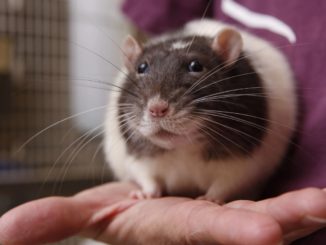
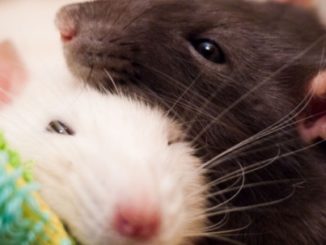
Even when they are white, laboratory rats -- the animals bred by the million for various kinds of experimental purposes -- are derived from brown rats (Rattus norvegicus). Colonies of such rats first were bred selectively at the end of the nineteenth century, either as candidates for the rat pits or, a little later, as “fancies.” In the first case, rats were selected for their pugnacity -- to be pitted against terriers -- while, in the second, they were selectively bred for their looks -- usually coat color -- and for docility. Rats kept by humans thus became whatever we wanted them to be.

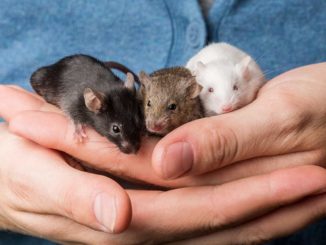
Although some specific strains of mice have been known for centuries (“waltzing” mice, bred in China and Japan), most modern laboratory strains began as “fancies” of Mus musculus bred by amateur enthusiasts in the late nineteenth century. Amateurs soon found themselves asked to supply laboratories. Rodent breeder Abbie Lathrop, of Granby, Massachusetts, supplied the researchers whose experiments led to the creation of, among others, the C57 and DBA lines of mice early in the twentieth century (Rader, 1998). Others experimented with crossing captive-bred albino animals with wild ones. Sprague-Dawley rats began with wild rats taken from a company dump in the 1920s (Foster, 1980).

Breeding of inbred strains of rats and mice, however, soon moved into the laboratory, fueled by growing interest in Mendelian inheritance in the first two decades of the twentieth century. Thus, many of these were animals bred to study patterns of inheritance. It was many years before the specific production of laboratory rodents on a large scale and housed in carefully controlled conditions, became widespread. Before the Second World War, lab animals might come from a variety of sources, including fanciers; conditions, too, were highly variable, with some animals literally kept in the lab. After 1945, conditions became more standardized, and specific animal houses emerged -- changes that helped to perpetuate standardization of animals.
Throughout the twentieth century, more and more strains were developed, often for specific purposes -- rats bred to be diabetic or mice with immune deficiencies. Now, there are many thousands of strains, with others being developed all the time for specific purposes. The website for the Jackson Laboratory currently lists new strains undergoing development for, say, research into cardiac or brain function. But genetic variation within strains has also needed to be minimized, to reduce experimental variability. Breeders in mid-century increasingly sought uniformity within a strain, to make the laboratory animal more like a “chemical reagent,” part of the apparatus of the laboratory (Lane-Petter, 1952, p.30; Clause, 1993; Phillips, 1994). The search to reduce variability goes one step further with modern techniques of genetic manipulation -- specific alterations to the DNA to create, for example, mice with particular genes inactivated or carrying specific genes.

Maintaining rodents, however, especially for experimental genetic modification, is hazardous, as they are prone to a host of diseases. So, a significant development since the 1960s has been the development of pathogen-free strains or strains subsequently inoculated with a known array of bacterial pathogens. This takes the standardization a step further, as these animals must be kept carefully sealed from the rest of the world, a process that in turn profoundly affects how buildings housing them are constructed and how personnel work around them. However much we may refer to them as “laboratory rodents,” they are not living in laboratories as most people would envisage such spaces: On the contrary, the animals are segregated into specialized units within equally dedicated animal houses, sealed away from potential contamination brought in by humans.

There were, then, two stages in the development of laboratory rodents as we know them. The first was the process of bringing them from the wild into the labs, via the fanciers’ breeding rooms. This entailed a transformation from wild to tame and from animals exemplifying certain species (such as brown Norway rats) to multitudes of different types, colors, and strains. It also, of course, required a transformation from being an animal that routinely elicited reactions of disgust and horror from people to becoming an animal that would represent medical progress. The second stage was what might be called a process of greater industrialization, in which lab animals become standardized and increasingly became a production process and part of the apparatus of science (Logan, 2001; Shapiro, 2002). Although many of these generalizations apply also to other species, it was rodents who became particularly standardized and who now exemplify “laboratory work”

Rodents were chosen for early experimental studies for several reasons. They bred quickly, so facilitating studies of inheritance; they were altricial (i.e. they are born immature), so facilitating studies of early development; and rats particularly were thought to have strong sex drives, important to early twentieth century studies of reproduction and sexual behavior (Burian, 1993; Logan, 2001). By the 1930s, rats had become “a kind of generic standard in research on physiology and behavior”, so displacing earlier emphases on species diversity in physiological studies (Logan, p. 287). On the contrary, just as studies increasingly came to focus on only one species, more and more subdivisions within that species emerge -- a new, but more controlled, form of diversity.
Throughout these transformations, meanings change and new metaphors arise. The wild rat of the sewers, terror of so many myths and legends and bearer of disease, becomes iconically part of the struggle of biomedicine to conquer disease. There is considerable irony in this transformation; as Shapiro (2002) notes, that unruly and nocturnal animal, terror of our history, has moved from the shadows into the spotlight, to become “the primary inhabitant of this highly controlled, rule-bound, broad-daylight laboratory of science” (p. 441).

Moreover, the rat/mouse has been made to fit the emerging metaphors through selective breeding and standardization. Laboratory rats and mice are now potent symbols of scientific endeavor; indeed they stand alongside the ubiquitous double helix as icons of the laboratory in modern Western culture.

Changing Meanings

We may shun the sewer rat or try to exterminate rats and mice from our houses and farms, but, in the laboratory, rats mean a great deal to us. I want now to explore some of these meanings, in two broad, overlapping areas.
First, how we understand the laboratory rat today draws on widespread cultural metaphors of medical triumph and the conquest of disease. Laboratory rats may be represented in ways that signify not only successes in conquering diseases but also the triumph of specifically scientific (Western) medicine. Global science relies on a global production of standardized rodents. Yet, rodents in such iconography often seem to become our saviors, standing in for us in their suffering. These metaphors in turn structure how we think about both scientific laboratories and rodents.

Secondly, the transformation into “the” laboratory rat has entailed a loss of the rat understood as an animal or as exemplar of a species. Rather, the laboratory rat has become transformed from what most of us would commonly call an animal into something that stands in for data and scientific analysis. I will explore each of these in turn.

Global Conquest: The Triumphant Rodent

Mapping metaphors in biology are now ubiquitous. We can map the genome of mouse or human, although we have long been mapping the body of rodents through dissection guides and other reference books (there are various “Atlases of the Rat Brain”). We can also map the distribution of hormone receptors, say, within that brain.

It is not, of course, only rodents who are thus “mapped”; indeed, much of the impetus for genome mapping comes from the efforts to sequence the DNA in the human genome. In practice, however, there are very few organisms around whose genomes there is such intensive mapping effort; among these select few are laboratory rats and mice. The significance of their genomes does not lie in understanding them as exemplars of their species but on their role as stand-ins for human disease. Mice and rats attain a particular status thereby; their chromosomes can be compared directly to maps of human ones in relation to the genetics of specific diseases.

Mapping metaphors can be added to Arluke’s (1994) classification of three types of images used in advertising laboratory animals: the “classy chemical;” consumer goods (both of which construct the lab animal as analogous to a chemical reagent)or the “team player” in which, typically, cartoon animals are portrayed as “helping” in the service of medicine. Inevitably, the huge interest now in genome mapping is mirrored in advertising. In several advertisements for laboratory rats and mice , the rodent’s image appears either juxtaposed to images of gel electrophoresis (the typical “bars” of DNA analysis), or next to a map. In one advertisement, one-half of the (white) rat is shown photographically, but the image merges and its hindquarters appear as diagrammatic isoclines -- the mapped rat body.

The mapping metaphor is, as Haraway (1997) has pointed out, a highly pervasive -- and persuasive -- one, drawing on imagery and rhetoric of global conquest and triumph Haraway analyzes an image used by New England Biolabs, depicting a young white woman superimposed on a map of Africa, noting the connotations of gender and race. A rat image nearby a world map similarly advertises Charles River Laboratories’ (1997) advertisement for the International Genetic Standard CD Rat. This rat is not morphing into the map, as the woman/Africa image does but stands nearby, the image representing the availability of “total uniformity” for the “global research community.” This, then, is the globalized research tool, and the lab rodent thus comes to symbolize the victory of Western science and medicine, not only over disease (the claim that is explicitly made) but also -- more implicitly -- over other knowledge and forms of medicine.

While scientific medicine becomes triumphant in advertising images and associated narratives, the laboratory animal becomes a willing participant. Arluke(1994) noted the theme of lab animals as “helpers” or “team players” in advertising. This may take the form of jokey, cartoon, characters, such as the cartoon mouse dressed as a corporate executive (or perhaps a desk scientist) that was used to advertise GenPharm’s transgenic mice. Or, it may portray the animal as victor, as in one of the advertisements Arluke analyzed. A similar theme runs through media reports of developments in xenotransplantation, as though the transgenic animals used in such research are helping either scientists or patients directly (Birke & Michael, 1998). Scientists, for example, may be reported as producing “research-friendly” mice, almost as though the animals actively condone the research. One recent advertisement for a laboratory animal breeding facility depicts a range of lab animal species, with the text: “We are More than Just Animals -- We’re your Partner in Research.”

The laboratory animal helper not only is assisting the scientist to gain data; the animal in these images also is a helper of humankind in general. Media reports may thus refer to animals such as transgenic pigs or sheep who could “help to save lives” by, say, producing specific proteins used in human medicine. Similarly, an Internet publication from the Jackson Laboratory (Winter, 2002) stated, “Jackson laboratory mice enlist in war against bio-terrorism” and asked, “How can mice become warriors in the fight against terrorism? By helping researchers understand the genetics behind why some animals resist anthrax infection.” These animals become our saviors through their role in research; they even enlist in global battles. But despite the implications of animal agency in the advertising images (as though the animals consent to saving our lives by sacrificing their own), they first must be transformed from animal to a kind of living laboratory equipment.

The image of laboratory rodents as saviors is a powerful one and figures in many images. One review (Paigen, 1995) of “mouse models” began with a heading: “A Miracle Enough: the Power of Mice,” going on to outline ways in which mice are the ideal animals for genomic research, potential saviors who will lead to new therapies and means of preventing human disease. It is the creature, the text claims, to whom we turn experimentally because it is “so important in reaching an understanding of ourselves.”
This kind of rhetoric draws partly on the arguments put forward by proponents of animal-based research, who usually emphasize a view of medicine as progress, a progress that has depended on the use of animals (Quimby, 1994; Paton, 1993). So, lab animals become constructed as necessary to the creation of all medical advances, thus facilitating their images as our helpers.

In many ways, laboratory rats and mice have been created to bear our diseases -- from animals selectively bred to have little or no functional immune system to those who have been genetically engineered with human genes. They have been transformed from bearers of highly contagious diseases such as plague to become benign assistants in the medical fight against infections. In that sense, they become symbols of Christian salvation stories, suggests Haraway (1997). The history of science itself draws heavily on an iconography of salvation (Midgley, 1992), so it perhaps is not surprising that laboratory animals become such symbols. Haraway illustrates her point by referring to the creation of OncoMouse, the mouse bred with a human gene for breast cancer. In her 1997 book, a painting by Lynn Randolph, depicts OncoMouse as half-woman, sitting inside a box similar to a Skinner box, and observed by the watchful gaze of scientists’ eyes. This half-woman/half-mouse bears a crown of thorns. This animal thus not only bears the gene, she argues, but also symbolically bears suffering for us.

The intertwined metaphors of mapping and of rodents as helpers/saviors signify beliefs in conquest, the triumph of medicine over disease. However problematic the idea of medical triumph and progress may be, laboratory rats and mice are potent icons. Although all kinds of lab animals may be represented as part of the fight against disease, rodents particularly symbolize that fight -- not least because of their strong cultural association with disease. It is no accident that advertisements for lab animals so frequently juxtapose statements about fighting disease with images of rodents, for rodent strains are created as bearers of specific diseases. In a sense, the place of rodents as key players in our salvation from illness symbolizes the ultimate triumph of good over evil -- a process in which the rodents themselves are transformed from evil, disease-full vermin into sanitized, germ-free angels of mercy.

Not Quite an Animal

To become our saviors in the struggle against ill health, rats and mice also must become something other than the rodent-as-animal: These, after all, are animals we generally loathe. Scientists today use millions of laboratory rats and mice. Rodents are not only medical models for this massive industry (Paton, 1993), but are also beings defined as “not quite” animals. The United States Animal Welfare Act has controversially excluded rats, mice, and birds from the definition of “animals” coming under its protection. Legislation in Britain covers all vertebrate animals; information published annually by the Home Office about animal use under current legislation (The Animals [Scientific Procedures] Act, 1986), however, always emphasizes the large percentage of animals who are rodents (approximately 80 %). Organizations defending the use of animals in biomedical research make similar arguments, taking the line that most research is for potential medical benefit and most research involves rodents. Somehow, this emphasis implies that it is more acceptable to use animals in research if they are rats or mice.

And to many people, indeed it is. Public opinion is more likely to support painful experiments on rats and mice than on monkeys, while many scientists who would accept using rats or mice in research might draw the line at certain other species (Arluke, 1988; Michael & Birke, 1994). That it is generally more acceptable to cause suffering to rodents reflects the negative view most people have of these animals: Public acceptance is greater just because they are animals we abhor (and this in turn is heeded by antivivisectionist organizations, which rarely use rats or mice in their illustrations).

That scientists, too, draw a line perhaps reflects a need to establish distance from rats or mice as animals in the lab (Arluke, 1988). Accordingly, most laboratory animals (especially rodents) are not named but given only numbers, while references to the naturally behaving animal tend not to enter laboratory reports, even though they may pepper scientists’ speech. This schism is particularly noticeable if the animal in question belongs to a species widely accepted as sentient, such as chimpanzees, who typically are given individual names in the laboratory, though not reported as such in subsequent papers (Wieder, 1980).

Rats, however, rarely gain such status as a name. They are more likely to be numbered lots, hidden away in their racked cages, not exposed to view -- they no longer have individual histories (Shapiro, 2002). Indeed, in an interview with a technician in one of my own studies, she recounted that the scientists in that lab insisted that she put the rats in opaque cages. They did not like having rats in clear cages because the “animals could look at you.” They become a little too like real animals outside the lab when they do that.

Yet at the same time, scientific understanding of the animal and the animal’s husbandry relies ultimately on a conception of the animal as an animal. Among other things, the animal might curl around and bite the experimenter. But these features of animalness must not enter written reports, which simplify and mathematicize. It is extremely rare to find a scientific report based on work with rats that refers to the animals in any other way.

Concepts of lab rats as barely animate tools for the job coexist with an (often tacit) understanding of them as being emotional and capable of being influenced by the affect of the researcher (Dror, 1999; Dewsbury, 1992). Partly, this reflects the way in which lab reports are written and by whom. Knowledge of the rat as an animal is explicitly excluded from reports; moreover, it is the animal caretakers rather than the scientists who will have most of this tacit knowledge about everyday rat behavior. Rats have a highly ambiguous status in the laboratory, reflecting in part the ambivalence of the scientists who use them. Meriting special treatment, rats always are both faceless objects of scientific experiment and candidates for simultaneously becoming pets (Herzog, 1988; Arluke, 1988).

In the laboratory, lab animals symbolically must become something other than animals, just as cows and pigs must become something other than animals in order to become food. In his ethnographic study of laboratory neuroscientists, Lynch (1988) described how they sometimes use contrasting models of what is meant by “the animal.” The “naturalistic animal” is the animal of common sense, the kind we are familiar with outside the laboratory. But, in order to use them experimentally, animals must be made into “analytic animals”; that is, they must become data.

The transformation into analytic animal begins even before the rat enters the laboratory. Sprague-Dawley rats were used in the lab Lynch (1988) studied because of their appropriate size, docile disposition, ability to survive stressful operations, and uniformity of brain dimension from one individual to another....The selection and breeding of rats was thus done with an orientation to a generalized ‘mathematical’ space transcending the brain of any given animal. (p. 273)

From the beginning, these transformations have been part and parcel of the breeding programs of laboratory strains of rats and mice; rodents have, in a sense, been created to fit their own mathematization.
Rodents are both handy models of human disease and originate in a despised animal; these two aspects of how we see them make it easier to perceive rodents in particular as merely data. Latour (1987), a sociologist of science, has described the ways in which “facts” are created in the course of laboratory work. Latour argues that through processes of persuasion and agreement and reliance on output from accepted devices to produce graphical output, scientists construct stories that become acceptedthrough repetition and rhetoric -- as facts. An initial suggestion that, say, a mammalian brain produces a particular molecule that may be a neurotransmitter can quickly become codified and accepted as evidence that there is such a transmitter (Latour). These transitions begin with an animal. That set of moves, however, from animal to data to inference to established facts, is easier if the first move is foreshortened -- if the animal already is not quite an animal.

So, in the production of results from the laboratory, the animals who ate, slept, and played with their friends -- hidden from human eyes -- disappear. Indeed, for scientists to do their work, the animals must disappear. The lab rat has been metamorphosed from a rat, with particular characteristics of species-typical behavior, to a “laboratory animal” representing numbers. However many millions of rats and mice are used annually in the service of science, we know remarkably little about their characteristics as species. Rather, lab rats -- unlike many other kinds of animals studied in the laboratory -- no longer stand as exemplars of their species. Looking through back issues of the journal Animal Behaviour, I was struck by the difference in how certain animals are described. Most papers refer to studies with a specific species, identified by the Latin binomial and some reference to the habitat in which the animal is found in the wild. Occasionally, studies use rats: Few of these studies are concerned with the Norway rat as such but may use rats to study some specific biological mechanism. In striking contrast to references to other species (“the white-footed mouse,” identified in English as a member of a particular species), the studies using rats significantly refer to the animal only as “the laboratory rat.” It is as though “the laboratory rat” becomes the species name.

Furthermore, if rats and mice are perceived in the first place as models for human physiology, then their own ratness or mouseness is irrelevant; they already are part way to becoming de-naturalized analytic animals precisely because they are perceived as (and reduced to) “models” (Shapiro, 2002). Models are abstractions. A model of a physiological system in textbooks might mean an abstract diagram or graphical representation of a set of processes. The reader is not meant to think of a living animal while scrutinizing these graphs.

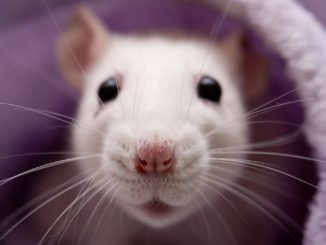
Yet, advertising for laboratory rodents may bring out the “animalness” by using images of the lab rat or mouse without a context. The image in such advertisements (aimed at users of lab animals) may well include representations of data (some emblem of DNA or graphs) but rarely portrays the animal actually in a cage or laboratory or even with a scientist in evidence. Most advertisements, rather, include a photograph of a white rodent, lit from above, casting a shadow and standing over the shadow, so distinguishing the image from the white page. In these images, the animal’s eyes are often oriented to the viewer, so becoming, paradoxically, more like a naturalistic animal.

One aspect of being a model for human physiology is that toxicological studies use millions of rodents to test drugs and other chemicals to which we are exposed. Alongside these routine tests, scientists can gain information about chemical exposures from epidemiological studies of our own species as well as “sentinel” species of wildlife or companion animals whose physiological responses to chemicals in the environment can be monitored. The ideal species for such surveys would be one that shares our environment and is equally exposed to our diet -- hence, the use of data obtained from companion animals (National Research Council, 1991). The animals who most closely fit these criteria are, of course, the rodents who live so commensally with us in and around our habitations. But we cannot use them as sentinels outside the laboratory for the simple reason that we also are trying to poison them by putting down rodenticides. As indicators of toxicity, laboratory rodents really are a breed apart.

One set of meanings attached to the label “the laboratory rat” is that this rat is, and is not, an animal. This rat’s animal status is ambiguous, mirroring the ambivalence of our human relationship to the rat. This rat, when representing animality, may bite or gaze at nervous experimenters. This rat must stand, with shining fur, as though on a plinth, but never appear caged. When not standing for animality, these rats must become part of the equipment of science, fitting literally (cages or stereotaxic equipment to hold heads in place must fit the animals; but so too must the animals be selected to fit the equipment) or metaphorically by narratives that move them into the realm of data or as models for “man.” In these meanings, the rat is not so much an animal as a device for producing an output.

Shapechangers: (Laboratory) Rats and Other Animals

There are, then, a multitude of overlapping and contradictory meanings attached to “the laboratory rat”: The rat neither is quite in nature (having been brought into the lab), nor outside of nature. Like other animals, this rat is “other” to ourselves. Such others include animals we like as well as those we dislike. But what seems to be happening in the story of the laboratory rat is a double othering, whereby first the rat as an animal is other, and then is made other to other kinds of animals in transference to the laboratory. Both moves strip the rat of subject status, of rat persona. And both moves contribute to a double-sidedness, an either/or status.

All lab animals are doubly othered ethically, because things may be done to them in the lab that are not readily permitted outside the lab. Rats and mice may be killed in large number, just as they are in laboratories. However, there is a clear distinction in the way that invasive and sometimes painful procedures may be carried out in labs and in labs alone. Lab rodents in this sense are made, through law and ethics, into others within the others.

Yet, in practice, too, the lab rodent has been doubly othered. These rats are made other to other kinds of animals first in the literal transfer to the laboratory through breeding programs and taming that serve to separate them from the wild Rattus or Mus counterparts; they are further differentiated from other animals in how they are sequestered in specialized animal houses (from which, of course, wild, naturalistic, rodents are scrupulously excluded). They also are made other, symbolically, in the transition from those naturalistic animals. Laboratory animals are, in some senses, already partly not-naturalistic animals. Even in their cages in the animal house, their hiddenness and numbering ensure that they are not quite real animals.

In the processes both of breeding for specific traits of use to scientific experiments and in the processes of representation as a “model,” laboratory rodents are reduced to something else -- particular gene effects or physiological responses. This perhaps makes it easier for us to forget their history and associations with disease and to forget that whatever changes domestication has brought, these laboratory rodents remain living animals. Yet, ironically, they also are represented as our helpers. It is as though, by portraying them as altruistic, we can -- metaphorically at least -- return to them at least some of their status as animal subjects, even if in practice they have none in laboratories.

Shapiro (2002), writing about the role of the laboratory rat in the history of psychology, notes how, in the process, the animals have been de-individuated and de-animalized as well as de-speciated (in the sense that they no longer represent their original species). This, he notes, very effectively plays down their sentience and consciousness. Yet, alongside the recent development of techniques such as the creation of transgenic organisms, which further reduce laboratory animals to laboratory apparatus, there is renewed interest in the cognitive abilities and awareness of animals. Increasingly, scientists are faced with evidence that not only do laboratory rats and mice have considerable intelligence but that they undoubtedly do suffer a great deal in many (or most) laboratory procedures. This shift of focus begins a process of “re-minding” the laboratory rodent, which might return these rodents to their animal status and so promote the animals’ welfare.

The rat, Burt and Ellman (2002) write, is an icon of modernization as well as of the plagues of the past, as rats spread themselves through the networks of modern culture and habitation. The modernized rat is the standardized rat of laboratory breeding. Yet, rats, they note, also can be multiplicities representing post-modernity. That is, what the rat means to us is many things at once -- just as the animals can be many things at once in their considerable success at colonizing the world in our wake. The rat and mouse, like the coyote, are shape-changers: They can be much-loved pet and hated adversary; they can be dirt personified, and they can symbolize the eradication of disease. In the laboratory, they are both animals and not quite animals; they are vermin in the pipework under the lab but a useful piece of equipment in the lab; they are equipment, yet we can be mindful of their minds; they are bearers of disease while promising to liberate us from disease. These are contradictory, multiple, and elusive meanings indeed: It seems we can never know who is the laboratory rat.


Notes
* Lynda Birke, University of Lancaster
 

For Abstracts of all issues, including the most current, click Article Abstracts

To order Society & Animals Journal, go to our secure online ordering page

You can Search the online issues of Society & Animals, as well as the entire Society & Animals Forum (formerly PSYETA) website,
for topics and keywords of your interest:

Google

Search Our Site


Society&Animals Forum
Violence Link
Animals in the Classroom
Publications
Resources & Educational Material
About
How You Can Help