|
Managing the
Stigma of Outlaw Breeds: A Case Study of Pit Bull Owners
Hillary Twining,
Arnold Arluke, 1 and Gary Patronek
Tufts Center for Animals and Public Policy
Ethnographic interviews were
conducted with 28 pit bull "owners" to explore the sociological
experience of having a dog with a negative image. Results
indicate that the vast majority of respondents felt that these
dogs were stigmatized because of their breed. Respondents made
this conclusion because friends, family, and strangers were
apprehensive in the presence of their dogs and because they made
accusations about the breed's viciousness and lack of
predictability. In the face of this stigma, respondents resorted
to using a variety of interactional strategies to lessen the
impact of this perception or prevent it from occurring. These
strategies included passing their dogs as breeds other than pit
bulls, denying that their behavior is biologically determined,
debunking adverse media coverage, using humor, emphasizing
counter_stereotypical behavior, avoiding stereotypical equipment
or accessories, taking preventive measures, or becoming breed
ambassadors.
For the first half of this century, pit bulls enjoyed a positive
image in America. During World War I, these dogs stood for
American courage and were featured in a series of patriotic
wartime posters. In the 1930s, a popular show called The Little
Rascals, as well as the Our Gang comedy series, featured a pit
bull. And from 1890 to 1948, pit bulls were very popular dogs to
own because they were seen as "a good_natured watchdog and
family pet" (Jessup, 1995, p. 43).
However, the image of pit bulls has suffered in recent years.
The popular media commonly portrays pit bulls as demonic animals
- unpredictable and savage in their behavior toward humans. For
example, the headline of an article in U.S. News and World
Report (1987) proclaimed that pit bulls were "The Most Dangerous
in America." The article's author claimed that "America's
baddest dog" was in a separate category from shepherds,
Dobermans, and Rottweilers because they cannot "chomp through a
chain_link fence" like pit bulls. Cities passed ordinances that
restricted or banned pit bulls, and the media kept the hysteria
going by reporting every pit bull attack while minimizing those
of other breeds.
The result is that pit bulls have come to be seen as an
abomination or disturbance in the natural order - an
unacceptable threat to the perceived security and stability of
the entire community and a violation of the almost sacred image
of the dog as an amiable cultural hero (Serpell, 1995). In other
words, they have become an outlaw or deviant breed. Feeding this
negative portrayal of pit bulls have been depictions of their
"owners" that threaten mainstream America. Media reports of
attacks by these dogs were invariably accompanied by value_laden
descriptions of their owners as people whom "average citizens"
might find dangerous. According to Hearne (1991), these reports
often described pit bull owners as white thugs or poor urban
blacks and Latinos who kept their dogs in dope dens and fed them
raw meat to make them as mean as possible.
This negative image has implications for people who have pit
bulls as companion animals. On the one hand, some people might
be drawn to this breed in the hope of exploiting and
perpetuating its vicious reputation. Such owners seek to use
these dogs as status symbols of power and aggression and to reap
the secondary benefit of an intimidating persona. On the other
hand, some people might see qualities in this breed that run
contrary to its negative image and want to establish
"traditional" human_dog relationships with their pit bulls.
Nevertheless, they "inherit," and presumably have to contend
with, adverse public perceptions of their pets. Sociologically,
this adverse perception can be considered a breed stigma where
the animal itself has a "spoiled" or tainted identity and where
owners may experience a courtesy stigma as a consequence of
their association with, and ownership of, pit bulls (Sigelman,
Howell, Cornell, Cutright, and Dewey, 1991).
According to Goffman (1963), humans experience stigma when they
possess certain physical or mental traits that result in various
negative consequences such as social exclusion, anxiety,
alienation, loss of self_esteem, discrimination, and social
disenfranchisement. In the face of social disapproval or even
fear, stigmatized individuals seek to manage or respond to these
adverse perceptions by relying on interpersonal strategies that
minimize, neutralize, or evade their stigma - as, for example,
do epileptics (Schneider & Conrad, 1980) and animal researchers
(Arluke, 1991).
Individuals undertake these steps to manage their stigma as a
part of the dramaturgy of everyday life whereby people seek to
present a certain image of themselves, especially in terms of
the small, unremarkable interactions that comprise a substantial
part of routine social behavior. According to Turner (1998),
"...individuals deliberately 'give' and inadvertently 'give off'
signs that provide others with information about how to respond"
(p. 394). Although some information that people communicate is
inadvertent, much of it is deliberate and carefully
orchestrated. Given the degree to which our social reality
hinges on people's unspoken agreement to uphold common
expectations about public conduct, the failure to do so results
in a sense of uneasiness. In this regard, people not only
maintain and promote social interactions through their
presentation of self but also seek to repair damaged or
disrupted relationships.
Dramaturgical sociologists have noted that impression management
can involve a "team" of actors who collaborate to create
particular perceptions of themselves (Goffman,1959), and a
handful of recent studies suggest that team presentations of
self can extend across species lines, such that humans who are
responsible for particular animals may seek to control or
influence how other people perceive their animals and them
(e.g., Cantwell, 1992). For instance, Sanders (1990) notes that
companion animals and their owners often function as teams in
public settings when owners re_establish social equilibrium by
accounting for their dogs' actions after they misbehave.
Although Sanders' "excusing tactics" refer to specific incidents
of canine disobedience, they also are relevant to the ways that
pit bull owners respond to their anticipation of negative
perceptions of their dogs. Pit bull owners may seek to manage
impressions of their dogs if they discover that their dogs, or
the breed as a whole, are viewed in an unfavorable light and if
they care about this negative image.
Method
Ethnographic interviews were conducted with pit bull owners to
explore how they experience and manage breed stigma. Names of
pit bull owners were obtained from two shelters in large eastern
Massachusetts cities. The forty most recent pit bull adopters
from each shelter were sent a letter describing this study. Of
this group, a total of 28 owners were interviewed. Except for
one pilot interview, all participants had adopted a pit bull
within the past year and a half. They lived in cities and
suburbs throughout the central and northeast part of the state
as well as in southern New Hampshire. The vast majority of
respondents were Caucasian, between the ages of 20 and 50. Both
blue and white collar professions were represented, although the
former were more common than the latter. The types of households
ranged from single adults to couples and families.
The interviews were semi_structured and usually lasted about 45
minutes. The questions focused on participants' previous
experience with pit bulls, their decision to adopt this kind of
dog, reactions from strangers, family, and friends, and the way
in which this breed's stigma affected dog ownership. On the
whole, the vast majority of respondents appeared to be
comfortable and forthcoming during the interviews.
Results
Results indicate that the nature of this stigma usually revolved
around accusations of the breed's viciousness and lack of
predictability. Although a few owners spoke with nonchalance
about the breed's negative public reputation, the majority of
respondents expressed concern and frustration about this stigma.
In the face of such stigma, respondents used one or more
excusing or accounting tactics. These strategies included
passing their dogs as breeds other than pit bulls, denying that
their behavior is biologically determined, debunking adverse
media coverage, using humor, emphasizing counter_stereotypical
behavior, avoiding stereotypical equipment or accessories,
taking preventive measures, or becoming breed ambassadors.
Breed Stigma
According to many respondents, when they and their pit bulls
encountered strangers, direct allegations of viciousness were
rare. More common, they claimed, was a sense that strangers were
fearful or apprehensive. Most respondents, for example, could
recall situations in which people on the street tried to avoid
their dogs, either by walking around them or by crossing the
street. One owner who lives just outside Boston in a city with a
prominent pit bull population said,
In the morning when I walk [my dog], sometimes I cross
paths...and as I'm coming out [there is] this lady walking her
little - I don't know what it is; it's a Schnauzer or Lhasa Apso
or something. I could be in my driveway and she's already trying
to avoid the dog.
For another respondent, this avoidance was expressed more
directly. Recounting a situation in which a delivery man refused
to come to the house, he said,
My dogs were out in the front yard and the guy would not come
near the house. He parked up the street, called me from the cell
phone. [He said], "You have two dogs in your yard, two pit
bulls; I'm not coming in there."
This desire to avoid pit bulls altogether was occasionally
expressed by family members as well. Several respondents had
relatives who did not want to visit them because of their dogs.
For one owner, it took positive reports about his pit bull from
siblings before his stepmother would consider a visit. In
another case, the respondent's father agreed to visit but did
not want to stay in his house with the dog.
He was supposed to come visit and stay with us, and he wouldn't
stay with us because [our dog] was a pit bull. Not because he's
afraid of dogs, because he has a dog, but basically just because
she was a pit bull, he was dead against it.
The presence of children often heightened people's caution
around pit bulls. One owner, although familiar with occasional
avoidance from strangers, was struck by the dramatic reaction of
two parents as she and her leashed pit bull walked by their
children on a busy road:
I saw these people; they were walking on Route 9 and I was
coming up by the pond there. The two adults were next to the
pond side of the sidewalk and their children [were] half on the
road, half on the sidewalk...They're letting their kids
practically play in traffic - they see me coming with the dog
and they immediately push their children to the side of the road
sheltering them from the dog.
For this respondent, the parents' reaction to her pit bull
seemed ironic in light of the comparative risk of letting their
children walk so close to a busy road.
Concern for children frequently prompted people to voice more
specific fears about pit bulls. One owner's relative related a
story in which a friend's daughter was bitten on the face by the
family's pit bull when she accidentally stepped on the dog. For
a young couple with a newborn, concern about their pit bull from
friends and family had been fairly low_key ("Is the dog going to
be okay"?), but for another respondent, the reaction was much
more pronounced: "When [my daughter] was first born, everyone
said, 'You've got to be careful. That dog is going to eat her;
he's going to kill her; he's going to bite her.'"
Although concerns about safety around pit bulls were most
pronounced with children, adults often harbored the same fears.
Several respondents were self_employed contractors or
salespeople who spent most of the day in their trucks traveling
between clients, and they often brought their pit bulls with
them. One of these respondents related the following story:
One of my customers didn't know that I had my dog who...would
sleep down on the floor [of my truck]. And this guy got in to
move my truck in front of his garage and...slammed the door
shut, and [my dog] sprung up off the floor, leapt onto the seat,
and prepared to give him a big, old kiss. And [the customer]
urinated! The guy was so scared that he messed himself.
Although the element of surprise certainly contributed to this
man's reaction, it is possible that the dog's breed was also a
factor in his split_second reaction.
Some owners described situations in which people approached them
and asked if their pit bulls were friendly. Although this type
of inquiry indicated an acknowledgment that there are good pit
bulls, it nonetheless communicated expectations about the way in
which most pit bulls behave. When one respondent told a woman
who was petting his dog that the dog was a pit bull, she quickly
began to retreat. He pointed out that his dog was still the same
friendly animal she had just seen, and the woman acknowledged
his point but made it clear that his pit bull was an exception
to the rule. She commented, "I'm really glad I got to meet a pit
bull because I hadn't ever met one, and it's a great learning
experience for me that there is at least one nice one out
there."
Other questions and comments challenged respondents' sense of
trust in their pit bulls. One owner's neighbor said, "Do you
really trust that dog? Aren't you worried that she's going to
attack someone?" Questions about a dog's trustworthiness could
be particularly vexing for respondents because such comments
seemed to presume that the speaker had a more complete knowledge
of the dog than did the owner. Referring to several co_workers,
another woman said,
They're just like, "Oh my God, why would you get a dog like
that?' Like you're asking for trouble. And then I'd say, "It's
all in the way we bring this dog up." And they're like, "Oh no,
that dog will turn on you." I hate to hear that. I'm like,
"Don't tell me this! I've had [my dog] for how many years? She
could never turn on us"!
The suggestion that stereotypes could be more accurate than
extensive personal experience left owners such as this one
frustrated and upset.
For some people, the pit bull's tough reputation precluded the
possibility that this type of dog could assume the more benign
role of canine companion. Pit bulls have been described as
weapons; as Hearne (1991) pointed out, they are often portrayed
as guard dogs for illegal activity. When one young woman
identified the breed of dog that she had adopted, her mother
asked, "Why did you think you needed a dog for protection"?
Although her mother didn't claim that pit bulls are vicious or
bad, her question turned on the assumption that they serve a
particular purpose: to protect their owners.
In the experience of some respondents, negative assumptions
about their dogs were unspecified, but the tone of people's
remarks left no doubt as to their opinion of the breed. When a
respondent who teaches at a local college told his colleagues
that his family had adopted a pit bull, one of them exclaimed,
"Oh my God, you didn't!" Stigma was also indirectly expressed in
terms of the suggestion of more appropriate breeds. Another
colleague chided him, saying, "Couldn't you have been a little
smarter and gotten a Cocker spaniel or a Labrador retriever?"
There was a sense among some of these owners of an unofficial
canon of appropriate family dogs, such as spaniels or
retrievers, among others. In adopting a pit bull, they were
stepping outside this tradition and confounding other people's
expectations.
Law enforcement regulations and practices also appeared to
stigmatize pit bulls, according to respondents. Many were
troubled by the implications of animal control laws and
ordinances that singled out pit bulls. Massachusetts cities such
as Haverhill and Salem have muzzle laws that apply to pit bulls
and other "dangerous breeds." Springfield has outlawed pit bulls
altogether. Lynn passed a similar ban in the late 1980s, but
later it was challenged and overturned.
Some respondents, especially those who live in areas with a high
concentration of pit bulls, were sensitive to prejudicial
treatment this breed seems to receive from police and animal
control officers. One owner who currently lives in Lynn was told
by a friend, "...pit bulls in Lynn have a wicked reputation and
whenever there's a problem with a pit bull, the cops will shoot
them right on the spot." The implication of this comment was
that police officers in this city consider pit bulls too
dangerous to be evaluated on a case_by_case basis. The small
group of owners whose dogs had been reprimanded by a police
officer or animal control official often attributed the response
to bias or discrimination. One man had been told that he could
not walk his mother's pit bull in public while the dog was in
heat. According to this respondent, "I was like, 'What kind of
law is that? I've never heard of it.' I think the dog officer
was just having a problem because [my mother's dog] was a pit
bull."
In sum, breed stigma was manifested in a variety of ways both
subtle and direct. Many respondents found that people simply
avoided their pit bulls, but a large number of owners also
described more pronounced reactions, especially when children
were present. According to respondents' experience, the pit bull
stereotype had several components to it; pit bulls were expected
to be vicious and untrustworthy, unpredictable, and particularly
dangerous around children. Although most references to breed
stigma revolved around informal interactions with other people,
some respondents described this stigma in terms of larger social
institutions such as animal control and law enforcement
departments.
Managing the Stigma
Respondents use "passing" tactics. Passing Individuals from
stigmatized, disenfranchised groups sometimes attempt to hide
their identity and to represent themselves as authentic members
of the dominant culture. Respondents also used passing as a
tactic to fit in with mainstream culture and avoid proper
identification, although it was their dogs and not they whose
identities were masked; in order to deflect the stigma of pit
bulls, respondents presented their dogs as unproblematic and
acceptable pets.
Two conditions make it possible to pass their dogs as not pit
bulls. First, much of the public is unaware that the terms "pit
bull" and "American Staffordshire Terrier" often function as
synonyms. In 1935, the American Kennel Club (AKC) agreed to
register these dogs but chose to call them Staffordshire
Terriers to avoid association with dog fighting. To confuse the
issue further, the name Staffordshire Terrier was changed to
American Staffordshire Terrier in 1972 when the AKC began
recognizing the Staffordshire Bull Terrier from England.
Shelters also have contributed to breed confusion in their
efforts to promote pit bull adoption. Fearing that negative
associations may discourage people from adopting such dogs,
Humane societies have become creative marketers; the San
Francisco Society for the Prevention of Cruelty to Animals, for
example, has gone so far as to refer to them as St. Francis
Terriers. Although less radical in their approach, the shelters
involved in this study make it a point to call their pit bulls
American Staffordshire Terriers, and the cage cards display this
AKC breed name.
Beneath the confusion about this dual American Staffordshire
Terrier/pit bull identity is a larger and more basic issue: the
public's frequent inability to identify the breed correctly.
Although pit bulls have continued to attract headlines and media
coverage, a surprising number of respondents indicated that they
regularly encounter people who do not recognize pit bulls at
all. Several respondents surmised that this lack of recognition
is due partly to the assumption that pit bulls are very large
dogs. The other factor that, according to some respondents,
contributed to this lack of breed recognition was the
expectation that pit bulls, by definition, behave aggressively.
As one respondent illustrated,
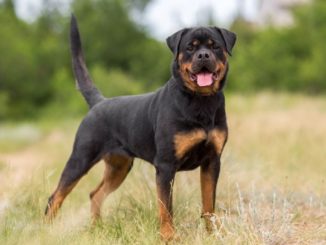
We brought a pit bull and a Rottweiler down to Martha's Vineyard
on the ferry and we had them on_leash, and everybody came up to
the pit bull and was petting her and whatnot and [saying], "What
a sweet dog." And then they're like, "What kind of dog is it?"
They had no idea.. Once they found out it was a pit bull, they
kind of shied away.
Confusion surrounding the multiple names used to refer to pit
bulls, as well as the inconsistency with which they were
accurately identified, offered respondents an opportunity to
present their dogs in a better light simply by the way in which
they referred to their breed. Many owners attempted to manage
breed stigma by studiously avoiding the term pit bull and
replacing it with a more neutral and respectable name such as
American Staffordshire Terrier. By using this term, respondents
passed their pit bull as a more idealized version of the breed.
According to one man, "I always say 'Staffordshire Terrier,' -
always; I never say 'pit bull.' I guess maybe subconsciously I
know it kind of conjures up bad feelings about the breed."
Another owner expressed similar concerns about using the name
pit bull to refer to her dog; she said, "...I'm afraid that
people will get the wrong idea and the wrong impression of [my
dog]. Because he's nothing [to be afraid of]. He's such a wimp!
He's so easygoing and laid_back."
Other respondents chose to distance their pit bulls even further
from the breed's intimidating public persona by emphasizing
their unknown or mixed heritage as shelter dogs. The notion of
passing functioned more directly in this context insofar as
owners avoided all references to the breed. Several owners
referred to their dogs as a "mixed breed," a "mutt," or a "pound
dog." One respondent found that people often identified her dog
incorrectly and she chose not to correct their misconception.
She remarked,
Most people think [my dog] is a Boxer. She's got, like, big
cheeks [and] she doesn't have that tight pit bull face at
all...So most people just think she's a Boxer mix and ask me
what she is, and I'll say, "Oh yeah, she's a Boxer mix."
Use of the term pit bull was sometimes situational and depended
on people's initial reaction to an owner's dog. For example,
some respondents deliberately avoided the term when other people
showed signs of fear around their dogs. One woman said, "I have
said to people that [my dog] is a pit bull, but only to people
that I know aren't afraid of them..." Another respondent
described a tier of related breed names that he used, depending
on the degree of apprehension that he encountered:
A lot of it depends on the people you meet...If I see people
[who are] very timid with dogs, a lot of times I'll tell them
[my dog] is an American Bulldog, because he does look a lot like
the picture of an American Bulldog...Sometimes we'll just say -
if they're really afraid of dogs - we'll say, "Oh, he's a Boxer
mix."
These respondents focused on moderating people's reactions to
their dogs by choosing the most appropriate name for each
audience. Through this approach, passing remained fluid and
context_driven. In addition to providing respondents with
greater control over the presentation of their dogs, passing
allowed them to orchestrate positive encounters. Many owners
managed breed stigma by allowing their dogs to make a good first
impression before telling others that they were pit bulls. This
approach was effective because it offered people positive,
firsthand experience with pit bulls, which directly counteracted
the expectations they might have had otherwise. Passing in this
context was achieved through delayed breed identification, as
opposed to an indefinite concealment of the dog's breed.
Don't blame the dog. A second strategy for neutralizing breed
stigma was for respondents to prevent their own pit bulls, as
well as the breed itself, from being blamed for bad behavior.
This was accomplished in several ways: they emphasized the role
of environment and training as determinants of behavior; they
pointed out similarities between pit bull behavior and that
found in other breeds; they noted that these dogs were unaware
of their own strength; and they insisted that their dogs were
unlike other, more stereotypical pit bulls.
Environment was often expressed in terms of owners' attitudes
toward, and treatment of, their dogs, with particular emphasis
placed on the importance of respect. One respondent explained,
It's like children [and] how you bring them up. If you bring
them up with no respect, bring them up with no discipline, then
they're going to respond that way...It's the same way [when] you
bring your animal up.
Another respondent stated,
...if you treat [your dogs] well, they'll treat you well. If you
abuse them, they're not going to have any respect for you, not
going to have any love for you. So what do you expect? The dog
will turn on you.
Many of these owners compared dogs to people in terms of their
response to poor treatment, noting in one case, for example: "If
you abuse a kid, if you abuse a wife, if you abuse an animal,
they're going to react." Another respondent remarked
I mean, it's like people; if you get some kid that has been
beaten all his life, he's going to go out and be aggressive
towards people. And that's how it is with [my dog] and with pits
[in general].
These comments conveyed the belief that behavior does not occur
in a vacuum; rather, pit bulls, like any other animal (including
humans), are shaped by, and react to, their environment.
Training was also emphasized, particularly in terms of its
contribution to aggressive behavior. One respondent remarked, "I
think almost any breed can be trained to be bad_aggressive."
Another respondent, describing a group of pit bull owners he had
seen in a nearby city, said, "They wanted a pit bull, they
wanted this little, vicious dog that just barks at people. You
know, they foster that and they want that. I think that's why
the dog ends up being that way."
Several respondents underscored this emphasis on training by
noting that pit bulls exhibit a particularly strong desire to
please their owners. This malleability makes training a
particularly potent tool when pit bulls fall into the wrong
hands. One respondent remarked,
I think with pit bulls, they'll turn out exactly the way you
want them [to]. If you want them to be tough and vicious and
intimidating, they will do that for you...If you want a nice
all_around dog - very athletic, smart, all that - you can get
that [too].
The assertion that pit bulls' behavior is determined largely by
their owners and their environment plays an important role in
defusing breed stigma because these dogs are often perceived as
naturally vicious. Although respondents acknowledged the unusual
strength of these dogs, they denied any malicious intent on
their part and maintained that owners could choose to channel
these physical capabilities in positive or negative directions.
The few respondents who witnessed aggressive and unwanted
behavior in their dogs targeted inbreeding as the problem; dogs
"born bad" were considered anomalies that had resulted from poor
breeding, either accidental or deliberate.
In addition, many respondents deflected blame by comparing pit
bull behavior to that of other dogs and thereby normalizing it.
For example, an owner noted that one of his pit bulls could
become possessive of her food around his other dog but said,
"...any dog is like that." According to another respondent,
My brother_in_law was telling my sister all the reasons why not
to [get a pit bull] - you know, the horror stories. Yeah, they
happen, but...any dog could be that way if you train him and
treat him that way.
One owner recalled that his dog had been "nippy" when he adopted
it as a seven_month_old; when asked if this behavior had
subsided, the respondent said, "Oh yeah, he stopped. He doesn't
do that any more. That was just puppy [behavior]." By
emphasizing that the potential for certain behavior exists in
all dogs, these owners sought to demystify pit bulls.
Respondents used this excusing tactic to discredit
breed_specific criticisms and to promote the idea that, at a
fundamental level, a dog is a dog, regardless of breed.
As another twist on the theme, don't blame the dog, some
respondents focused on their dogs' lack of awareness about their
own strength. This common refrain was voiced by one woman who
owns two pit bulls: "They don't know their own strength really."
Echoing this observation, another owner said, "[My dog] doesn't
really know her strength, I think. That's what I worry about,
because she is really strong." When owners described
interactions between children and their pit bulls, many of them
expressed the concern that their dogs could easily knock a child
over. For most respondents, the issue was not that their dogs
would behave aggressively with children but that their dogs
would unintentionally hurt or frighten a child because of the
breed's strength and excitability. A mother of two older
children offered this advice: "I don't think I would recommend
this kind of dog to anyone with young, young children because
[my pit bull] is very forceful. It's not that he's aggressive
towards them, but just in play...he's strong."
Several respondents managed breed stigma by pointing out that
their pit bull was not like other more stereotypical pit bulls.
For example, one respondent said,
[My friend] was like, "Well, I just don't like pit bulls. I
don't like Rottweilers or pit bulls." I felt upset that she said
that right in front of me with my dog. I could see if she said,
"Well, other pit bulls..."
Another woman described a situation in which she was sitting in
a doctor's office while her boyfriend waited outside with their
pit bull; when another patient came into the office and made a
disparaging remark about her dog, this owner responded in the
following manner: "I said, 'Listen lady, there's nothing wrong
with that dog.' She said, 'I've been attacked by one.' I said,
'Well, you weren't attacked by my dog.'"
In sum, respondents not only emphasized the role of environment
and training but also deflected blame from their dogs in several
ways: they sought to normalize pit bull behavior, they focused
on their dogs' lack of awareness about their own strength, and
they rejected breed stereotypes by insisting on specificity.
Each of these approaches to managing breed stigma had a similar
goal: namely, to tell others "don't blame the dog."
Many respondents debunk media coverage. As a group, respondents
had a complicated and somewhat ambivalent reaction to pit
bull_related media coverage, and many of them took an active
role in debunking press coverage and media reports. This
approach to managing breed stigma included four general
criticisms: selective reporting, sensationalism, a lack of
objectivity, and a failure to provide context.
Many owners, especially those who had been on the receiving end
of aggressive behavior from other breeds, felt that pit bulls
were unfairly over_represented in the media reports. A young
businessman who owned two pit bulls said,
It annoys me that only pit bulls are shown. I mean, there are a
lot of other dogs that attack. When I was young, I was attacked
by a collie, you know, a Lassie dog. You never hear about those
stories but...you always tend to hear the worst about pit bulls.
Echoing these sentiments, another owner remarked,
When you see an article in the newspaper and all it says is "pit
bull," the dog's [automatically] a killer. If a Cocker spaniel
attacked a kid, you wouldn't even hear about it. You never see
any bad press about...these "killer dogs."
These respondents complained that journalists were more
interested in reporting dog attacks and bites if they involved
pit bulls. There was also frequent cynicism about articles and
television reports that focused on the lurid details of pit bull
attacks. One woman quipped, "What do they say? 'If it bleeds, it
leads.'" When asked about the breed of dog that was mentioned in
a particular newspaper article, another owner said, "I think it
was a pit bull; that's what the paper said. Of course, because
that's what sells." Owners argued that media coverage was fueled
by a desire to sell papers or to attract television viewers and
that reporters were simply giving people what they wanted to
hear.
A related criticism concerned the objectivity of media coverage.
One respondent had owned an American Staffordshire Terrier who
bit another dog, prompting the dog's owner to go to a newspaper
with the story. Recalling the coverage, this respondent said,
...the paper called me and I just kind of said, "No comment,"
and hung up. And then they put that in there, [to] try and make
me look bad; you know, "He's not concerned and just said no
comment."...They made it [sound] like if [my dog] was a pit
bull, she would have killed [the other dog]. Even the animal
control officer had a quote: "If she had been a real pit bull,
she would have never let go and killed him."
As this experience illustrates, many respondents felt that
people in the media had already made up their minds about this
breed and that they reported pit bull_related incidents
accordingly.
Many respondents pointed out that aggressive behavior was often
taken out of context by the media and that important questions
about the dog's background and upbringing had not been asked.
According to one young woman, "If I read an article about [a pit
bull incident], I would ask, 'How was this dog raised? Who was
its owner? What kind of life did it have before this owner?'"
Most respondents emphasized that aggressive behavior does not
occur in a vacuum - that it is triggered by specific events that
are often overlooked or unacknowledged by the media.
It was common for owners to disagree with the tone or content of
this breed's media coverage. Given the degree of negative
attention pit bulls receive in newspapers and on television,
owners frequently managed breed stigma by debunking these media
reports and calling for a more critical interpretation.
Respondents use humor to reaffirm their perceptions. Many
respondents noticed a sharp discrepancy between the demeanor of
their own pit bulls and the reputation of the breed as a whole;
this contrast occasionally prompted jokes and humor. Although
such a response did not involve an active rebuttal of the
breed's reputation, it allowed owners to reaffirm their own
perception of pit bulls. Like any breed of dog, pit bulls have
many dimensions to their personalities, and the occasions for
this humor allowed respondents the opportunity to refute the
one_sidedness of breed stereotypes.
This humor often revolved around contrast and contradiction;
although the popular image of pit bulls points to vicious,
aggressive dogs, many owners had encountered the opposite
behavior. For example, humor often resulted from the observation
of a dog's affability and playfulness in light of the
expectation that pit bulls are tough, intimidating dogs. One
respondent joked with her husband about their two pit bulls'
night_time routine in front of the television, a routine where
it was clear that they were "family dogs" and not guard dogs or
uncontrollable animals. She remarked,
[One of our dogs] will come up and plop down next to you and put
his head on you...[Our other dog] is the same way. They just
want to cuddle up to you and be next to you.
She added, "We kind of laugh about it, [about] the stereotype. I
mean, we don't like it, but I kind of try and make a joke of it,
like 'Killer pit bull? Yeah, right!'" Another respondent joked
about the way her pit bull greeted people: "...if people come
into the house, she gets all excited and she does this cute
little bunny hop and we think, 'Oh, look at the vicious pit
bull!'"
Other things could underscore the juxtaposition between a dog's
personality and appearance, thereby providing an opportunity for
humor. For instance, humor could be prompted by the dog's
occasional habits. When asked if he ever jokes about the breed's
reputation, one owner responded, "Yeah, especially when [my dog]
does silly things, like when she's just snoring away when she's
sleeping and we're like, 'Oh, look at the aggressive pit bull!'"
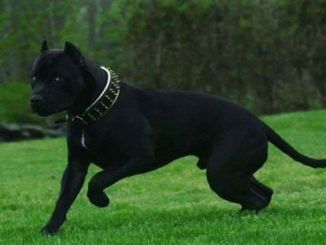
In addition to comical poses and behavior, accessories could
serve this purpose. Studded collars are often used to emphasize
the tough image of pit bulls, but one respondent remembers
laughing at the incongruity of such a collar on her brother's
dog. This pit bull had been nicknamed "Pathetic Petey" by the
family and according to the respondent, "...if it rained, he
would lie in my brother's office and moan the whole time." She
added, "Petey was the most docile dog that there possibly was."
When the family saw the studded collar, "...we would laugh and
say, 'That is so Petey, right?!'" Sometimes Petey would be
adorned with goggles and sunglasses, and the respondent
remarked, "The dog was a riot." Such accessories underscored the
contrast between this family's pit bull and the breed image
while allowing them to poke fun at the reputation. These
respondents' humor, whether prompted by the presence or absence
of particular personality traits and behaviors, emphasized
contrast and contradiction. Such humor allowed owners to
counteract breed stigma, if only among themselves, and to
emphasize the limited scope of breed stereotypes.
Looks aren't everything. Although some respondents were quick to
acknowledge various physical characteristics of the breed which
tend to exacerbate pit bull stereotypes, many owners emphasized
their pit bulls' personalities over their appearance. In other
words, this fifth stigma_managing strategy sought to demonstrate
that there is more to these dogs than meets the eye.
In comparison to smaller breeds or dogs that have long coats and
soft mouths, pit bulls look built for power. One woman noted,
"...their mouth in proportion to the rest of their head is
bigger. And they just have a very clean, sleek look about them,
as opposed to a Golden [retriever]." Another owner commented,
"[Pit bulls] are real brawny, muscular; [they have a] wide,
broad chest. They've got a big jaw...They just look mean."
Respondents such as these spoke candidly about the implications
of their dogs' strength. According to one owner, "[Pit bulls]
have physical capabilities that are different from toy poodles."
Another owner, noting that his pit bull chews through
medium_sized logs from the woodpile, stated this point more
bluntly, saying of his dog, "She does have the equipment to
cause problems."
As a way of counterbalancing the effect of this breed's
appearance and physical power, many respondents alluded to
images and stories of their pit bulls' affection, which directly
contradicted their intimidating reputation. Owners frequently
focused on displays of affection as well as the breed's
sensitivity and attunement to people. One owner described the
introduction between her pit bull and a wary friend who was
concerned about the dog because she had young children:
...She came over here and sat down...and [my dog] got up on the
couch and started kissing her and everything. And she's like,
"Oh my God; well, I guess this is okay - the dog is just going
to kiss my kids to death"!
Another owner, focusing on the contrast between his dog's
physical strength and her docile personality, explained, "[My
pit bull] is a strong, powerful dog but, you know, she'd lick
you to death."
Respondents also described specific incidents that highlighted
their dogs' sensitivity, especially toward people considered
weak and vulnerable such as the disabled, the elderly, and the
very young. For example, the wheelchair_bound mother of a
respondent's girlfriend had been very skeptical about the
couple's pit bull adoption. According to this respondent,
I brought the dog in and he lay on the floor and [my
girlfriend's] sister patted him and everything else. So finally
[my girlfriend's mother] said, "Why don't you bring him over
here." So I brought him over so that he could, you know, sniff
her and lick her and she could pat him. Well, he gradually
crawled up ever so gently and lay prone, kind of half on her and
half next to her, and licked her face, and from then on she was
won over.
In this encounter, the respondent's pit bull was not only
well_mannered and friendly but also seemed to display an
instinctive sense about how to modify his behavior to fit the
situation. Such stories emphasized the idea that appearances can
be deceiving.
For many of these respondents, their pit bulls were walking
contradictions: powerful yet gentle, rambunctious yet
restrained. In contrast to dog owners who must contend with the
ramifications of having small, adorable breeds with short fuses,
these respondents faced the challenge of owning a breed that
appears threatening but loves people. These pit bull owners
attempted to manage breed stigma by arguing that behavior, not
appearance, expressed the truth about their dogs, and their
stories underscored the contention that "looks aren't
everything."
Respondents alter physical presentation. A sixth stigma_managing
strategy was for respondents to alter the physical presentation
of their pit bulls to avoid any appearance that might
communicate the mean or aggressive image widely subscribed to in
popular culture. This approach is contrary to the tough,
intimidating image of pit bulls emphasized by various
accessories such as spiked leather collars and heavy harnesses.
As one respondent observed, pit bulls wearing this type of
equipment resemble "gladiator dogs."
Many respondents were particularly critical of young teenage pit
bull owners who used such accessories and equipment on their own
pit bulls. As one owner said,
We went to the beach...this weekend and every dog we saw was a
pit. Every dog. And all of them had those collars with the
spikes on them, and a lot of [the people there] were younger
teenage guys....You can tell that these owners have [their dogs]
just to show off, just to say, "Oh, I have a pit," and God only
knows what else they do to them.
These respondents, in turn, were careful about the choices they
made in presenting their own dogs. Referring to large, studded
collars, one man said,
I've stayed away from that, somewhat on purpose, because I
didn't want to recreate the bad image that they have. When [my
dog] was a puppy, a real small puppy, there was a collar that
had the small, spherical studs [or] beads on it. Now that she's
bigger, she'll just wear a plain collar.
Referring to this type of collar, one respondent said, " I
bought [my dog] one and I returned it; it made him look too
mean. I bought him one, I had it for a day, and I brought it
back."
Concerns about breed presentation frequently crystallized around
particular training devices and equipment. For an owner who had
to treat her pit bull for kennel cough, the use of a harness was
a necessity because she didn't want to irritate her dog's throat
further with pressure from a collar. However, this respondent
noticed how the harness affected reaction to her dog and she was
quick to return to a plain collar after treatment. Some owners
were concerned about the image projected by pinch or prong
collars and modified their usage accordingly. One respondent
explained,
We took [our dog] to training and [the instructor] suggested it
because he pulled hard at first.... At first we were like,
"We're not using those collars," because, you know, [they]
looked so scary.
This couple eventually decided to use the pinch collar with
their pit bull, but only as long as it took to train him not to
pull on the leash. Respondents also did not like to use muzzles
on their pit bulls because they reinforced fear of them. One
respondent lived in a city that required pit bulls to be muzzled
in public. He said,
I think it's going to scare them even more, seeing that the dog
has to wear a muzzle. They're going to think the dog is vicious,
mean, [that the dog] bites. [My dog] will lay down [and show
you] these sad eyes until you take it off.
Because the city's muzzle law compromised this respondent's
ability to control breed presentation, he limited the time of
his dog's public exposure by walking the dog only at night.
Although none of the respondents deliberately added accessories
to soften their dog's image, several recalled situations in
which they had unknowingly created that effect. One owner, for
instance, said,
...I bought [my dog] a coat for the wintertime because I would
walk her outside and she'd be shaking. So I got her a little
fleece coat, and the reactions I get when she's wearing her coat
are very different from the reactions that I got before I got
the coat...I would see people and they would kind of shy away
and [then] they'd be like, "Oh, she has her coat on today! Oh,
look at her in her little coat; doesn't she look nice." She was
definitely less intimidating with her coat on. I should maybe
think about getting her a summer coat!
Although this respondent did not buy the coat in order to change
her pit bull's appearance, its effect was noticeable. She, like
the respondents above, were acutely aware of how certain
physical accessories could easily reinforce an image of pit
bulls that they wanted to avoid.
Respondents use preventive measures. A seventh strategy used by
some respondents entailed managing breed stigma by modifying
their dogs' behaviors or physical capabilities. By training
their pit bulls to avoid questionable behavior, however
innocent, many respondents sought to anticipate and defuse
people's concern. Alluding to their Rottweilers, Gillespie,
Leffler, and Lerner (1996) wrote, "...we faced a definitional
problem of how to recontrive them as non_threatening, even
friendly and pleasant - safe for the people our dogs might
frighten" (p. 176). The pit bull owners in this study faced a
similar challenge, and the preventive measures they undertook
included a variety of approaches such as refusing to play
particular games, discouraging "mouthiness," training their dogs
not to jump up on people, and implementing certain protocols
around children. These preventive measures offered owners an
effective method for ensuring that people did not misinterpret
their pit bulls' behavior, given the vicious reputation
attributed to these dogs.
Although studies of pit bull anatomy have found no evidence of a
"locking jaw," this breed does have a very strong jaw and can
grip with considerable tenacity. Several respondents had a
policy of not playing tug_of_war with their dogs because they
did not want to develop this jaw strength. According to one
owner,
My friends think it's great when they get [my dog] locked onto
the rope and they're tugging with him and stuff. I really
haven't done that with him. I really don't want him to know that
[sort of game].
Avoidance of this kind of play indicated a recognition of the
breed's physical capability and a desire not to develop it
further.
Another preventive measure was to discourage mouthiness. Many
dogs, especially those who are young and untrained, exhibit this
type of behavior and owners may regard it as a harmless, if
somewhat annoying, tendency. Some respondents, on the other
hand, expressed concern about such behavior and consistently
frowned upon it because this sort of behavior could be dangerous
and prone to misinterpretation. An owner said of her two pit
bulls: "I don't allow them to mouth [people]. I mean, sometimes
they'll do it when they get excited about something, but we
discourage that big time."
Like many dogs, pit bulls are often inclined to jump up on
people when they greet them, but their muscularity and
potentially intimidating appearance can easily make such
introductions go awry. Most respondents were highly aware of the
apprehension that already exists in the minds of people who
encounter their dogs, and many expressed a desire to train their
dogs away from this tendency to jump. The issue of this breed's
jumping ability, especially when combined with an
overenthusiastic greeting, was a concern for the following
owner:
[My pit bull] is definitely a really hyper dog. She gets really
frantic around other dogs and kids; she just gets kind of worked
up into a frenzy. She never does anything aggressive towards
them but sometimes she'll jump up on them. We've been working on
with her to sort of calm down a little bit around other animals
and people.
Concern about the strength of these dogs was especially
prevalent when children were present, and most respondents were
very attentive to the possibility that their dogs could knock a
child over accidentally. In response to this heightened concern,
some respondents took special care to present their dogs in a
mild, unthreatening manner when they were around children. For
several owners, this meant having their pit bulls sit before
they were allowed to interact with children, especially if the
children were unfamiliar. One young woman explained what she
does if kids want to pet her dog: "I get him sitting and then
I'm like, 'This is what you do,' trying to teach these kids not
to go right at [the dog] with their hands." In addition to
presenting her pit bull in a positive manner, this owner used
her dog to educate children about safe behavior around animals
in general:
[Kids ask], "Does he bite"? And my answer is, "He has teeth."
And they're like, "I don't get it," and I'm like, "Listen, if he
wants to bite, he'll bite." I'm like, "He's never bitten
anybody. I don't know if he'll bite somebody, but with an animal
whom you don't know, just use caution."
In this situation, education also served as a preventive
measure; by teaching children appropriate behavior around dogs,
respondents such as this woman anticipated future interactions
between children and their pit bulls and attempted to ensure a
positive outcome. Another respondent felt compelled to remove
her pit bull from social gatherings if children were involved.
She trusted her dog to be well_behaved around children, but she
also felt responsible for the concern that was expressed by
parents and other adults. Although this respondent trusted her
dog, there was a sense that special scrutiny would be given to
behavior and that no situation was foolproof. By separating her
dog from young visitors, she removed any cause for concern.
Respondents undertook a variety of preventive measures ranging
from modified play and an intolerance of mouthiness and jumping
to carefully planned interactions between pit bulls and children
in order to manage breed stigma. This approach distinguished
itself from most other strategies in that it was based on the
anticipation of breed_related stigma in future encounters. These
preventive measures were not excusing tactics so much as they
were precautionary tactics. Undertaken by respondents in the
absence of direct accusations about their pit bulls, such
preventive measures allowed owners to respond proactively and
with a sense of agency to breed stigma.
Respondents use advocacy and ambassadorship. One of the most
public and visible ways in which respondents managed breed
stigma was to become an advocate or ambassador for pit bulls.
These owners defined their responsibility in terms of the breed
as a whole, and they sought to present these dogs - often
through the example of their own pit bulls - as friendly,
well_behaved pets. This approach involved rebutting stereotypes
and misconceptions as well as promoting the breed's winning
qualities. Owners often encouraged their pit bulls to act as
their own ambassadors by showcasing the dogs' friendly, outgoing
personalities. In addition, some respondents filled the role of
advocate/ambassador by serving as models of responsible dog
ownership.
A major facet of advocacy and ambassadorship was to rebut
negative comments and promote the breed. Some advocates made
strong, proactive rebuttals. In one case, an owner described his
reaction to family members who brought up breed stereotypes as
follows:
...there's some [people] in our family that have said, "Oh,
their brain will swell up and they'll bite you!" And I [have]
said, "Go read something before you come out with that stuff to
me! Don't sit there and give me some rumors that...their jaws
lock. They don't lock; they don't ratchet shut. Don't tell me
this stuff. Go read facts before you bother me with this." And
that normally shuts them up.
Other respondents took a more low_key approach, such as an owner
who explained,
I don't get into shouting matches. Everybody has their
beliefs....I'll just say "You know, maybe you should look into
it a little bit more," or, "I know quite a few pits that are
really good; [my dog] happens to be one of them."
For this respondent, her personal experience with pit bulls
provided a solid basis for suggesting that others reevaluate
their opinions of the breed, but she was more circumspect in her
defense.
Advocacy and ambassadorship also entailed promoting the breed
and emphasizing its best traits. For example, one woman said, "I
always defend them....I always say, 'No, [my pit bull] is a
great dog.' You know, I definitely play up his assets." One of
the goals which lay behind promotion of the breed was a desire
to educate others, often through descriptions of personal
experience with pit bulls. According to one respondent,
...I'll try and educate people, as to at least my experiences
with pit bulls....I give them the instances of how great they
are with kids and, you know, I've had pictures with my other pit
bull laying on top of three children and just getting his tummy
rubbed. I'll tell them all the positive stuff....If you bring
these dogs up in a loving environment, I think they're fantastic
and I don't hesitate to tell people that.
Given the reputation that pit bulls have for endangering
children, this approach offered direct evidence to the contrary,
and this type of promotional effort gained credibility through
its reliance on first_hand experience.
In building support for this breed, many respondents felt that
the dogs themselves were the best ambassadors. One woman stated,
"In the right hands, [pit bulls] are the best ambassadors for
the breed." Referring to his stepmother's reluctance to visit
because of his pit bull, another respondent noted, "I'd give her
two minutes with the dog and she'd be won over just like
everybody else." A third owner expressed a similar degree of
confidence in her dog's ability to overcome people's
preconceived ideas about the breed: "If [people] say something
[negative] about the dog, I tell them - if I have my dog with me
- I basically say, 'My dog speaks for herself.'"
The personalities of these pit bulls made a particularly notable
impact by subverting public expectations about the breed. In
contrast to the popular image of pit bulls as fierce, predatory
dogs, one owner said, "[My dog] will run up and greet just about
anybody. He's pretty happy. He's got his tail going all the
time." Another respondent noted that her pit bull puts her tail
between her legs and rolls over on her back when she encounters
other dogs. This submissiveness and docility fly in the face of
breed stereotypes; according to the respondent, "She breaks
every stereotype." The degree to which this type of behavior
could overcome public fears was illustrated by an owner who
remarked, "People will cross the street in order to see [my
dog]...If she wants you to come over, she looks at you like,
'I'll kiss you; come on, come on!' She invites [the attention]."
This respondent surmised, only half jokingly, that her dog had
"some kind of magnetic charm."
Finally, several respondents served as advocates for pit bulls
by acting as role models. For one of these owners, being a role
model meant having a well_behaved and obedient dog. After
adopting his dog, the respondent had taken her to puppy
kindergarten, followed by a course in basic obedience. He
planned to continue her training with a class in advanced basic
obedience and eventually to certify her as a "Canine Good
Citizen." One woman said:
You've got to work harder. You are being scrutinized and watched
every minute of the day. You had better carry poop bags when you
are out for a walk, because you'll be crucified for that one
thing and that one thing alone...You just have to work harder,
you're more visible...
Advocacy and ambassadorship, then, served as the final way for
respondents to manage pit bull stigma. They did so by rebutting
negative comments about the breed and by actively promoting pit
bulls, often through the charismatic personalities of their own
dogs. As an extension of this advocacy, several owners assumed
the responsibility of serving as role models, either
individually or in partnership with their dogs.
Discussion
Although pet ownership is often cast as benign and unstressful,
many pit_bull owners we studied experienced some aspects of
their animal relationship as stigmatizing and relied on a number
of interactional strategies to lessen the impact of this stigma
or prevent it from occurring. The vast majority of respondents
relied on one or more of the following strategies with their
dogs: passing them as a breed other than pit bull, denying that
their behavior is biologically predetermined, debunking adverse
media coverage, using humor, emphasizing counter_stereotypical
behavior, avoiding stereotypical equipment or accessories,
taking preventive measures, or becoming breed ambassadors.
From the respondents' point of view, these strategies developed
as an essential part of the relationships they had with their
dogs and the people around them. At least with outlaw breeds
like pit bulls, the human_dog relationship is sociologically
more complicated and interesting than previously thought. Prior
research on the nature and management of stigma has been
anthropocentric, focusing only on how humans experience and cope
with blemishes in their individual or group identities. Our work
suggests that nonhuman animals also can be stigmatized, although
they will not have a conscious awareness of this perception.
However, as part of a human_animal team, their owners can
experience the taintedness that is commensurate with
stigmatization and resort to various techniques to mitigate,
prevent, or improve such adverse perceptions. Apparently, the
dramaturgical nature of symbolic interaction extends across the
species divide.
Although the vast majority of our respondents used various
stigma_reducing strategies, a few did not, choosing to
relinquish their pit bulls and exit the role of dog owner. Two
of the 28 respondents returned their pit bulls to the shelter,
and a third considered it and was still undecided. In two cases,
negative experiences with their dogs added credibility to the
poor reputation; for the third, negative comments from others
lead her to question what the dog would become. The level of
disapproval, often reinforced by bad behavior of the dog, made
it particularly difficult to mange breed_related stigma. The two
respondents who returned their dogs expressed frustration that
the adoption process had not focused more specifically on
breed_related issues. One left the shelter without realizing she
had adopted a pit bull since she did not associate the name
American Staffordshire Terrier with pit bull. In the other case,
family reaction was pronounced. For the respondent who kept her
dog: In the two months since adoption, the dog had attacked
several other dogs, and these incidents raised questions about
the uncertainty of the dog's disposition. Even though the dog
had not attacked people, this experience led the adopter to
question when that line would be crossed.
Lastly, our findings are important because breed_related stigma
is likely to affect the success of companion animal ownership.
Shelters naturally seek to avoid adoptions that lead to
unsuccessful relationships. Understanding breed stigma and the
various ways that owners manage it can be useful for shelters or
other adoption agencies working to place pit bull dogs. Adopters
and new owners can be counseled to help them cope with problems
that may arise with pit bulls. Potential adopters can be engaged
in a meaningful discussion about the ways in which breed stigma
can affect the experience of dog ownership, in the hope that
such a discussion will better prepare them as pit bull owners.
References
Arluke, A. (1991). Going into the closet with science:
Information control among animal experimenters. Journal of
Contemporary Ethnography, 20, 306_330.
Cantwell, M. (1992). The racing greyhound as a team
presentation. Paper presented at the American Sociological
Association, Miami, FL.
Gillespie, D. Leffler, A., & Lerner, E. (1996). Safe in unsafe
places: Leisure, passionate avocations, and the problematizing
of everyday public life. Society and Animals, 4, 169_188.
Goffman, E. (1959). The Presentation of Self in Everyday Life.
Garden City, NY: Doubleday.
Goffman, E. (1963). Stigma. Englewood Cliffs, NJ: Prentice Hall.
Hearne, V. (1991). Bandit: Dossier of a dangerous dog. New York:
Harper Collins Publishers.
Jessup, D. (1995). The working pit bull. Neptune City, NJ: TFH
Publications, Inc.
Sanders, C. R. (1990). Excusing tactics: Social responses to the
public misbehavior of companion animals. Anthrozoös, 4, 82_90.
Schneider, J. & Conrad, P. (1980). In the closet with illness:
Epilepsy, stigma potential and information control. Social
Problems, 28, 32_44.
Serpell, J. (1995). The domestic dog: Its evolution, behaviour,
and interactions with people. UK: Cambridge University Press.
Sigelman, C., Howell, J., Cornell, D., Cutright, J., & Dewey, J.
(1991). Courtesy stigma: The social implication of associating
with a gay person. Journal of Psychology, 13, 45_56.
"The Most Dangerous in America." (1987). U.S. News and World
Report.
Turner, J. H. (1998). The structure of sociological theory.
Belmont, CA: Wadsworth Publishing Company.
Note
1 Correspondence should be sent to Arnold Arluke, Department of
Sociology, Northeastern University, 360 Huntington Avenue,
Boston, MA 02115.
For Abstracts of all issues, including the most current, click
Article
Abstracts
To order Society &
Animals Journal, go to our secure online
ordering page
You
can Search the online issues of Society & Animals, as well
as the entire Society & Animals Forum (formerly PSYETA)
website,
for topics and keywords of your interest:
|