
|
Childhood
Socialization and Companion Animals: United States, 1820-1870
Katherine C.
Grier [1]
University of South Carolina
Between 1820 and 1870, middle-class
Americans became convinced of the role nonhuman animals could
play in socializing children. Companion animals in and around
the household were the medium for training children into
self-consciousness about, and abhorrence of, causing pain to
other creatures including, ultimately, other people. In an age
where the formation of character was perceived as an act of
conscious choice and self-control, middle-class Americans
understood cruelty to animals as a problem both of individual or
familial deficiency and of good and evil. Training children to
be self-conscious about kindness became an important task of
parenting. Domestic advisors also argued that learning kindness
was critical for boys who were developmentally prone to cruelty
and whose youthful cruelty had implications both for the future
of family life and for the body politic. The practice of pet
keeping, where children became stewards of companion animals who
were then able to teach young humans such virtues as gratitude
and fidelity, became a socially meaningful
Between 1820 and 1870, middle-class Americans became convinced
of the role non- human animals could play in socializing
children into the virtues of kindness and sympathy. This opinion
reflected changing ideas about child rearing. It was part of a
new domestic ethic of kindness to animals that grew out of the
flourishing culture of professionals, white-collar workers, and
independent proprietors and their families in cities and towns.
This may be called, to be concise, “Victorian” culture in
America (Howe 1976). Because of its preoccupation with the
meanings of family life, the domestic ethic of kindness focused
especially on the implications of kind or cruel treatment of
animals within that context. Animals in and around the household
were the medium for training children into self-consciousness
about, and abhorrence of, causing pain to other creatures
including, ultimately, other people. In an age where the
formation of character was perceived as an act of conscious
choice and self-control, cruelty to animals was understood as a
problem both of individual or familial deficiency and of good
and evil. The ideologists of kindness also argued that childhood
cruelty to animals had to be understood fundamentally in
gendered terms as a problem of raising boys and that failing to
raise boys into kindness had worrisome consequences for families
as well as for the body politic. Socializing children to be kind
to animals thus became an important task of middle-class
parenting. Pet keeping, an activity long interpreted and
tolerated as a personal indulgence, was transformed into a
morally purposive act.
An Old Argument Recast
The arguments for kindness and understanding of the meanings of
cruelty that will be outlined in this paper became part of the
cultural “common sense” of middle-class Americans. In 1820, the
most fundamental premise of these arguments, that cruelty to
animals predicted cruelty to humans, was already an old
argument. It was recast, however, in light of middle-class
culture’s special concerns, particularly a preoccupation with
controlling an apparent masculine propensity for violence.
Victorian commentators also incorporated traditional wisdom into
the domestic ethic of kindness, reviving the ancient argument
that animals in and around the household were moral exemplars,
even tutors. Thus, household pets became individuals and actors.
To a culture that placed special emphasis on feeling—not only
distaste for pain but also the ability to love—the faithful dog,
the maternal cat, and the bird family all made the emotional
structures of the middle-class family perfectly natural. At the
same time, this correspondence could be interpreted to mean that
such feeling creatures, precisely because of their moral and
emotional capacities, were also worthy of particular kindness
and care.
By mid-century, the typical apparatus for socializing
middle-class children into kindness was parental discipline,
perhaps augmented by the formal moral education of Sunday
schools and amplified by doses of didactic children’s
literature. The latter was part of a dramatic expansion in
popular, printed media that helped make the new conversation
about animal treatment more influential than any previous
discourse on the subject. Arguments in favor of kindness now
appeared in magazines, domestic advice books, child rearing
literature, poetry, and fiction. The arguments appeared as
advice for children in books and periodicals such as Youth’s
Companion and even in the imagery of Sunday School lesson prints
and picture books. Some of the era’s best-known authors—Hale,
the influential editor of Godey’s Lady’s Book, and the advice
and fiction writers Sigourney, Child, and Stowe—as well as many
lesser lights produced a steady stream of missives pressing
kindness for both children and adults. These sources provide an
important means of reconstructing the outlines of the argument
about childhood socialization and animals.[2]
Victorian Culture in the United States -- the “Eden of Home
Before turning to the linkage between childhood socialization
and pet keeping in more detail, a brief overview of the features
of Victorian culture in the United States that more broadly
underpinned changes in popular attitudes about animal treatment
will be helpful. In the first three decades of the nineteenth
century, economic and cultural change together fostered what has
been called a “coherent and remarkably vibrant” American middle
class (Carnes, 1993, p. 608). The development of national
markets and the increasingly complex and competitive world of
business encouraged the growth in numbers of independent
proprietors and white-collar workers—from lawyers to bankers and
clerks—whose households were no longer shaped by the traditional
family-based economy of pre-industrial agricultural life. As
these men enacted their economic lives outside their households,
the roles of their wives also evolved—from mistresses of a unit
of economic production to mistresses of a new kind of symbolic
production. In their new roles, the wives created the style of
living for the family and cultivated properly socialized
children who would grow up to succeed in this changed world.
Alternative to Calvinism
Middle-class people in the northeastern United States, where the
new culture first became a social force to be reckoned with,
tended to embrace a recently articulated form of evangelical
Protestantism. Presented as an alternative to orthodox
Calvinism, the form, arguing for the importance of emotion over
complex theology as the wellspring of faith, had been successful
in attracting new adherents (Johnson, 1978).[3] It also
encouraged belief in the efficacy of the individual will and in
the possibilities of individual and social progress toward
perfection, whether in firsthand encounters with the Lord in
revival, in the social world outside the church, or in the
increasingly private realm of the individual household. Wherever
it happened, however, this progress demanded the discipline of
personal self-control.
An Argument Adapted
Commentators such as Beecher, America’s most prominent
evangelical preacher of the mid-nineteenth century, repeatedly
stressed that human beings were subject to “passions” of all
kinds. Varied stimuli, carefully differentiated from heartfelt
emotion, prompted these passions: alcohol, gambling, romance
novel-reading, and “amusements which violently inflame and
gratify [men’s] appetites.” The passionate man was dangerous not
only to himself but also to other innocent beings, often
manifesting passions as violence toward dependent others. This
argument, adapted from eighteenth century moral philosophy, was
quickly extended to encompass both biped and quadruped
sufferers. As we will see, evangelical publications for children
found the lives and sufferings of animals at the hands of
uncontrolled humans especially useful for lessons on practicing
the self-discipline of true Christian love and sympathy.
Domesticity as a Cultural Construct
Kindness to animals also became an integral part of the ideal
labeled by one minister, the “Eden of Home,” a metaphor that for
some authors explicitly encompassed idyllic relations with
animals.[5] This introduces the next factor shaping new
attitudes toward kindness, the powerful cultural construct that
historians now label “domesticity.” Domesticity made the
individual household the primary medium for creating the
self-disciplined adults who could live the theology of liberal
Protestantism. At the same time, domesticity made the household
a refuge from the increasingly separate and competitive
masculine world of economic competition and a model of the world
as it should be, where the threat of naked power was supplanted
by moral influence and feminine love (Cott, 1977; Epstein,
1981).
Mothers Shaping Power
While patriarchal families in the eighteenth century had
deferred to fathers for childhood correction, mothers in the new
kinds of households now bore the principal responsibility for
socialization: They were present to study their children
constantly and closely and knew better how to influence young
minds. Along with the greater responsibility for child rearing,
the conventions of domesticity intimated that, as each woman
presided over her “state in miniature,” her conventional
feminine attributes—a more feeling nature, gentleness, and the
capacity for deep maternal devotion—shaped the particular kind
of power she wielded. Her tender feelings and influence in the
“softening, sanctifying environments of home” were meant to
guide family members gently toward the good.[6]
A “Banknote World” and the Other
Although real life was considerably more complex then the
conventions suggested, domesticity organized the world
conceptually—by splitting it into two domains that both opposed
and paralleled each other. One was rational and hard,
commercial, public, and masculine—a “bank-note world” that made
no place for ties of the heart (Cott, 1977, p. 68). The other
was bound by pleasures and responsibilities of home. That other
world was beyond commerce, private, and decidedly feminine. A
psychological as well as physical sanctuary, its occupants were
connected first by their love for one another. Domesticity also
drew on the new theology connecting Heavenly order and Earthly
social order through the family. The moral progress of each
household was causally linked to a good society. “Home
Interests,” an essay that appeared in Youth’s Penny Gazette, a
weekly paper published by the American Sunday-School Union,
described this equation concisely for young readers:
Our home is a little world. The most important laws of society
are as operative in the family as in the town, state, or
kingdom. There is authority conferred by God himself upon the
parents. There is dependence—the weak upon the strong, and the
ignorant upon the wise. There is a little theatre on which all
the charities and graces of social life may be beautifully and
harmoniously displayed. Hence it is, that one who is known to
have been a good father, son, or brother, is relied upon as a
good citizen also.[7]
This formulation also makes clear the important point that
domesticity did not reject divinely ordained hierarchical
relations within families, the operative assumption undergirding
family order in patriarchal households of the eighteenth
century. A rhetoric of service and duty, however, now softened
them. Kindly human stewardship of companion animals at home
metaphorically represented the relation of a loving God to
humankind. In addition, a kindly stewardship stood, in the
socialization of children, for the ideal relations of parents to
their children and of men to their families and other social
dependents.[8]
Dovetailing Three Cultural Factors
The middle-class theology of feeling and self-discipline and the
cultural ideal of domesticity also dovetailed nicely with a
broadly secular ideal, gentility. This was the standard of
personal excellence that Anglo-American elites fostered during
the eighteenth century and that continued to define “good
society” through most of the nineteenth (Bushman, 1992).
Gentility also affiliated individual self-control and softened
feelings in its own taxonomy of experience.
Advocates of kindness argued that improved treatment of animals
was evidence of genteel benevolence, the disinterested desire to
promote the happiness of others that originated in the
undamaged, natural, human “moral sense” but that required
appropriate cultivation. Inexpensive manners’ books, published
in large numbers throughout the nineteenth century, continued to
offer an eighteenth century formula for the “amiable character”
that connected “benevolence” with “true delicacy,”—the general
impulse to do good with the sensitivity that allowed a genteel
person to enter into the feelings of others. The anonymous
author of A Manual of Politeness (1837) explained that the best
sensibility had “a quick sense of what may give pleasure or
pain, and teaches us to pursue the one and avoid the other, and
a refined understanding points out the surest means of doing
this in different circumstances.”[9]
Creating a Framework
These three cultural factors—liberal Protestantism, domesticity,
and gentility—together created a powerful and long-lived
framework for reconsidering animal-human interactions. Kindness
to other sentient beings became a manifestation of the softened
feelings that respectable people valued on multiple counts and
thus became a marker of middle-class identity. For the rest of
the nineteenth century, the underlying premises of arguments on
behalf of animals—claims that guided the creation of the humane
education movement—were still based on those wielded by the
antebellum commentators whose words appear throughout this
essay. The genealogy of their argument for kindness originated
in England, dating from the seventeenth and
eighteenth-centuries; this history has been recounted in detail
elsewhere. It seems clear, however, that these popular U.S.
commentators had only a fragmentary awareness of their long, if
attenuated, history as they cobbled together fragments of
Biblical verse, romantic poetry, and philosophy to support a
case that they felt deeply (Thomas, 1983).[10]
Learning the “Law of Human Kindness”
A central tenet of liberal advice literature published for
parents in the first half of the nineteenth century was the
gradual growth of infants into independent moral agency. Authors
informed their readers that infants had “natural feelings of
kindness,” lacking only the experience and discipline parents
could provide.[11] This view of children as innocent,
good-hearted beings was part of a profound change in American
attitudes toward child rearing, a change first rung in with the
publication in 1693 of Locke’s Some Thoughts Concerning
Education. Locke’s assumptions were not embraced by many
American parents until more than a century later (Calvert,
1992). By the 1840s, Bushnell, author of the popular text Views
of Christian Nurture, and other ministers who believed in the
“natural pravity of man” informed parents that their “aim,
effort, and expectation” should be that their children were born
“ as one that is spiritually renewed...seeming, rather, to have
loved what is good from his earliest years.”[12]
But how were young children, confined to such a small sphere of
action in the world, to learn the “law of human kindness” that
inevitably led to general benevolence? Inside the little Eden of
the middle-class household, animals played a special role.
Sigourney’s popular advice manual, Letters to Mothers (1838),
addressed the question of kindness to animals as one of the
three fundamental lessons of the “moral code of infancy” that
laid the “foundation for a future superstructure of virtue” so
necessary for the formation of character. After the lesson of
obedience to parents, she suggested, the next lesson for
children was “kindness to all around.” The rudiments are best
taught by the treatment of animals:
If [a child] seizes a kitten by the back, or pulls its hair,
show immediately by your own example, how it may be held
properly, and soothed into confidence. Draw back the little
hand, lifted to strike the dog. Perhaps it may not understand
that it thus inflicts pain. But be strenuous in confirming the
opposite habit. Do not permit it to kill flies, or to trouble
harmless insects. Check the first buddings of those Domitian
tastes. Instruct it that the gift of life, to the poor beetle,
or the crawling worm, is from the Great Father above, and not
lightly to be trodden out.[13]
Parental Exemplars on the Alert
Fostering the habit of kindness also required adult exemplars.
Children learned best by seeing and imitating others, so parents
now had to be newly self-conscious of their own everyday
relations with animals. Discussing his approach to incorporating
moral lessons into children’s lives by “the influence of
example” rather than by “exhortation and instruction,” Abbott,
author of the enormously popular “Rollo” stories for children,
chose a single example, parental treatment of songbirds (one of
the iconic animals in discussions of kindness):
If a boy hears his father speaking kindly to a robin in the
spring—welcoming its coming and offering it food—there arises at
once in his own mind, a feeling of kindness toward the bird and
toward all animal creation, which is produced by a sort of
sympathetic action, a power somewhat similar to what in physical
philosophy is called induction. On the other hand, if the
father, instead of feeding the bird, goes eagerly for a gun, in
order that he may shoot it, the boy will sympathize with that
desire, and...there will be gradually formed within him...a
disposition to kill and destroy all helpless beings that come
within his power. There is no need of any formal instruction in
either case.[14]
Assuming that the parents’ behavior toward animals was
exemplary, child-rearing literature still insisted that it was
important for middle-class parents to be alert to any childhood
behavior that caused pain to other sentient creatures. Because
of the direct connection between the moral climate of the
individual household and that of the larger community, how
children treated animals predicted how, as adults, they would
treat other human beings. The cruel child begat an even worse
adult. This argument that cruelty to animals was a prelude to
cruel treatment of other humans—what sociologist Arluke and his
collaborators have called the “violence graduation
hypothesis”—was not new (Arluke, Levin, Luke, & Ascione, 1998;
Lockwood & Ascione, 1998). As Thomas (1983) and Serpell (1996)
have pointed out, Aquinas (1225-1274), no lover of animals,
explained the presence of biblical injunctions against cruelty
by arguing that their purpose was “for removing a man’s mind
from exercising cruelty towards other men, lest anyone, from
exercising cruelty upon brutes, should go on hence to human
beings....”(Thomas; Serpell).
Picking up the Theme
It appeared again in late seventeenth- and eighteenth-century
arguments about the effects of experience upon the development
of what was believed to be an innate human moral sense. The
formula that childhood cruelty to animals portends even worse
behavior in adulthood was given its strongest presentation when,
in 1750and 1751, Hogarth published his famous series of
engravings, “The Four Stages of Cruelty” (Turner, 1980; Paulson,
1996).[15] By the end of the eighteenth century, a new genre of
children’s literature picked up the theme. Salzmann’s Elements
of Morality for the Use of Children (1782), translated into
English by Wollstonecraft and in circulation in America by 1800,
used a variation on the same formula. In Chapter XXXII, James, a
young boy, is scolded by his father for proposing to punish a
mouse as a “little thief” by cutting off the mouse’s ears and
tail, parroting earlier punishments for human criminals. Mr.
Jones shames him as a “cruel boy” and warns, “He who can torment
a harmless animal...accustoms himself by degrees to cruelty, and
at last he will find a savage joy in it: and after tormenting
animals, will not fail to torment men.”[16]
Embracing Even the Lowly Insect
American advice authors of the first half of the nineteenth
century both shared and popularized their predecessors’ concerns
about the hardening effects of childhood cruelty, and they took
particular pains to embrace all animals, no matter how lowly.
Take, for example, their critique of what Muzzy and others,
seconding Sigourney, called the “wanton sport of torturing poor
insects.”[17] This was an activity that probably seemed harmless
enough to harried housekeepers who spent considerable time and
effort ridding themselves, their children, and their furnishings
and food of swarms of such pests in the days before modern bug
sprays or even window screens. Yet Sigourney quoted Cowper, a
favorite source for many advocates of the domestic ethic of
kindness: “I would not have for my friend...one who carelessly
sets foot upon a worm,” Sigourney warned the young audience of
her Boy’s Book (1845):
If I see even a young child pull off the wings of an insect, or
take pains to set his foot upon a worm, I know that he has not
been well-instructed, or else there is something wrong and
wicked in his heart.[18]
This rhetoric seems so hyperbolic that it could hardly have
reflected actual behavior on the part of parents. Yet when
Caroline Cowles, age 14, took a walk through downtown
Canandaigua, New York, with her grandfather (her guardian
following the death of her mother) on a fine day in April 1856,
she received an impromptu lesson on kindness to animals along
exactly these lines. She recorded in her diary that it was,
such a beautiful day I felt glad that I was alive….The air was
full of tiny little flies, buzzing around and going in circles
and semi-circles as though they were practicing calisthenics or
dancing a quadrille. I think they were glad they were alive,
too. I stepped on a big bug crawling on the walk and Grandfather
said I ought to have brushed it aside instead of killing it. I
asked him why and he said, “Shakespeare says, ‘The beetle that
we tread upon feels a pang as great as when a giant dies.’”[19]
Thus, Cowles’ diary entry recounts an apparently common
phenomenon—a middle-class child in Victorian America being
brought to consciousness of the feelings of another creature and
encouraged to be kind. It wasn’t easy to always think of others,
human or nonhuman. Even as she attributed the human emotion of
gladness to the insects she observed in flight and humanized
them by comparing their flight to a dance or a drill, the girl
deliberately killed one in her path. Her grandfather’s
admonition (cribbed from Measure for Measure) did not chide her
for childish “wickedness” but urged her to think empathetically
of the suffering of another creature. That the source of the
lesson was only a “big bug” suggested that learning the proper
attitudes toward other sentient beings and adhering to them in
daily life required a high degree of self-awareness and
self-control.[20]
Cowles’ grandfather was not the only adult who took this formula
to heart. Clemens, a mother who followed the reformed
childbearing practices in which she seems to have been raised,
still applied it in the 1880s when she would only allow her
youngest daughter, Jean, to create an insect collection with
specimens the child found already dead. (This approach lacked a
certain charm, and Jean soon fed her “collection” to one of the
family cats.)[21]
The “Habit of Cruelty”
Treatment of insects and other “lower animals” became important
precisely because that treatment seemed so trifling (authors
also singled out frogs, minnows, toads, and snakes as innocent
victims of cruelty). It could easily become a “habit of
cruelty.” That so thoughtless and small an act led to a more
dangerous habit drew on the debate about passions that also
underlay antebellum reform efforts against both public and
private corporal punishment. The debate peaked between the 1820s
and 1850s in widespread public criticism and in the final
abolition of public execution. Critics argued that the repeated
sight of suffering hardened and debased both the actors and
onlookers who, unable to intervene, experienced a weakening of
natural sympathy. Even worse, despite the presence of a moral
sense, taking pleasure in violence was still a latent human
passion that quickly became an addiction, demanding more and
more cruelty to satisfy itself. Beecher argued that, addicted to
the “intense thrill” of “short-lived excitement,” the cruelist,
…torments for the same reason that a girl reads her tear-bedewed
romance, or an inebriate drinks his rum....actual moans, and
shrieks, and the writhing of utter agony, just suffice to excite
his worn-out sense, and inspire, probably, less emotion than
ordinary men have in listening to a tragedy or reading a bloody
novel.[22]
Clearly, sparing children corporal punishment at home and
intervening against their own small acts of physical violence
was vitally important (Halttunen, 1995; Rothman, 1971; Glenn,
1984). Alcott worried his feminine readers with the admonition
that “all the larger cruelties of mankind have their origins in
the cruelties of infancy and youth.” But, he assured them, “over
all these cruelties, you and your sex...have very large
control.”[23] The assurance was a relief because boyhood cruelty
not only portended the private tyranny of domestic violence but
also had worrisome implications for the future of the American
republic. Sigourney noted that although she was not certain when
early childhood lessons of kindness were actually absorbed,
intervention during “infancy” (defined in those days as before
the age of six or seven) was essential, citing American history
as evidence:
Those baleful dispositions, which desolate human happiness, are
often early developed. It was Benedict Arnold, the traitor, who
in his boyhood loved to destroy insects, to mutilate toads, to
steal the eggs of the mourning bird, and torture quiet, domestic
animals, who eventually laid waste the shrinking domestic
charities, and would have drained the life-blood of his
endangered country.[24]
Thoughtless Boys
If children were not naturally cruel—if, in fact, they had
natural feelings of kindness—how could the abuse they apparently
heaped upon the animals in their paths be explained? Since
children were not evil, child-rearing advice and didactic
children’s books were compelled to see the actions of young
masters as “thoughtless”—at least the first time something bad
happened.
Master Henry’s Rabbit, a small paper-cover children’s book (c.
1840), discussed the problem of thoughtlessness and its cure for
young readers. Henry, a boy of seven or eight, is allowed by his
uncle, Mr. Dalben, to adopt a rabbit that has been injured by
some village boys and their dog. The uncle consents with the
condition that Henry have sole responsibility for the rabbit.
(Because he is kind, he also asks a servant to be certain that
the rabbit “did not want anything necessary to its comfort”—just
in case). For a time, Henry cares for the rabbit, but his new
kite soon diverts his attention and he forgets to feed his pet,
even after being reminded. His uncle finally punishes him: “You
are greatly to blame, Henry,” says the uncle.
You would have done better, to have destroyed the little
creature at once when you found it in the warren, than to keep
it to perish with hunger. Go, careless boy, feed your poor
rabbit now; and, in order that you may be able to feel for the
poor animal another time, I shall deprive you of your dinner
today.
The punishment meted out by Henry’s uncle was intended to foster
empathy—in this case through a similar experience of relatively
harmless pain—and to encourage self-regulation through
self-examination. Young Henry “humbled himself before God for
this sin, and prayed earnestly for a better heart.” [25]
Fictional Stories in Children’s Periodicals
Stories of cruelty to animals, guilt at the realization of pain
suffered, repentance, and the “lesson of mercy” learned filled
children’s periodicals too. Often repentance came only after the
death of an innocent creature. Forcing a woodchuck to swim until
he drowned, two little boys remembered how,
…he had approached them as though he considered them friends,
but they proved to be his murderers. And then his image was
before them, as he lay motionless on the bank, now and then
looking at them with an expression which seemed to denote
nothing but forgiveness.[26]
At least Stowe’s 1858 children’s story, A Talk about Birds, let
the victims live, but Stowe used similar assumptions in
describing a mother’s discussion with her young son when she
catches him trying to stone both song birds and the neighborhood
cats. Rather than paddling the miscreant, she “set out to make
him think about his acts” by describing the “beautiful
contrivances” of the body of Cherry, his pet canary. Her success
was measured by the boy’s statement that “it is a great deal
worse to kill little birds than it is to break looking glasses,
and such things, because little birds can feel you know.”[27]
Girls Portrayed as Sympathetic —Mostly
These fictional examples have featured little boys. Relatively
few tales in this genre had girls as their principal
protagonists.[28] Youth’s Penny Gazette did publish one story
about a thoughtless girl and her neglected canary, worth noting
because it is so hair-raising. In “Fanny’s Canary Bird” the
little girl neglects her pet despite the explicit warning of her
father; as punishment, the disobedient child is sent away to
school where she catches fever, and dies).[29] Foreshadowing
their adult roles, little girls were usually the untutored
voices of sympathy and conscience.[30] The narrator of “My
Bird,” for example, mourned that her canary could not “stretch
his weary wing” but realized that “the wind and snow/Would kill
my bonny bird,” and ended her poem with a promise:
By the first good ship across the main,
We’ll send him to Canary;
And we’ll never keep a bird again—
Say—will you, sister Mary?[31]
Problematic Play
Although discouraging boys from tormenting stray cats and dogs
and squashing defenseless toads was praiseworthy, the discourse
of middle-class kindness also made problematic some of the most
common, if not always most admirable, forms of play by boys of
all social classes in nineteenth century America. Young boys
spent more time outdoors than their modern counterparts, and
hunting and trapping small wild animals provided outlets for
youthful energies in both town and country. Phelps (1865-1943),
the son of a Connecticut minister, recalled that he “delighted
in shooting and killing birds, any bird, edible or otherwise,”
especially after he received his first double-barreled shotgun
at the age of twelve:
I was not cruel by nature, and could not bear to see any animal
ill-treated or in pain. Yet, when I was too small to own a gun,
I would get up at dawn, armed with David’s implement, and try to
kill robins and bluebirds. On the rare occasions when I
succeeded, I felt thrills of joy, unshaded by regret.
Prescriptive accounts of songbird killing attribute no motives
to juvenile minds other than thoughtlessness or cruelty, but
Phelps interpreted his own motive as a primitive desire to
possess the animal:
Not only did I feel a thrill when I shot a bird, but another,
keener and quite different thrill when I held the dead body in
my hand. The bird is an elusive creature, apparently
inaccessible; one never has him near enough to examine
completely and leisurely; hence the desire to hold him.[32]
The critique of bird nesting and songbird killing also ran
counter to parallel advice that boys become amateur naturalists.
Part of the “rational amusement” of natural history; collecting
specimens and the creation of amateur “cabinets” almost always
involved taking life and making awkward attempts at
taxidermy.[33]
Hunting—Rehearsal for Manhood
Boys commonly trapped animals categorized as vermin, such as
muskrats, to earn pocket money from their pelts; they trapped
barn rats or used them for target practice. Even Beecher, whose
worries about the effects of “passions” have already been noted,
acknowledged that the sight of a woodchuck had in his youth
caused attacks of “venatorial perturbation,” and he winked at
his own sons’ efforts to catch and kill them.[34] Killing small
wild animals was just something boys did, and they were proud of
their ability to outsmart their prey. Miller (1796-1886), of
York, Pennsylvania, was so proud of his “first Rabbit” caught
“by strategem(sic)” in 1809 that he commemorated it in his
sketchbook many years later.[35] By the 1860s, even children’s
magazines that promoted kindness as an essential element of
their editorial content, such as Our Young Folks (1865-1869) and
its successor St. Nicholas routinely included ripping yarns
about boyhood hunts. Hunting was still a cultural rehearsal for
manhood, even the manhood of white-collar work.
Yet killing for sport—exactly the kind of leisure in which
middle-class men engaged since their families no longer required
game for subsistence—was particularly suspect because it dealt
in blood for the purposes of amusement. Alcott admonished women
neither to smile on “these juvenile murderers” nor to “eat the
fruit of their doings.”[36] “Fishing and hunting for mere sport”
were among the “exciting and pernicious amusements” of the
senses targeted by advocates of kindness.[37] It was not that
humans weren’t entitled to kill animals. The difficulty came
when they exhibited “the love of killing,” a fundamental
breakdown in empathy and self-control.[38] Alcott worried that,
“…whatever may be the apology, are not most of the animals
around us, whether slain in one way or another—for food or for
defence (sic)—are they not slain for sport? Where is the boy or
young man to be found who hunts, entraps, fishes, &c., for any
better reason...than because it is an amusement to him?”[39]
Making “game of the suffering of God’s creatures” hardened the
heart and prepared the practitioner for “rapine, murder, and
war.”[40]
Violence Against Animals Represents Violence Against Families
This analysis of boys’ “thoughtless” violence toward animals,
and its urgent argument that intervention during childhood was
critical, could not have been inspired by parental observation
of rough play alone. Although a full discussion is beyond the
scope of this essay, we should remember that violence enacted
upon the bodies of animals in public spaces was routine in both
rural and urban America throughout the eighteenth and nineteenth
centuries—and almost all of it was committed by men (Turner,
1980).[41]
Such violence became newly “visible” to the eyes of sensitized
people, and it may have inspired the search for the meanings
behind the violent acts of boys and the connection between the
violence of boys and the more dangerous violence of men. The
deliberate quality of some of the most egregious behavior of
adult men could apparently be explained only by postulating a
“hardening effect” in presumed past behavior. It was a scary
thought, especially since masculine brutality seemed to embrace
so many kinds of victims, including women and children. Further,
reform efforts against corporal punishment had actually reached
their cultural limits in the discussion of wife beating and
child abuse. Antebellum reformers could not bring themselves to
advocate legal restrictions against parents’ traditional rights
to discipline children. Ironically, domesticity’s idealized
views of relations within families “posed a crucial ideological
barrier to widespread public discussion of wife beating” (Glenn,
1984, p. 80).
Thus, discussions of violence to animals were also often a
covert discourse about violence within human families. Sometimes
it was not even particularly covert. Picture Lessons,
Illustrating Moral Truth, a set of large colored pictures with
didactic captions published by the American Sunday-School Union,
included “The Young Robbers. The Cruel Boys Robbing the Bird of
Her Little Ones” The caption chided,
Harken! My boys, Would a mother like to have a cruel robber
come, and take her little ones out of the cradle or the crib
while she has gone out, to get bread for them? Answer this
question before you touch these helpless birds. Has [the boy] a
home, and would not he be grieved if robbers should break into
it, and seize his little brothers and sisters and carry them
off, and throw the house down or set it on fire? Why then does
he not consider that the house of the little birds is dear to
them, and that to break it up, is to distress, if not to destroy
them?[42]
In its early years, Youth’s Companion repeatedly published
anecdotes about the “maternal affection” of whales and cows and
the “fervent” love of goats for their kids, usually in settings
where “savage” men were attacking their young. Simultaneously
both another metaphorical representation of concerns about the
safety of human families and a plea for animals, the magazine
used terms its readers would presumably understand.[43]
Pet Keeping and Animal Exemplars
As the presence of animals within the domestic circle became a
medium for socialization and as other kinds of interactions with
animals were stigmatized, apologists for kindness actively
promoted pet keeping. The earliest advice on inculcating
“kindness to all around” had simply assumed and found useful the
presence of animals around middle-class households useful. Now,
however, parents were advised to provide their boys with coops
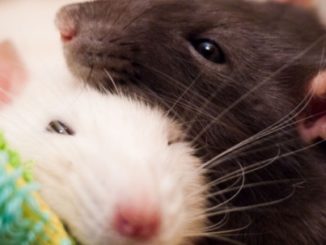
of pigeons, cages of songbirds, hutches of bunnies, and
rollicking dogs.
In 1868, Hale, the influential editor and author, announced that
parents could best foster kindness in boys by actively
encouraging, rather than simply tolerating or even proscribing,
the presence of companion animals in their households. Hers was
certainly not the first statement in support of an already
common practice, but it was one of the most explicit in its
discussion of its implications. Pet keeping “humanized” boys and
was “a great preventative against the thoughtless cruelty and
tyranny they are so apt to exercise toward all dependent
beings!”. She did not bother to explain why boys were such
little tyrants; her readers knew the whole argument.
Hale did admit that girls also benefited from caring for pets,
if only because “as sisters and mothers, they must help and
teach boys in whatever things are good, tender, and lovely.”[44]
Boys seemed to be developmentally prone to cruelty. Practicing
his future mastery of the world in an imperfect, thoughtless
way, a boy would be tempted to use physical abuse as “a trial of
his skill”—at throwing rocks, for example, or aiming an arrow—or
as “a proof of his strength.”[45]
A few authors of advice books promoted pet keeping because an
“early habit of fondness” led to a lifelong pattern of kind
behavior to animals, but most of the authors found in the
practice a wider social utility.[46] Affection for pets and the
experience of caring for them were regarded as potent agents for
cultivating “the love of natural history and intellectual
improvement...thoughtful tenderness and moral sensibility.”[47]
Muzzy added thoughts on love:
Indeed, love in any form, and to any thing, is an elevating
motive....[Who] can doubt that many a heart, both of the happy
and sad, has been made better by the multitudes of parrots,
lap-dogs, canaries, &c., which have been objects of
affection.[48]
Sweet Counsel: A Book for Girls (1866), a set of “letters” about
domestic life directed to a fictional young girl named Mary,
noted,
…if you wish your little brother and sister to have loving, fond
little hearts, do your best to provide them with pets, as you
have pets. They are almost, if not quite, as necessary to them
as congenial [human] companions....[49]
Apologists for Kindness
Yet animals, although no longer punished in the same ways as
criminals, were not viewed simply as the passive recipients of
human tenderness. At a time when moral philosophers were
insisting that animals, whatever their capacity to feel pain,
were “destitute of any moral faculty,” a strong strain of
traditional thought, suggesting that household animals were
indeed moral actors, survived in the domestic ethic of
kindness.[50]
The apologists for kindness could draw on a long tradition of
stories, folk beliefs, and popular natural histories when they
argued that human beings, especially young ones, actually
benefited from daily contact with certain animals because of
their exemplary qualities (Ritvo, 1987). Children could learn
respect for the family dog by hearing their mother describe “the
virtues of his race...their fidelity and enduring gratitude.”
The children also learned that these were valued qualities in
people as well.[51] Cats were “very neat” and observant of
changes in their environment, a quality “very useful for boys
and girls and every body to imitate”.[52] Bird pairs were
“emblematical of enduring affection and constant attachment, and
afford lessons of love to brothers and sisters.”[53] Stories of
virtuous dogs were, of course, the most common account of the
moral qualities of animals, appearing frequently in children’s
books and papers and as brief anecdotes in magazines, gift
books, and anthologies.[54]
In one typical story, a shepherd discovers that his dog had been
feeding the shepherd’s lost son until the child could be rescued
from a cave. Sacrificing his own small ration of bread, the
“faithful dog guarded him like a father, and fed him with a
mother’s tenderness.”[55] In 1848, the General Protestant
Episcopal Sunday-School Union published The Dog, as an Example
of Fidelity, an entire volume of anecdotes published originally
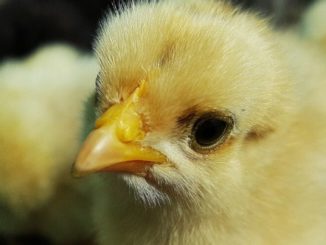
in London.[56] Even the ubiquitous dooryard chicken provided a
useful, and biblically grounded, model for children. Describing
her favorite childhood pet gathering her brood under her wings,
the author of “My First Chicken” reminded her readers to
“remember who used this tender and lovely scene as a figure of
what He would gladly do to those who are weary and have need of
rest.”[57]
As they were incorporated into the emotional structures of
middle-class families, domestic animals were described as having
feelings paralleling those of middle-class humans in both range
and intensity—devoted love, happiness, grief, and mental as well
as physical suffering. Beecher thought that pets’ displays of
affection could “awaken corresponding tenderness and care” in
children. When she credited animals with “intuitive perceptions
of our emotions which we cannot conceal,” Beecher used language
that her readers would have perceived as appropriate to the
delicacy of refined people, especially women.[58] And, since
they had the capacity for gratitude, both domestic and wild
animals provided a model for receiving benevolent
treatment,.[59]
Masking and Unmasking Family Life
The author of the Book of Household Pets (1868), which may be
the first volume published in the United States devoted
exclusively to the general subject, pointed out to his readers
that songbirds were gifted with “memory, knowledge, gratitude,
affection, and even imagination, for they dream.” Pairs of
pigeons,“emblematical of enduring affection and constant
attachment,” also could “afford lessons of love to brothers and
sisters,” while rabbits were “brisk, merry, and bright-eyed,”
like the best human playmates.[60]
As we have seen in the case of bird families, expressions of
maternal grief were particularly compelling. An “Anecdote of a
Cat,” published in Youth’s Companion in 1828 and in The Cabinet
of Natural History and American Rural Sport in 1832, recounted
the efforts of a favorite cat to make her master follow her from
a room. When this did not avail, the cat brought “the dead body
of her kitten, covered over with cinder dust,” to his feet. The
stricken man
…now entered into the entire train of this afflicted cat’s
feelings. She had suddenly lost the nursling she doated on, and
was resolved to make me acquainted with it—assuredly that I
might know her grief, and probably also that I might inquire
into the cause...and divide her sorrows with her.[61]
Denial of any gap in either the natural moral standards or
emotional make-up between people and certain animals shaped the
experience of learning kindness. Pets naturalized the
middle-class virtues that antebellum parents were supposed to
work so hard to instill. Their dependence on the kindness and
steady care of their owners made pet keeping a useful rehearsal
for the social stewardship that middle-class boys were expected
to assume. Animals’ responsiveness—their ability to thrive
physically and to express identifiable emotions—made caring for
them an ideal reciprocal relationship of benevolence.
While the “facts” of their emotions and characters helped to
insinuate the animals more deeply into the fabric of household
routine, they also served the ideological function of masking
the historically recent construction of middle-class family
life. Pets today are expected to help instill a general, and
ungendered, sense of responsibility. Between 1820 and 1870, pet
keeping was explicitly meant to help create good men in a
culture that worried a great deal about the nature of manhood
itself.
Notes
[1] Correspondence should be sent to
Katherine C. Grier, Department of History, University of South
Carolina, Columbia, SC 29208 USA. This essay is part of a
book-length manuscript-in-progress on the changing relationships
of middle-class Americans to domestic animals between 1820 and
1920. The author would like to thank the National Endowment for
the Humanities Fellowship Program for College Teachers and
Independent Scholars, the Obert C. and Grace A. Tanner
Humanities Center and the College of Humanities at the
University of Utah, and the Henry Francis du Pont Winterthur
Museum, Library, and Gardens for their fellowship support during
the research phases of the project.
[2] Formal “humane education” became another strategy for
establishing lifelong patterns of kindness after 1870. Following
the national trauma of the Civil War, and the successful
abolition of slavery, some reform-minded citizens turned their
energies toward the creation of organizations dedicated to
fighting cruelty to animals, such as the American Society for
the Prevention of Cruelty to Animals (SPCA)(founded 1866). The
informal socialization of family life was now augmented by
something new: membership organizations for children dedicated
to “humane education” and school programs intended either to
support the parental message or to supplant inadequate or
inappropriate socialization taking place in some families.
Speaking directly to children, St. Nicholas Magazine for Girls
and Boys founded the “Army of Bird-Defenders” in 1873, a few
years after the Massachusetts SPCA initiated school essay
contests on the subject of kindness to animals. Following an
English model, the organization of “Bands of Mercy” among
American school children after 1882, the development of school
lesson programs by groups such as the American Humane Education
Association (1889), and the American Humane Association at the
turn of the century tried not only to socialize children into
kindness but to create future activists. For the
“Bird-Defenders,” see Katherine C. Grier, At Home with the
Animals: Middle-class Families and the Animals in their Lives,
1820-1920 (ms in progress). For information on early
organizational humane education efforts see Sydney H. Coleman,
Humane Society Leaders in America, with a Sketch of the Early
History of the Humane Movement in England (Albany, New York:
American Humane Association, 1924).
[3] For a concise account of the principal arguments of the new
liberal Protestant theology and an argument for its utility as
an instrument of social control in one community, see chapter 5,
“Pentecost,” 95-115.
[4] Henry Ward Beecher, Lectures to Young Men, on Various
Important Subjects (1844; 2nd ed.). New York: Derby and Jackson,
1859,148.
[5] The “Eden of Home,” along with a score of other “synonyms”
for “home,” may be found in Rev. W. K. Tweedie, Home; or, The
Parents’ Assistant and Children’s Friend. Norwich, CT: The Henry
Bill Publishing Company, 1873, 34-41. For an explicit
formulation of the “Eden of Home” including animals, who fell
when Adam did and could expect Paradise when it was restored for
humankind, see Charlotte E. B. Tonna, Kindness to Animals or,
the Sin of Cruelty Exposed and Rebuked. Revised by the Committee
of Publication of the American Sunday-School Union.
(Philadelphia: American Sunday-School Union, 1845), 9-12.
[6] Reverend A. B. Muzzy, The Fireside: An Aid to Parents.
Boston: Crosby, Nichols, and Company, 1854, 8. The secondary
sources referenced in the body of the text provide historical
perspective on changes in attitudes toward mothering.
[7] “Home Interests,” Youth’s Penny Gazette 8, 24 (20 November
1850), 94. Published by the American Sunday-School Union.
[8] Charlotte E. B. Tonna noted that man was intended to be “a
careful and loving ruler over the poor dumb creatures, as the
Lord God is a careful and loving ruler over all that He has
created.” Kindness to Animals; or, the Sin of Cruelty Rebuked,
9.
[9] A Manual of Politeness. Philadelphia: W. Marshall and
Company, 1837, 276.
[10] Keith Thomas, Man and the Natural World: A History of the
Modern Sensibility. New York: Pantheon Books, 1983, remains the
most comprehensive account of this genealogy prior to 1800.
[11] Mrs. Louisa Hoare, Hints for the Improvement of Early
Education and Nursery Discipline (3rd ed.). Dover: Samuel C.
Stevens, 1826, 36.
[12] Horace Bushnell, Views of Christian Nurture, and of
Subjects Adjacent Thereto (Hartford, CT: Edwin Hunt, 1847), 16,
6.
[13] Lydia Sigourney, Letters to Mothers, 6th ed. (1838; New
York: Harper, 1846), 41, 35-36.
[14] Jacob Abbott, Agnes. A Franconia Story, by the Author of
the Rollo Books (New York: Harper and Brothers, 1853), v-vi.
[15] The first print depicts gangs of boys, including the boy
Tom Nero whose path is being plotted in the narrative, hanging
cats, cockfighting, gouging out the eye of a small bird with a
wire, and sexually molesting a dog, among other outrages; the
second includes Tom Nero beating a carriage horse, who has been
overburdened by a group of thoughtless, obese lawyers and the
death at the hands of a drover of a sheep too weak to walk. (In
the third, Tom Nero murders his lover; in the fourth his hanged
corpse is dissected by doctors while a dog that looks
suspiciously like the dog he once abused eats his discarded
heart. Paulson offers a discussion of the circumstances
surrounding the publication of these prints (Hogarth later
commented that he was proud of the series since he believed that
it had helped to relieve cruelty to animals), and a detailed
visual analysis of the series.
Eighty-five years later, “Cruelty and the Gallows,” a
particularly hair-raising piece of admonition in the Youth’s
Companion, still used Hogarth’s narrative structure when it
informed its readers that a famous murderer, recently gone to
the gallows at age nineteen, had admitted that he had liked
killing animals “better than anything else”: “Youthful reader!
whenever you find yourself delighting in cruelty to any of the
creatures which God has made, think of Prescott -- think of the
gallows!” “Cruelty and the Gallows,” Youth’s Companion 9, 49 (22
April 1836), 195.
[16] Mary Wollstonecraft, trans. Elements of Morality for the
Use of Children, with an Introductory Address [sic] to Parents.
Trans. From the German of the Rev. C. G. Salzmann. (American 3rd
ed.). Wilmington, DE: Joseph Johnson, 1796. The book was first
published in English in 1790.
[17] Rev. A. B. Muzzy, The Fireside, 74. See also “Be Kind to
Animals,” Youth’s Companion 4, 2 (2 June 1830), 6; “Cruelty,”
Youth’s Companion 6, 10 (25 July 1832), 6; “Kindness to Brutes,”
Youth’s Companion 12, 19 (21 September 1838), 74-75.
[18] Lydia Sigourney, The Boy’s Book; Consisting of Original
Articles in Prose and Poetry ( New York: Turner, Hughes, and
Hayden, 1845), 54, 29. For Cowper as an inspiration to kindness,
see also “Stories about Cats,” Youth’s Companion 9, 24 (30
October 1835), 95-96: “A very sweet poet, named Cowper, who
loved animals and used to keep hares, a dog, and a cat in his
room, and loved to see them sport about so merrily, said, “he
would not call that man his friend who would needlessly tread
upon a worm.” The Youth’s Companion often reprinted material
from other periodicals with credit lines; this story was
credited to the “Juvenile Miscellany.” This passage was
paraphrased from Cowper’s “The Task” (1784), a 5,000-line work
of blank verse that contained a lengthy discussion of cruelty to
animals in Book Six: The Winter Walk at Noon, lines 560-567.
John D. Baird and Charles Ryskamp, eds. The Poems of William
Cowper, II: 1782- 1785 (Oxford: Clarendon Press, 1995), 251.
[19] Caroline Cowles Richards, Village Life in America
1852-1872. Including the Period of the American Civil War as
Told in the Diary of a School-girl (l908; repr. Williamstown,
MA: Corner House Publishers, 1972), 61-62.
[20] Isabella: “...The sense of death is most in
apprehension,/And the poor beetle that we treat upon/In
corporeal sufferance finds a pang as great/As when a giant
dies.” William Shakespeare, Measure for Measure, Act Three,
Scene I, lines 79-81.
[21] Charles Neider, ed. Papa: An Intimate Biography of Mark
Twain by Suzy Clemens, His Daughter, Thirteen. Garden City, NY:
Doubleday and Company. 1985, 155-156.
[22] Henry Ward Beecher, Letters to Young Men, 149.
[23] “Against the Abuse of Cattle,” Youth’s Companion 3, 2 (June
1829), 6; Dr. William A. Alcott, Gift Book for Young Ladies; or,
Familiar Letters on Their Acquaintances, Male and Female,
Employments, Friendships, &c. Auburn and Buffalo: Miller, Orton
and Mulligan, 1854, 272-273.
[24] Lydia Sigourney, Letters to Mothers, 37-38.
[25] Master Henry’s Rabbit (Troy, NY: no listed publisher, n.d.[c.1840]),
10. Master Henry’s Rabbit was first published in England. It was
one volume in a series of didactic stores about Henry’s moral
progress. On the matter of thoughtlessness (“absence of mind”)
and cruelty to animals, see “Tenderness to Animals”, Youth’s
Companion 8, 31, (19 December 1834), 125; and “The Woodchuck,”
Youth’s Companion 9, 31 (18 December 1835), 123.
[26] “The Woodchuck,” Youth’s Companion, 123.
[27] Harriet Beecher Stowe, “A Talk about Birds,” Our Charlie,
and What to Do with Him. Boston: Sampson and Company, 1858. 97,
107.
[28] In Thoughts on the Education of Daughters (1787) Mary
Wollstonecraft’s discussion of “Benevolence” did include an
anecdote about a girl who killed ants “for sport”;
Wollstonecraft stopped the child by “adapting Mr. Addison’s
account of them to her understanding. Ever after she was careful
not to tread on them, lest she should distress the whole
community.” Mary Wollstonecraft, Thoughts on the Education of
Daughters: with Reflections on Female Conduct, in the More
Important Duties of Life (London: Joseph Johnson, 1787), 44.
[29] “Fanny’s Canary Bird,” Youth’s Penny Gazette 7, 18 (29
August 1849), 95.
[30] This is a formula previously used by Salzmann in his
Elements of Morality for the Use of Children. In the chapter on
cruelty to animals, James’ parents are warned of his intention
to mutilate the mouse he has caught by the entreaties of his
sister. Elements of Morality for the Use of Children, 168-169.
[31] Lydia Maria Child, “My Bird,” in The Girl’s Own Book (New
York: Clark Austin & Co., 1833), 244-245. Youth’s Companion
featured on the front page of its 12 March 1829 issue a story
where a very little girl accidentally tore the wing off a
butterfly she wanted to examine and was reprimanded by her older
sister. She repented immediately and insisted on burying her
victim in a marked grave, which she would show to other children
to instruct them about the importance of kindness. “The Birth
Day Present,” Youth’s Companion 2, 42 (12 March 1829), 165.
[32] William Lyon Phelps, Autobiography with Letters (New York,
London, Toronto: Oxford University Press, 1939), 60-61.
[33] For boys’ taxidermy and amateur “cabinets” as an
educational form of play, see Charley’s Museum. A Story for
Young People (Philadelphia: H. C. Peck and Theo. Bliss, 1857);
William Lyon Phelps, Autobiography with Letters, 54-55; Bellamy
Partridge, Big Family (New York and London: Whittlesey House,
1941), 305.
[34] H. H. Delong, Boyhood Reminiscences: Dansville, N.Y.,
1855-1865 (Dansville, New York: F. A. Owen Publishing Company,
1913), 56; Claudia L. Bushman (Ed.) “Life Along the Brandywine
Between 1880 and 1895 by Samuel Canby Rumford, Part II” Delaware
History 23, 3 (Spring Summer 1989), 168, 195; Henry Ward
Beecher, “Country Stillness and Woodchucks,” in Eyes and Ears
(Boston: Ticknor and Fields, 1862), 139-141.
[35] Lewis Miller, Sketches and Chronicles: The Reflections of a
Nineteenth Century Pennsylvania Folk Artist (York: PA: The
Historical Society of York County, 1966), 135.
[36] Dr. William A. Alcott, Gift Book for Young Ladies; or
Familiar Letters on Their Acquaintances, Male and female,
Employments, Friendships, &c. (Auburn and Buffalo: Miller, Orton
& Mulligan, 1854), 274.
[37] Mrs. L. G. Abell, Woman in Her Various Relations (New York:
R. T. Young, 1851), 53.
[38] Alex M. Gow, A.M., Good Morals and Gentle Manners. For
School and Families (New York and Cincinnati: Wilson, Hinkle and
Company, 1873), 137.
[39] William A. Alcott, Gift Book for Young Ladies, 274.
[40] “Nauticus Agricola” [pseud.], “The Murdered Robin,” Youth’s
Companion 11, 6 (23 June 1837), 22.
[41] A fascinating firsthand account of the kind of casual
cruelty inflicted on animals by men in the name of amusement in
antebellum America can be found in Richard B. Stott, ed. William
Otter: History of My Own Times (Ithaca and London: Cornell
University Press, 1995), 81-84, 146-149, 153, 167. Otter was a
mechanic, and sometime slave hunter who recalled his various
escapades, which included running horses almost to death and
drowning a dog as a joke, with glee in this memoir.
[42]
Picture Lessons, Illustrating Moral Truth. For the Use of Infant
Schools, Nurseries, Sunday- Schools, and Family Circles
(Philadelphia: American Sunday-School Union, n.d.). The copy in
the collection of the Research Library of the Winterthur Museum
is inscribed, “Zilpha Clarke/from LaFayette H.(?) S.
School/Buffalo Apl 25, 1852.”
[43] “The Cow and Her Calf,” Youth’s Companion 5, 18 (21
September 1831), 72; “Barbarity of Whale Fishing,” Youth’s
Companion 1, 6 (4 July 1827), 23; “Remarkable Attachment of a
Goat,” Youth’s Companion 4, 46 (6 April 1831), 183.
[44] Sarah Josepha Hale, “Pets and their Uses,” in Manners; or,
Happy Homes and Good Society All the Year Round (1868; repr. New
York: Arno Press, 1972), 244. On boy’s “tyranny”, see S. S.
Messenger, “Edward and the Cat,” Youth’s Companion 2, 39 (19
February 1829), 153-154: “You were unmerciful to the cat....you
were too proud to forgive a dumb beast for not obeying you; and
like a little tyrant, would have had her put to death.”
[45] “Against the Abuse of Cattle,” Youth’s Companion 3, 2 (June
1829), 6.
[46] “Children’s Pets,” Godey’s Ladies’ Book 63, 1 (July 1861),
94.
[47] Sarah Josepha Hale, “Pets and their Uses,”244.
[48] Rev. A. B. Muzzy, The Fireside, 141-142.
[49] “Sarah Tyler” (pseud. Henrietta Keddie), Sweet Counsel: A
Book for Girls (Boston: Roberts Bros., 1866), 154.
[50] Francis Wayland, The Elements of Moral Science, 395. The
most comprehensive account of animal “crime and punishment”
remains E. P. Evans, The Criminal Prosecution and Capital
Punishment of Animals (1906; London: Faber and Faber, 1987). An
example of this older strain of thinking about animals survives
in the Chronicles of Lewis Henry Miller (1786-1882). A lifelong
resident of York County, Pennsylvania, Miller produced an
illustrated remembrance of everyday life in his town. He told
and illustrated the story of “Mrs. Cath. Weiser frying a
sausage, and A hound came and Stole it out of the pan for his
breakfast.” Miller warned, “Woman Guard Your Kitchen....teach a
dog and put him in a way to fulfill his demands, and you make
him a Moral Agent.” Lewis Miller, Lewis Miller: Sketches and
Chronicles, 82.
[51] Lydia Sigourney, Letters to Mothers, 98.
[52] “Stories about Cats,” Youth’s Companion 19, 24 (30 October
1835), 95-96.
[53] The Book of Household Pets, and How to Manage Them. New
York: Dick and Fitzgerald, 1866, 42.
[54] The early volumes of Youth’s Companion printed such stories
frequently. See, for example,“The Sagacity of a Dog,” Youth’s
Companion 1, 48 (25 April 1828) 101; “The Lives of two Children
saved by a Dog,”Youth’s Companion 3,17 (16 September 1829), 68;
“Faithfulness of Dogs,” Youth’s Companion 7, 13 (14 August
1833), 51.
[55] Lydia Sigourney, The Boy’s Reading-Book, 37. See also
“Canine Sagacity,” Youth’s Companion 11, 21 (17 October 1828),
83; “Canine Affection,” Youth’s Companion 11, 19 (3 October
1828), 75; “The Lives of two Children saved by a Dog,” Youth’s
Companion 13, 17 (16 September 1829), 68.
[56] The Dog, as an Example of Fidelity. From the London
Edition. New York: General Episcopal Sunday School Union, 1848.
The copy I have examined is inscribed, “George S. Payne/a token
of affection from the Rector./ Grace Church/ Christmas 1848.”
[57] “My First Chicken,” Youth’s Companion 69, 5 (2 February
1860), 1. See also “Thomas and His Chickens,” Youth’s Companion
1, 6 (4 July 1827), 24. This story also makes explicit reference
to the biblical verse, Matt. 23:37.
[58] Catharine E. Beecher and Harriet Beecher Stowe, The
American Woman’s Home (New York: J. B. Ford and Company), 394.
[59] “Animal Gratitude,” Youth’s Companion 1, 42 (14 March
1827), 167 (from “London paper”); “The Grateful Lioness,”
Youth’s Companion 3, 52 (19 May 1830), 207 (“From the London
Youth’s Magazine”); “A Grateful Cow,” Youth’s Companion 5, 20 (5
October 1831), 70 (from the “Cheltenham Chronicle”).
[60] Anon., The Book of Household Pets (New York: Dick and
Fitzgerald, 1988), 5,42, 76. This book appears to be based on an
English volume but contains revisions specifically for the U.S.
readership.
[61] ”Anecdote of a Cat,” Youth’s Companion 1, 47 (1828), 187;
“Anecdote of a Cat,” The Cabinet of Natural History and American
Rural Sport, v. 2 (Philadelphia: J. And T. Doughty, 1832), 246.
In the latter source, the story is credited to Good’s Book of
Nature.
For Abstracts of all issues, including the most current, click
Article
Abstracts
To order Society &
Animals Journal, go to our secure online
ordering page
You
can Search the online issues of Society & Animals, as well
as the entire Society & Animals Forum (formerly PSYETA)
website,
for topics and keywords of your interest:
|