|
Good Dog: Aspects
of Humans' Causal Attributions for a Companion Animal's Social
Behavior
D. W. Rajecki
1 and Jeffrey Lee Rasmussen
Indiana University - Purdue University
Clinton R.
Sanders
University of Connecticut
Susan J. Modlin
and Angela M. Holder
Indiana University - Purdue University
Lay theories or assumptions about
nonhuman animal mentality undoubtedly influence relations
between people and companion animals. In two experiments
respondents gave their impressions of the mental and
motivational bases of companion animal social behavior through
measures of causal attribution. When gauged against the matched
actions of a boy, as in the first experiment, respondents
attributed a dog's playing (good behavior) to internal,
dispositional factors but a dog's biting (bad behavior) to
external, situational factors. A second experiment that focused
on a dog's bite revealed clear attributional process on the part
of observers. Higher ratings of a dog as the cause of a victim's
distress predicted higher ratings of a dog's guilt. Higher
ratings that a dog had an excuse predicted stronger
recommendations for forgiveness. Individual differences in
seeing the actor as a "good dog" systematically predicted
judgments of severity of the outcome and recommendations for
punishment. Discussion of these attributional findings referred
to tolerance for companion animal misbehavior and relinquishment
decisions. This article illustrates the utility of causal
attribution as a tool for the study of popular conceptions of
nonhuman animal mind and behavior.
In mainstream causal attribution theory and research, the goal
is to identify cognitive processes by which a human observer
will credit the behavior of a human actor either to external
environmental pressures or constraints or to the actor's
internal personal motivations or goals (Hewstone, 1989; Ross &
Fletcher, 1985). To put it another way, to which type of
cause--situational or dispositional--can one attribute a
specific act? Causal attributions can allow for "judgments of
responsibility" for an actor's behavior (Weiner, 1995). By
extension, the same issues should be raised in the study of the
human experience of other animals. Given the opportunity, would
people be inclined to make dispositional or situational causal
attributions for the behavior of a companion animal?
Research Review
To date, we know of only a single report on the application of
the formal principles and methods of causal attribution to the
question of humans' perceptions of the bases of companion animal
behavior. Rajecki, Rasmussen, Modlin, and Holder (1998) derived
measures from a human model for the attribution of blame,
originally proposed by Shaver and Drown (1986), and applied them
to the matched misbehavior (biting) of a dog compared with that
of a boy. Supporting the general attribution model, results
showed that people's impressions of the extent of the dog's and
the boy's personal dispositions -- volition, intent -- for the
act predicted levels of judgment blame. The nonhuman and human
actors, however, were not perceived as equals. The dog, seen as
having more excuse and less intent for biting, was judged less
guilty and blameworthy than the boy.
These patterns indicate contrasting evaluations of essentially
the same act and show that dog versus boy behavior received
markedly different interpretations. Hence, measures of causal
attribution have the potential to reveal the way people view the
mentality or motivation underlying an animal's act. Indeed, our
aim was to extend the findings available from the Rajecki et al.
(1998) attributional analysis of dog behavior. Although
persuasive and instructive, that earlier article had certain
limitations.
First, the method was tied to a single attribution model, that
of Shaver et al. (1986). Extending the paradigm to other known
models would be informative. Second, although the article
assessed impressions of blameworthiness and guiltiness regarding
misbehavior (biting), no measures were employed concerning the
fate of the dog or boy. That is, judgments of guilt and blame
are one thing, recommendations for punishment or forgiveness
another. In the case of the dog, current concerns about
real-life animal abuse or pet relinquishment indicate the
importance of measures about the actor's fate. Third, the
effects of individual differences based on respondents' general
orientations toward dogs were not reported. For one dimension of
orientation, ownership versus non-ownership influences
perceptions and attitudes about animal issues (Fidler, Light, &
Costall, 1996; Moss & Wright, 1987; Wells & Hepper, 1997).
Because prior sentiments could influence ongoing evaluations
regarding a dog's behavior and consequent recommendations for
its fate, individual differences become an important
consideration
Accordingly, the current project -- using procedures related to
those of Rajecki et al. (1998) -- addressed the three points.
First, in Experiment 1 we sought to broaden the understanding of
the social cognition of human/companion animal relations by
appealing to a different attribution model. We adopted the items
used in the current study from the Causal Dimension Scale
(Russell, 1982). Second, in Experiment 2 we broadened the method
and range of measures to include respondents' recommendations
for the fate of the offending dog. These included items about
punishment and forgiveness. Third, also in Experiment 2 we
approximated individual differences in general orientation
toward dogs by asking whether the actor was a "good dog." Based
on the polarities of their responses to the that item,
individuals were divided into three post-hoc experimental groups
EXPERIMENT 1
Method
Causal Dimension Scale
The nine-item Causal Dimension Scale (Russell, 1982; Russell,
McAuley, & Tarico, 1987) was originally developed to assess
separately the causal dimensions of internality,
controllability, and stability, each dimension represented by
three questionnaire items. We chose this model because of its
differences with the Shaver et al. (1986) approach and the fact
that its original items could be easily reworded to fit our
ends.
In the current application, our measures referred to one or the
other outcome, play or bite, and actor, dog or boy. Every item
was accompanied by a stem: “Is the cause of the outcome
(something that is)…” and a seven-interval (1 to 7) scale with
appropriate bipolar endpoints. The endpoints for the three
dimensions, in the case of the canine actor called Dog B, were
as follows.
Internality
1. Inside of Dog B [or] Outside of Dog B
2. Reflects an aspect of Dog B [or] Reflects an aspect of the
situation
3. Something about Dog B [or] Something about other things
Controllability
1. Controllable by Dog B [or] Uncontrollable by Dog B
2. Intended by Dog B [or] Unintended by Dog B
3. Someone is responsible [or] No one is responsible
Stability
1. Permanent [or] Temporary
2. Stable over time [or] Variable over time
3. Unchangeable [or] Changeable
In our instrument -- as in the original -- some of the endpoints
were reversed, and item order matched the original ( Russell,
1982). The three items per dimension were combined in analysis,
and all were scored such that larger values represented
estimates of more internality, controllability, and stability.
Rationale for Tests and Scenarios
We never intended to contrast the different variables within the
Russell framework. Instead, following the lead of Rajecki et al.
(1998), the stated point of the current research was to compare
and contrast patterns of attributions for a dog's behavior with
attributions concerning matched behavior on the part of a boy.
To this end, we asked respondents to express their own estimates
of the likelihood or applicability of a dimension drawn from the
model. For example (on a 7-point scale), “Is the cause of the
outcome something Intended by Dog B [or] Unintended by Dog B?”
For this project, respondents received scenarios in test
booklets that gave clear pictures of physical social acts: Dog
plays with boy or dog bites boy. However, motivational or
dispositional and contextual or situational elements were
presented to a minimal extent and their possible impact on the
behavior made intentionally ambiguous. We believed that this
procedure -- depending on respondents' inclinations, habits, or
histories with related actors and acts would provide the
latitude to attribute the behavior to internal or external
determinants.
We chose the acts of biting and playing for two reasons: The
literature offers precedents for the use of these scenarios
(Rasmussen & Rajecki, 1995; Rajecki et al., 1998), and both acts
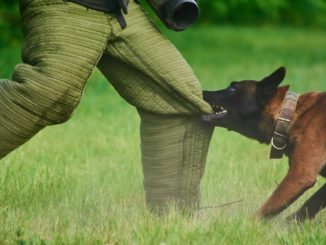
are common to dogs and boys. Concerning canine aggression, dog
bites occur frequently enough to be viewed as a national health
problem (Boenning, Fleisher, & Campos, 1983; Griego, Rosen,
Orengo, & Wolf, 1995). And children do bite children. According
to one review, "[a]fter the toddler period, the next peak of
occurrence is between 11 and 16 years of age" (Leung & Robson,
1992, p. 255).
Test Booklet Construction
The first two pages of test booklets stated that participation
was voluntary and anonymity guaranteed. They provided space to
indicate gender and instructions on how to use the rating
scales.
Scenario and outcomes. The booklet’s third page contained a
scenario involving a certain situation and one of two outcomes,
as adapted from Rasmussen et al. (1995, p. 121). A certain Dog B
or a school-aged Boy B. played with or bit a child, Boy A. The
only stated provocation for the play episode or the bite attack
was that Boy A had picked up a toy belonging to Dog or Boy B.
Next, under the heading of outcome, the booklets providing the
play condition offered the following statement: “Dog or Boy B
ran up to Boy A and pushed him gently as an invitation to play.
Boy A became delighted, dropped the toy, and ran laughing back
into his own yard.”
The following statement was provided for the bite condition:
“Dog or Boy B flung himself on Boy A and bit him hard, causing a
serious tear in the skin. Boy A became terrified, dropped the
toy, and ran screaming back into his own yard.”
Items. At the bottom of the scenario, an item read, "I believe
the outcome associated with Dog [Boy] B's behavior was . . . ."
Responses were made on a 7-point, bipolar scale with endpoints
of POSITIVE (GOOD) and NEGATIVE (BAD). These were scored as
positive = 7 and negative = 1. Finally, the attribution items
were listed beginning on the fourth page.
Participants. Undergraduate students recruited from an urban
public university in the Midwestern United States participated.
Age, ethnicity, and other demographic characteristics not
recorded were considered random variables. Prior to a testing
session, dog and boy (play or bite) instruments were alternated
in a single stack and handed out in sequence. Thus, respondents
in convenience samples were assigned to one or another actor
(and act) conditions on an effectively random basis. The test
group included about an equal number of men and women. A
preliminary data analysis indicated that the gender of
respondents did not have a strong influence on ratings. For
example, regardless of the actor, women (M = 5.46) tended to
rate play less positively than men (M = 5.58), a pattern that
also emerged for bite (Ms = 2.08 and 2.46, respectively), but
these differences were not statistically reliable. Accordingly,
gender was dropped from consideration as a variable. The final
experimental design involved four independent cells based on the
two actors and the two acts. Sample sizes were 24 or 25 per
condition.
Results
Outcome Measure
Table 1 shows the average outcome measures for actors in
reference to acts.
--------------------------------------------------------------------------------
Table 1. Dog and boy means for outcome and attribution measures
under conditions of play and bite in Experiment 1.
| |
Play |
Bite |
| Measure |
Dog |
Boy |
p |
Dog |
Boy |
p |
| Outcome |
6.12 |
4.92 |
.01 |
2.84 |
1.63 |
.01 |
| Attribution |
|
|
|
|
|
|
| Internality |
4.29 |
4.09 |
ns |
3.85 |
4.94 |
.02 |
| Controllability |
4.39 |
4.59 |
ns |
4.05 |
5.42 |
.01 |
| Stability |
2.64 |
2.49 |
ns |
3.35 |
3.20 |
ns |
| (n) |
(25) |
(25) |
|
(25) |
(24) |
Note: Larger mean values indicate more positivity of the
outcome or higher attributional estimates on a scale of 1 to 7.
Probability statements reflect simple effects tests for
particular pairs of dog versus boy means.
Play Bite
Measure Dog Boy p Dog Boy p
Outcome 6.12 4.92 .01 2.84 1.63 .01
Attribution
Internality 4.29 4.09 ns 3.85 4.94 .02
Controllability 4.39 4.59 ns 4.05 5.42 .01
Stability 2.64 2.49 ns 3.35 3.20 ns
(n) (25) (25) (25) (24)
Note: Larger mean values indicate more positivity of the outcome
or higher attributional estimates on a scale of 1 to 7.
Probability statements reflect simple effects tests for
particular pairs of dog versus boy means.
--------------------------------------------------------------------------------
As a manipulation check, respondents were obviously paying
attention to the scenarios and the scales. The general pattern
of means is very much in line with the prosocial and antisocial
incidents so designed. A two-way analysis of variance showed
strong main effects between the play versus bite behaviors, F(1,
95) = 143.15, p < .01, and the dog versus boy actors, F(1, 95) =
19.31, p < .01. The table indicates by parallel simple effects
the obvious absence of an interaction between the actors and the
acts on this measure, F(1, 95) = 0.00.is Thus the play outcome
was seen as reliably more positive for the dog and the bite
outcome as less negative for the dog.
Attribution Measures
Internality. A two-way analysis of variance (act X actor) did
not yield main effects for either the acts (play/bite) or the
actors (dog/boy). Nevertheless, as shown in Table 1, an
interaction between act and actor emerged, F(1, 95) = 4.93, p <
.03. The source of this interaction is evident from simple
effects tests. There was no difference between actors in the
case of play but a sharp difference between them under the bite
condition. For the biting behavior, the boy received relatively
higher internality scores compared with those assigned in the
play condition. In contrast, when biting was involved, the dog
received relatively lower internality scores compared with those
he received for play.
Controllability. Results for controllability ratings were in
line with the internality pattern. Although there were no main
effects for acts or actors, a significant interaction emerged
across those variables, F(1, 95) = 6.23, p < .02. As shown in
Table 1, the actors were not rated differently on
controllability in the play condition but did differ based on
the bite behavior. For biting, the boy received relatively
higher controllability scores compared with those assigned in
the play condition. In contrast, when biting was involved, the
dog received relatively lower controllability scores compared
with those received for play.
Stability. A two-way analysis of variance revealed a main effect
for the acts only, with generally higher stability ratings under
the antisocial compared with the prosocial condition, F(1, 95) =
8.89, p < .01. Table 1 indicates the absence of an interaction
between the actors and the acts on this measure by parallel
simple non-effects.
Discussion
We concluded that, in comparison with a boy actor, a dog's good
behavior was about equally credited to dispositional influences,
a dog's bad behavior more likely credited to situational
influences. Aspects of our findings, however, warrant
clarification.
Internality and Controllability
The finding that, under the bite condition, the cause of the
dog's outcome was rated as less internal and controllable might
indicate that respondents felt the dog simply acted
instinctively. However, an appeal to the instincts of Dog B does
not account for the lack of difference in ratings by other
respondents of the internality and controllability of the play
outcome for both the dog and the boy. Where a prosocial act was
involved, people were willing to assign responsibility to the
companion animal: ("something about Dog B"; "intended by Dog B")
for the outcome. The very ratings of the actors' play outcomes
(Dog B = 6.12; Boy B = 4.92) seem to indicate that the dog
should be given substantial credit for its act.
Two interpretations might be placed on these stability results.
First, the scale endpoints in question ("permanent/temporary";
"stable over time/variable over time";
"unchangeable/changeable") may have proved inapplicable or
unclear in connection with the current task. It is known that
respondents sometimes feel uncertain about using such scales to
express their impressions (Miller, Smith, & Uleman, 1981). Lack
of clarity, however, would not account for the direction or
reliability of the difference found across the play and bite
conditions.
We favor a second possibility. Given that the cause of the boy's
bite was generally rated as internal and controllable, the
relatively high stability estimate (M = 3.20) indicates that
respondents judged dispositional factors would continue to
govern the boy's behavior in other times. Further, given that
the cause of the dog's bite was generally rated as comparatively
external, not under control, the relatively high stability
estimate (M = 3.35) indicates that respondents judged
situational factors would continue to govern the dog's behavior
in other times. In any event, the ratings of the actors' bite
outcomes (Dog B = 2.84; Boy B = 1.63) seem to indicate that the
dog should be held less accountable for the act.
Dog-Positivity Bias?
Previously, Rajecki et al. (1998) used the behavior of a boy as
a standard against which to gauge reactions to the behavior of a
dog living in a home with humans. In comparison, they found
considerable leniency in humans' judgments of blameworthiness of
the bite behavior of the dog and generosity in judgments of the
praiseworthiness of the dog's play behavior. That research
identified links between judgments of blame and praise for
behavior, on the one hand, and causal attribution processes on
the other. Results of Experiment 1 support and expand this line
of findings.
Using a different attribution model, we documented related forms
of positive judgments in human social cognitions concerning the
behavior of a dog. Compared with a boy actor and in terms of the
dimensions of internality and controllability, people seemed
willing to credit a dog for good behavior but unwilling to hold
the dog accountable for bad behavior. Taken together, the
findings of Rajecki et al. (1998) and Experiment 1 suggest a
general inclination to cast the behavior of Dog B in a good
light or to give him the benefit of the doubt. This is
reminiscent of the phenomenon identified by social psychologists
as "person-positivity bias" (Sears, 1983): all else being equal,
human perception tends toward positive rather than negative
evaluations.
By extension, the pattern emerging in the current literature
might well be called a dog-positivity bias. People may be
predisposed to assume that any given dog, including Dog B, is a
good dog. But even if there is a dog-positivity bias, it is
certainly not shared equally by everyone. In an examination of
the dog bite data from Experiment 1, for example, we can point
to variability in the outcome measure. The mean for this measure
in that condition was 2.84 (see Table 1), but note that the
standard deviation was 1.15. Obtained scale scores ranged from 6
(positive), through 4 (neutral), to 1 (negative). These values
may reflect the individual differences in orientations to dogs.
To learn more about the influences of such individual
differences and to extend further the attributional approach to
the perception of dog misbehavior, we turn to Experiment 2.
Experiment 2 also had provisions for assessing people's
recommendations for the fate -- forgiveness or punishment -- of
a biting dog.
EXPERIMENT 2
Experiment 2, with merged methodological features from
Experiment 1 and from Rajecki et al. (1998), focussed
exclusively on Dog B. The point of the experiment was to gain
additional information by combining the bite scenario with new
scale items such as whether Dog B was likable and a good dog.
Other new items included recommendations for forgiveness and
punishment. These measures and others could capture attribution
processes through an intercorrelation analysis. Further, the
measure of good dog had the potential to identify individuals
with different orientations toward the dog. Polarities of
responses to this specific item were used to identify post-hoc
groupings of individuals and to examine differences in their
reactions to the scenario.
Method
We again employed the booklets. For this study, however, we
presented only the single scenario about Dog B's biting. As the
booklets also served as a pilot test of Sanders' (1990)
propositions concerning owners' excusing tactics for pet
impropriety, we modified the bite scenario. In some booklets the
outcome section reads as follows:
Dog B flung himself at Boy A and bit him hard, resulting in a
serious tear in the skin. Boy A became terrified, dropped the
toy, and ran screaming back into his own yard. Right after the
contact involving Dog B and Boy A, two Adults, Mr. B and Mr. A,
met at the open gate between yards. Mr. B, the owner of Dog B,
said, "My Dog B really loves his new toy. I think he felt that
your Boy A was going to take it from him." He walked back to his
house.
However, the Dog B bite scenario was apparently an inappropriate
vehicle for tests of excusing tactics. Analyses indicated no
effects for excuse tactic type, and the presence of owners in
the scenario did not appreciably affect the respondents'
judgments.
Scale Items
Following the standard outcome measure (Experiment 1),
respondents encountered a series of 13 questions, each of which
began with the stem, “Is it reasonable to say that…” and
concluded as follows:
Dog B was the cause of Boy A's terror and screaming?
Dog B should have been judged guilty of bringing about terror
and screaming in Boy A?
Dog B would feel sorry about what happened?
Dog B intended to bring about terror and screaming in Boy A?
Dog B had an excuse for biting Boy A?
Dog B should be punished for what happened?
Dog B had justification for biting Boy A?
Dog B is likable?
Dog B meant to bring about terror and screaming in Boy A?
Dog B should be forgiven for what happened?
Dog B should have been blamed for bringing about terror and
screaming in Boy A?
Dog B is a "good dog"?
Boy A's terror and screaming were due to Dog B?”.
Responses were made on 7-point, bipolar scales with endpoints of
REASONABLE and UNREASONABLE (reversed for some items). These
were scored as reasonable = 7 and unreasonable = 1.
Participants
A total sample of 91 undergraduate participants, again recruited
from the Midwestern university (n = 51) and also from a public
state university in the northeast (n = 40), included 29 men.
Gender, however, was ignored. Demographic characteristics were
considered random variables
Results
Outcome Measure
Unlike Experiment 1, the scenario used in Experiment 2 contained
characters other than Boy A and Dog B. It is therefore essential
to determine if the additional actors influenced responses. The
most direct test compared the means for the dog bite outcome
rating in the two experiments. For Experiment 1, that mean was
2.84 (see Table 1); for Experiment 2, the mean was 3.18. These
two means are not reliably different, t(114) = 0.96, ns,
indicating that the presence of Mr. A. and Mr. B. did not have a
strong effect on respondents' replies.
Strength of Association
--------------------------------------------------------------------------------
Table 2. Intercorrelations between measures in Experiment 2.
| Measure |
B |
C |
D |
E |
F |
G |
H |
I |
| A. Outcome |
-.17 |
.05 |
.26* |
.29** |
.17 |
-.26* |
-.32** |
.22* |
| B. Cause/due to |
--- |
.02 |
-.02 |
-.17 |
-.17 |
.47** |
.31** |
-.20 |
| C. Intent/meant |
|
--- |
-.08 |
-.04 |
.08 |
.18 |
.13 |
-.11 |
| D. Excuse/justify |
|
|
--- |
.30** |
-.03 |
-.31** |
-.48** |
.18 |
| E. Good/likable |
|
|
|
--- |
.22* |
-.31** |
-.30** |
.44** |
| F. Sorry |
|
|
|
|
--- |
.01 |
.18 |
.10 |
| G. Guilt/blame |
|
|
|
|
|
--- |
.39** |
-.29** |
| H. Punish |
|
|
|
|
|
|
--- |
-.33** |
| I. Forgive |
|
|
|
|
|
|
|
|
Note: For this table, df = 89
*p < .05
**p < .01
--------------------------------------------------------------------------------
The eight relevant rows in the table are characterized
individually.
Outcome. Coefficients in this row indicate that respondents who
thought the outcome was relatively positive also tended to rate
Dog B as high on excuse/justify and as good/likable. Further,
people who rated the outcome more positively tended to give
relatively lower ratings of guilt/blame and lower
recommendations to punish as well as higher recommendations to
forgive.
Cause/due to. Relatively high ratings of Dog B on the cause/due
to measure predicted higher ratings of guilt/blame, and
recommendations to punish.
Intent/meant. Ratings of intent/meant correlated with none of
the other variables.
Excuse/justify. People who judged that Dog B was high on
excuse/justify tended to rate him more highly on good/likable,
relatively lower on guilt/blame, and gave lower recommendations
to punish.
Good/likable. Respondents who saw Dog B as relatively
good/likable, estimating that the dog would feel sorry, gave
relatively lower ratings on the guilt/blame and punish scales.
Also, people who rated him high on good/likable gave high
recommendations to forgive.
Sorry. As noted above, ratings of sorry correlated positively
with the variable of good/likable only.
Guilt/blame. Ratings of guilt/blame were positively related to
recommendations to punish and negatively related to forgive.
Punish. Recommendations to punish and to forgive were negatively
related. Indeed, the strength and extent of associations between
certain variables shown in Table 2 suggest an alternative
analysis. Another way to describe the relationship of variables
in this attributional approach is to frame the data in terms of
the respondents' individual differences.
"Good Dog?": Individual Differences Analysis
We suggested earlier that even if there were a dog-positivity
bias on the part of many people, not all individuals would share
that viewpoint. Using the obtained scale scores from item 12,
"Is Dog B a good dog?" in the preceding list of scales is one
way to look for the effects of this proposed distinction. Based
on the polarity of their responses to this item, individuals
were assigned to one of three post-hoc groups. Those who chose
the unreasonable-to-say scale intervals (1, 2, and 3) were
assigned to the first group (n = 15). Persons who selected the
scale mathematical midpoint (4) were assigned to the second
group (n = 46), and persons who chose the reasonable-to-say
scale intervals (5, 6, and 7) were assigned to the third group
(n = 30). Average ratings for these groups on selected other
variables are shown in Table 3.
--------------------------------------------------------------------------------
Table 3. Means for outcome, attribution, and judgment measures
under the post. Hoc Conditions Based on the "Good Dog" Item in
Experiment 2
| |
Obtained scale* scores |
| Measure |
1,2,3 |
4 |
5,6,7 |
p |
| Outcome |
2.60 |
2.93 |
3.83 |
.05 |
Attribution |
|
|
|
|
| Cause/due to |
6.00 |
5.62 |
5.45 |
ns |
| Intent/meant |
2.07 |
2.38 |
2.23 |
ns |
| Excuse/justify |
3.67 |
4.87 |
4.93 |
.05 |
Judgment |
|
|
|
|
| Guilt/blame |
4.80 |
3.90 |
3.52 |
.05 |
| Punish |
5.67 |
4.20 |
3.93 |
.05 |
| Forgive |
4.33 |
5.33 |
6.00 |
.01 |
| (n) |
(15) |
(46) |
(30) |
|
| |
|
|
|
|
Note: Larger mean values indicate more positivity of the
outcome, or higher attributional and judgmental estimates on a
scale of 1_7. Probability statements reflect simple effects
tests for particular sets (rows) of means.
*The scale item read: "Is it reasonable to say that Dog B is a
'good dog?' " Scale scores of 1, 2, and 3 represented the
"unreasonable" pole; 4 was the mathematical midpoint; and 5, 6,
and 7 represented the "reasonable" pole.
--------------------------------------------------------------------------------
The table reveals several strong effects in terms of the
following types of measures:
Outcome. There was a positive relationship between "good dog"
scores and ratings of the positivity of the outcome, F(2, 88) =
4.66, p < .05.
Attribution. People scoring lowest on the good dog scale were
also the lowest on the excuse/justify variable; people scoring
highest on the scale assigned the dog the highest average
excuse/justify ratings, F(2, 88) = 4.39, p < .05.
Judgment. All of the measures in the judgment category were
strongly related to the good dog index. Persons scoring highest
on that predictor variable assigned the animal the lowest levels
of guilt/blame, F(2, 88) = 3.54, p < .05; the lowest levels of
punish, F(2, 88) = 4.83, p < .05; and the highest levels of
forgive, F(2, 88) = 8.16, p < .01. The means for the sorry
measure (2.00, 2.80, 3.47) were in line with certain other
patterns in Table 3 but only approached significance, F(2, 88) =
3.03, p < .06.
Two other measures in Table 3 did not show reliable differences
across groups. Even so, these measures are informative. The
similar and high cause/due to averages (6.00, 5.62, and 5.45)
indicate that most respondents viewed Dog B as the causative
agent in Boy A's terror and screaming. Of even more interest,
the similar and low intent/meant averages (2.07, 2.38, and 2.23)
indicate that most respondents thought it unreasonable to say
that Dog B intended to or meant to bring about terror and
screaming in Boy A.
Discussion
Experiment 2 proved successful in extending the findings of
Experiment 1. From the perspective of attribution processes,
Table 2 indicates that the various measures concerning the bases
and ramifications of Dog B's behavior showed fairly high and
interpretable consistency. Coefficients were large for
associations between ratings on certain pairs of variables
central to attribution theory:
cause/due to with guilt/blame (r = .47)
excuse/justify with punish (r = -.48), and
good/likable with forgive (r = .45).
As to individual differences in orientation to dogs, the
post-hoc groupings shown in Table 3 indicate that response
polarity to the good dog item was clearly predictive of
attribution elements and consequences (Rajecki et al. 1998 ;
Shaver et al., 1986). To put it plainly, people who thought Dog
B was a good dog were more lenient and generous toward the
offending animal. Of course, the item was actually the 13th
scale encountered by respondents as they worked through
booklets.
Chronologically earlier evaluations of the outcome as
good/positive or bad/negative may simply have generalized to the
matter of Dog B's goodness. We think it far more plausible,
however, that our respondents had differing feelings about dogs
before they received the instrument and that those prior
sentiments, among others, influenced ratings of outcome. Future
research can evaluate this assumption.
Finally, the overall average rating of intent/meant from
Experiment 2 (M = 2.28) deserves attention. In an earlier
finding, Rajecki et al. (1998) also reported a similar low
rating of intent/meant under a Dog B bite condition (M = 2.51).
These low ratings are in contrast to higher overall
excuse/justify ratings from the 2 sources: Ms = 4.71 and 4.77,
respectively. Apparently, when Dog B bites Boy A, many people
are reluctant to hold the animal personally accountable for its
dark deed.
Implications
Based on methods for the study of causal attribution, our
experiments add to the literature showing that there is
something like a "dog-positivity bias" on the part of many human
observers (Experiment 1). Further, the degree of this positivity
across individuals predicts levels of leniency and generosity
toward dog misbehavior (Experiment 2). We believe there are
three areas of human/companion animal relations where this
positivity dimension can have a real-life impact: under-reported
dog bites, love for metaphorical children, and pet
relinquishment decisions.
Underreported Dog Bites
A previous article by Rajecki et al. (1998) pointed to the
phenomenon of underreported bites of owned dogs. They reasoned,
based on findings similar to those from the current experiments,
that the leniency and generosity shown by people toward the
misbehavior of a companion animal could lead to an unstated
understanding that bites by a companion animal need not or
should not be reported. Thus, positivity toward the familiar
animal would spare it disagreeable consequences, at least for
mild or first bites.
Love for Metaphorical Children
In a recent essay, Tenner (1998) argued that not only do people
seek reflections of their own personal qualities in their pets
but that dogs can also represent the virtues of entire nations.
One national symbol is the "mascot." Mascot animals, not held to
high performance standards, are said to be natural greeters and
goodwill ambassadors: the English bulldog, French poodle, and
German dachshund.. In effect, “. . . mascots are metaphorical
children, loved as much for their foibles and mild misbehavior
as for the positive side of their character" (Tenner, 1998, p.
74).
Tenner's insight seems echoed in today's direct marketing world.
The Celebration Fantastic catalog recently featured a cover
photo of a colorful papier mache statue of a dog lifting its
hind leg as in urination, touted as a "naughty" beagle.
Additionally, a recent Miles Kimball catalog offered two iron
doorstops: one that resembled a cat appearing to sharpen its
claws on a vertical surface, and the other a dog lifting its
hind leg as in the act of urination. According to the catalog
blurb, "These two pesky pet doorstops are humorous --but
realistic --examples of forgotten lessons in behavior."
Apparently, these "naughty" objects are marketable because they
are amusing or touching to some consumers. They illustrate
Tenner's point about metaphorical children (dogs and cats) who
are loved (by some) as much for their foibles and mild
misbehavior as for their positive
characteristics. In the terminology of the current research and
theory, a urinating dog icon available from a catalog--even if
it had really soiled valued object--can continue to be loved
because some people (if asked) would rate him low on intent, and
high on excuse.
Pet Relinquishment Decisions
In extension of the matter of soiling, behavior problems are the
basis for a fair percentage of pet relinquishments. One study
reported that 32% of previous owners voluntarily identified such
problems and, during in-depth interviews, suggested that the
rate might have been even higher (DiGiacomo, Arluke, & Patronek,
1998).
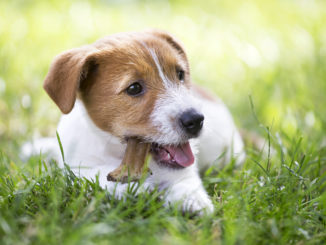
We propose that the pet-positivity dimension, in the context of
attributional processes, could figure into decisions about
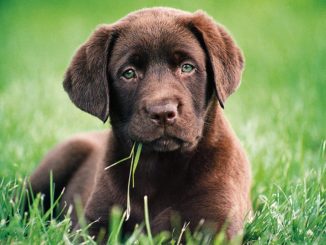
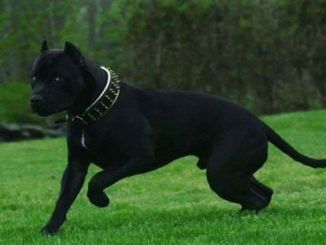
problematic animal behavior. Given an act by a companion animal
that might be seen as a problem, as with the dog in Figure 1, a
decision to employ therapy or training versus a decision to
surrender the animal to a shelter could well depend on whether
an owner views the actor as a "good dog."
References
Boenning, D. A., Fleisher, G. R., & Campos, J. M. (1983). Dog
bites in children: Epidemiology, microbiology, and penicillin
prophylactic therapy. American Journal of Emergency Medicine, 1,
17-21.
DiGiacomo, N., Arluke, A., & Patronek, G. (1998). Surrendering
pets to shelters: The relinquisher's perspective. Anthrozoos,
11, 41-51.
Fidler, M., Light, P., & Costall, A. (1996). Describing dog
behavior psychologically: Pet owners versus non_owners.
Anthrozoos, 9, 196-200.
Griego, R. D., Rosen, T., Orengo, I. F., & Wolf, J. E. (1995).
Dog, cat, and human bites: A review. Journal of the American
Academy of Dermatology, 33, 1019-1029.
Hewstone, M. (1989). Causal attribution. Cambridge, MA: Basil
Blackwell.
Leung, A. K. C. & Robson, W. L. M. (1992). Human bites in
children. Pediatric Emergency Care, 8, 255-257.
Miller, F. D., Smith, E. R., & Uleman, J. (1981). Measurement
and interpretation of situational and dispositional
attributions. Journal of Experimental Social Psychology, 17,
80_95.
Moss, S. P. & Wright, J. C. (1987). The effects of dog ownership
on judgments of dog bite likelihood. Anthrozoos, 1, 95-99.
Rajecki, D. W., Rasmussen, J. L., Modlin, S. J., & Holder, A. M.
(1998). Dog bites boy: Judgments of blame and shame. Anthrozoos,
11, 66-73.
Rasmussen, J. L. & Rajecki, D. W. (1995). Differences and
similarities in humans' perceptions of the thinking and feeling
of a dog and a boy. Society & Animals, 3, 117-137.
Ross, M. & Fletcher, G. J. O. (1985). Attribution and social
perception. In G. Lindzey and E. Aronson (Eds.), Handbook of
social psychology: Vol. 2 (3rd ed., 73-122). New York: Random
House.
Russell, D. (1982). The causal dimension scale: A measure of how
individuals perceive causes. Journal of Personality and Social
Psychology, 42, 1137-1145.
Russell, D. W., McAuley, E., & Tarico, V. (1987). Measuring
causal attributions for success and failure: A comparison of
methodologies for assessing causal dimensions. Journal of
Personality and Social Psychology, 52, 1248-1257.
Sanders, C. R. (1990). Excusing tactics: Social responses to the
public misbehavior of companion animals. Anthrozoos, 4, 82-90.
Sears, D. O. (1983). The person_positivity bias. Journal of
Personality and Social Psychology, 44, 233-250.
Shaver, K. G. & Drown, D. (1986). On causality, responsibility,
and self_blame: A theoretical note. Journal of Personality and
Social Psychology, 50, 697-702.
Tenner, E. (1998). Citizen canine. Wilson Quarterly, 22, 71-79.
Weiner, B. (1995). Judgments of responsibility. New York:
Guilford Press.
Wells, D. L. & Hepper, P. G. (1997). Pet ownership and adults'
views on the use of animals. Society & Animals, 5, 45-63.
Notes
1. Correspondence should be sent to D. W. Rajecki, Department of
Psychology, LD124, IUPUI, 402 North Blackford Street,
Indianapolis, IN 46202-3275. Phone (317) 274-6766; Fax: (317)
274-6756: E-mail: drajecki@iupui.edu. Copies of the
questionnaires employed in this project are available on
request.
2. The word "causing" was inadvertently employed in the bite
outcome of Experiment 1. The concern is that in drawing
respondents' attention to any causal relationship, attributional
distinctions about what characterized the cause of the bite
outcome (internality, controllability, stability) may have been
blurred. However, if the bite results were truly contaminated by
increased error variance, one would expect parallel shifts for
both actors relative to play ratings and small differences
between the actors. Instead, opposite shifts and strong
differences emerged for biting. In any event, the word "causing"
was replaced in Experiment 2.
For Abstracts of all issues, including the most current, click
Article
Abstracts
To order Society &
Animals Journal, go to our secure online
ordering page
You
can Search the online issues of Society & Animals, as well
as the entire Society & Animals Forum (formerly PSYETA)
website,
for topics and keywords of your interest:
|