
|
The
Dispossession of Animal Companions: A Humanistic and Consumption
Perspective
Debra
Lynn Stephens and Ronald Paul Hill 1
Villanova University
This
research project examines the dispossession of animal companions
by loving owners. The results of two data collections reveal
six highly interrelated themes: Love and Friendship, Joy in
Life versus Sorrow in Death, Pets as Family Members, Vividness
of Unexpected Death, Good-bye Rituals, and Return to Nature.
The article closes with a brief discussion of the implications
of these themes for service providers and for the education
of potential pet owners.
- My
dog does have his failings, of course. He's afraid of firecrackers
and hides in the clothes closet whenever we run the vacuum cleaner,
but unlike me he's not afraid of what other people think of
him or anxious about his public image. He barks at the mail
carrier and the newsboy, but in contrast to some people I know
he never growls at the children or barks at his wife. (Kowalski,
1991, p. 2)
Pet ownership
in the U.S. is higher than ever; more than 60 percent of homes
contain animal companions ranging from dogs and cats to birds,
fish, and myriad other non-human species (Jasper & Nelkin,
1992). Consumers spent $8.5 billion annually on pet food (Mogelonsky,
1995), and more than $5 billion a year on veterinary services
(Crispell, 1991). And according to the International Association
of Pet Cemeteries, many people are willing to invest in their
pets in death as in life; there are more than 600 pet cemeteries
across the nation, and new ones are established almost monthly
(Drown, 1995). On the other hand, 11 to 27 million cats and
dogs pass through the 5,000 or so animal shelters in the U.S.
each year. Nearly half of these animals are given up by their
owners; the rest are strays. And only about 1 in 5 cats or dogs
in shelters is adopted (Crispell, 1991).
Psychologists
and sociologists have shown moderate interest in examining the
nature of the human- animal bond (e.g., Katcher & Beck,
1983; Loyer-Carlson, 1992; Sussman, 1985; Tuan, 1984), but consumer
researchers have, until recently, had little to say about the
diverse relationships between consumers and their pets (for
exceptions, see Hirschman, 1994; Sanders, 1990). This study
seeks to extend our understanding of these relationships by
focusing on owners' experiences of and responses to a pet's
death. Current knowledge of animals' roles in our lives will
be discussed, with a focus on humans' responses to the loss
of a pet. Then our study will be presented, followed by a brief
discussion of implications for service providers and consumer
education.
The
Functions of Pets in Our Lives
Hirschman
(1994) enumerates the diverse roles pets may play in our lives;
most fundamentally, they are viewed and treated either as objects/property
or as companions with feelings and preferences of their own.
Object animals may serve as ornaments (e.g., exotic fish or
birds acquired for their beauty), as status symbols (e.g., thoroughbred
horses), or as equipment (hunting dogs, carriage horses). Companion
animals may be regarded as friends, family members, or even
as extensions or part of the consumer's self. Intuition and
anecdotal evidence would suggest that many pets have dual functions
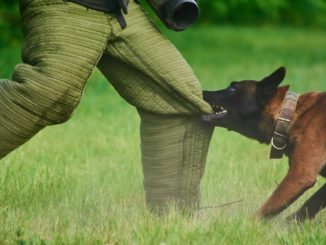
as objects and as companions. For example, the senior author
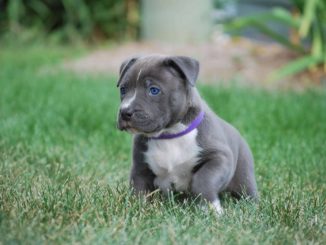
knows a couple that adopted a pit bull for protection. Because
she has been treated humanely from puppyhood, she is very affectionate.
It appears that she functions as a child as well as a guard
dog: she has regularly scheduled "play time" with her favorite
dog friend and she owns many toys, which are stored in a child's
toy box. But she has been trained to attack (human and canine)
intruders, and will do so if her home or her owners are threatened.
When
asked how they view their pets, between 70 (Beck & Katcher,
1983) and 93 percent (Katcher & Rosenberg, 1979) of respondents
report that they view them as family members. When a pet is
regarded as a close friend or family member, one cannot assume
it is merely a substitute for a human (Weisman, 1991). As the
opening quote suggests, animals provide us with love and acceptance
that is not contingent on our appearance, social or economic
status, or accomplishments. They do not criticize or mock us,
and they never become entangled in our own ruminations and abstractions.
In contrast to human relationships, which may be complex, confusing,
and at times painful, bonds with pets are unambivalent and relaxed,
and (in many instances) more consistently intimate and loving.
And pets need us to care for them on a daily basis; unlike human
children, who eventually grow up and become independent, or
spouses, who can fend for themselves, pets are totally dependent
on us for their survival and well-being. Thus they fulfill our
need to be needed, to nurture and to love. Given that pets offer
us so much, it is not surprising that an individual who has
lost a beloved animal companion may grieve as for a human companion.
However,
it would be a mistake to assume that all pets are so treasured
or their loss so mourned. Research (Hirschman, 1994) as well
as anecdotal evidence (Jasper & Nelkin, 1992) suggests that
pets are regarded as family members or close friends to the
degree that they may be anthropomorphized, i.e., imbued with
human motives, feelings, and thoughts. Hirschman proposes that
pets are arrayed within a cultural hierarchy, the lowest rung
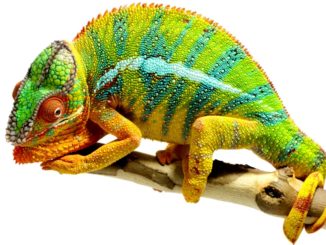
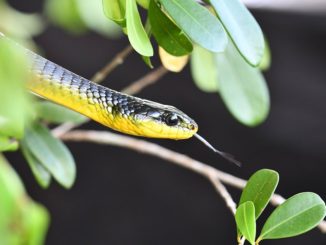
of which is occupied by cold-blooded vertebrates (the most difficult
to anthropomorphize), and the highest rung by dogs and cats
(the most readily humanized). Birds and rodents occupy the middle
rungs. In interviews with pet owners, Hirschman found that "animals
at the lower end were more likely to be objectified and commoditized
- viewed as food for self or others, discarded down a toilet
or in a garbage can" (p. 625).
Responses
to the Death of an Animal Companion
More
than 15 million animals kept as pets die each year (Katcher
& Beck, 1983). At least two and a half million are euthanized
by veterinarians with the owner's consent (Fogle, 1981; Katcher
& Beck, 1983; McCulloch & Bustad, 1983). According to
more recent reports, veterinarians perform an average of 8 to
11 euthanasias per month (Hart, Hart, & Mader, 1990; Sanders,
1995). Disease, accidental injuries, natural causes, and human
neglect or abuse account for unknown proportions of the 12 and
a half million or so remaining deaths.
How an
individual responds to the death of an animal companion is a
function of myriad factors, including degree of attachment (Gage
& Holcomb, 1991; Harris, 1983; Sanders, 1995), previous
bereavement experiences, age, attitudes of others (Stewart,
1983), and childhood socialization regarding "appropriate" responses
to death (Dickinson, 1992). Because the death of an animal companion
may be experienced very differently by children and adults,
we discuss the two groups separately.
Children's
Responses to the Death of an Animal Companion
While
a number of researchers have attempted to examine how children
acquire the concept of death (see Lazar & Torney-Purta,
1993 for a review), few have focused on childhood bereavement
experiences involving animals in particular (Dickinson, 1992).
Stewart (1983) asked 135 school children aged 6 to 15 years
to write essays about their animal companions, indicating what
they liked about the animal and how they felt when it died.
Of the 62 children who wrote about animals that had died, two-thirds
reported that they felt sad. In all bereavements that appeared
unresolved, the child's parents were unwilling to have another
animal, usually because they did not wish to experience another
loss. This conflict between the wishes of child and parents
often led to family arguments.
Stewart
observes that parents and veterinarians may have great influence
on children's subsequent attitudes toward, and responses to,
animal companions' deaths:
The
father who went to the trouble to bury his daughter's fish
created a very different impression on that child than the
vet who laughingly made a comment about 'fish for dinner'
when a daughter's friend brought in a dying goldfish. (That
girl never again took an animal to a vet.) (Stewart, 1983,
p. 394)
Dickinson
(1992) collected retrospective written accounts of 440 college
students' first experiences with death; 28 percent of those
childhood experiences involved the death of an animal. Commonly
reported emotions included sadness, confusion, fear, and guilt.
Most respondents recalled crying. When an animal companion died
in an accident, almost without exception, respondents reported
feeling intense anger, even hatred, directed at the one who
had killed the animal. This anger extended to parents who had
the animal companion put to sleep, and to the vet who performed
the euthanasia.
Whether
the child's bereavement involved the loss of an animal or of
a human, parental responses were often inadequate or inappropriate.
Several respondents described being punished for crying. One
respondent was spanked with a hairbrush when she was 15 years
old for crying over the death of her puppy. In another account,
the parents of a four-year-old girl did not tell her that her
puppy had been killed by a mowing machine until two or three
weeks after the event. "She was allowed to search for him 'frantically'
every day. She even put out food and would worry at night that
he was cold or hungry" (p. 174).
Young
children often believe that they can control, and thus are responsible
for, what happens to those around them, humans and animals alike
(Fraiberg, 1959; Leach, 1983). Such "magic thinking" brings
with it wholly unwarranted but overwhelming feelings of guilt
when something goes wrong:
One
four year-old girl's responsibility was to feed the dog, Charlie,
every night. One night she forgot to feed Charlie, and the
next day Charlie did not come home. She said: 'I just knew
he had run away because I had not fed him. I felt terribly
guilty, but I kept my mouth shut and did not tell my parents
of my grave mistake. A few days passed, and Charlie still
did not come back, even though every night I tried to call
him to feed him...My parents finally told me that Charlie
would never be coming back because he had been run over. Well,
this information devastated me. I put all the blame on myself.
I just knew that Charlie had been run over because I had failed
to feed him that night. (Dickinson, 1992, p. 172)
Relatively
few of the entire group of 440 respondents recounted memories
of family closeness and sharing of grief. This culture's extreme
discomfort with death is well-documented (Gentry, Kennedy, Paul
& Hill, 1994; Leach, 1983); Dickinson's study suggests mechanisms
by which children are taught this discomfort, and the concomitant
denial and/or repression of grief at the loss of beloved humans
or animals.
Adults'
Responses to the Death of an Animal Companion
Adults'
initial responses to the death of an animal companion may include
sadness and crying (Cowles, 1985; Harris, 1983; Stewart, 1983;
Weisman, 1991), appetite and sleep disturbances (Quackenbush,
1984), a temporary inability to cope with daily routine (Cowles,
1985; Quackenbush, 1984; Stewart, 1983), and often guilt when
the owner consented to have the animal euthanized (Harris, 1984).
If the animal companion died in an accident, cognitive reliving
of the event is common (Cowles, 1985). Searching behavior (unconscious
attempts to locate the animal) and misperceptions of the animal's
presence are not uncommon in the weeks and months following
the death. The animal's possessions - collars, favorite toys,
food dishes, blankets - are often kept as mementos (Cowles,
1985). The time it takes to recover from the loss may vary from
a few days to many months (Katcher & Rosenberg, 1979; Stewart,
1983; Weisman, 1991).
The death
of an animal companion may also lead to disruptions in family
functioning. In a survey of 242 couples who reported the death
of an animal companion in the prior 3-year period, Gage and
Holcomb (1991) found that 40 percent of the wives and more than
25 percent of the husbands stated that they were "quite" or
"extremely" disturbed by the loss. For husbands, the loss of
an animal companion was almost as stressful as the loss of a
close friendship, and more stressful than children leaving home
or getting married. For wives, an animal companion's death was
about as stressful as losing touch with their married children,
and more stressful than the loss of a close friendship or children
leaving home or getting married. Researchers have observed that
in cases where family members' reactions to the death are quite
disparate, the member who is most deeply affected may be rejected
or stigmatized by the others (Carmack, 1985; Gage & Holcomb,
1991).
While
some individuals may attempt to talk with someone about an animal
companion's death (Cowles, 1985), few report being comforted
by such interactions (Cowles, 1985; Stewart, 1983). In Cowles'
study, for example, one informant "bitterly reported that when
she appeared upset at work the day following her dog's death
and her boss responded by saying, 'Well, it's just a dumb dog'"
(p. 141). Weisman (1991), in his counseling of the bereaved,
notes:
the
discovery of acceptance and respect for their bereavement
was in itself appreciated. There was a general reluctance
to tell others about their bereavement, because they feared
criticism, condescension, or curt suggestions, such as, 'Get
another cat,' 'After all, it's only a dog.'...Most people
apologized for crying. (p. 243)
It is
clear that the seeds sown in childhood have taken root.
Data
Collection and Analysis
In order
to better understand the bereavement process for an animal companion
from a consumer behavior perspective, data were collected from
two independent sources. The first source was a pet cemetery
located in the same community as the pet owners. The second
source was current or former pet owners who had experienced
loss of one or more pets previously.
Data
collection also occurred at a community pet cemetery that was
one of two pet-only public burial grounds locally. According
to the proprietors, the pet owners who use this facility vary
demographically but share a deep and abiding relationship with
their pets. Most of these individuals chose to bury their animal
companions instead of other means of dispossession in order
to establish a lasting memorial to an esteemed family member.
All of
the information contained on the approximately 100 "active"
grave sites/memorials were recorded, including the pet's name,
birth and death dates, and epitaph. Consistent with the method
described previously, these data were examined to gain an understanding
of the pet/owner relationship. Several themes emerged that inform
the data collected from the second source.
The 73
current or former pet owners were asked to compose a lengthy
essay describing their relationships with their deceased pets
from its inception to final dispossession. Consistent with the
recommendations of Wertz (1983), the researchers employed the
five components of everyday description out of which insights
and the ultimate interpretation should emerge. All were used
to guide this analysis, and they include: undertaking an empathic
immersion in the world of description; slowing down and dwelling
on the details of the description; magnifying and amplifying
the situation to understand its significance; suspending belief
by taking a step back and wondering what this particular way
of living the situation is all about; and turning from objects
or events to the meanings they hold for informants.
These
recommendations were operationalized by working through four
successive stages. The first stage required reliving the experience
of each respondent by reading his or her essay until the researchers
felt a sense of "empathic knowing" of the pet owner as an individual
who experienced a cherished relationship with an animal companion.
The second stage required the summarization of each pet owner's
dispossession experience. After these two steps were accomplished
for all respondents, the third stage began which involved searching
for common themes. The fourth stage required that interconnections
among the themes be explored in order to develop a comprehensive
understanding of the pet dispossession experience. To this end,
each essay was reviewed again in an attempt to validate these
themes as well as to look for negative and qualifying evidence
that failed to support this gestalt.
Thematic
Interpretation
Pet
Cemetery
Our analysis
of the pet cemetery revealed three highly interrelated themes:
Love and Friendship, Joy in Life versus Sorrow in Death, and
Pets as Family Members. Each is briefly discussed below.
The theme
of Love and Friendship was articulated clearly in the sentiments
contained on the grave markings/stones. Many owners simply stated
"To Our Beloved [Name]/Friend" or "We love you." Others added
that their animal companions were their "best friend" or "loyal
friend." While none of this is necessarily surprising given
the closeness of some owner/pet relationships, the true depths
of these friendships were revealed in the epitaphs that extended
these feelings into the unlimited future ("We love you Now &
Forever"/"Love Always") or until the owner and pet are reunited
in death ("My love until we meet again"/"if there is an eternity
may we share it together"). Thus, this theme reveals the close
personal relationship between owners and animal companions and
its enduring quality.
The Joy-in-Life
versus Sorrow-in-Death theme presents the contrast for owners
between life before and after the death of a beloved pet. For
example, animal companions were described as "The joy of our
lives" by virtue of their ordinary yet loyal traits and behaviors
("Such a sweet heart always sitting pretty"). On the other hand,
the loss of these cherished relationships was deeply felt ("Sadly
Missed"), resulting in personal reflection about the past and
future ("You came to me from nowhere, now only memories"). Thus,
this theme demonstrates the integral nature of the relationship
between owners and their animal companions.
Pets-as-Family-Members
also was widespread. Animal companions often were referred to
as "son," "daughter," or "baby," and owners referred to themselves
as "mommy" or "daddy." Also, some of the pets were afforded
special status, and their grave stones noted that they were
"adopted" by the family or represented the family's "only child."
This theme typically was associated with one or the other of
the previously discussed themes. For example, love and family
were common ("You bring us the greatest love - Papa-Mamma")
as well as feelings of sorrow and family ("Your broken-hearted
Mommy"). Thus, this theme uncovers the sacred status that some
animal companions achieve if they attain the position of an
esteemed family member.
Our analysis
of the essays revealed the three themes described above, as
well as three additional themes: Vividness of Unexpected Death,
Good-bye Rituals, and Return to Nature.
Pets
as Family Members; Love and Friendship
Because
these two themes are so closely interrelated in the essays,
they will be illustrated and discussed together. The Pets as
Family Members theme was manifest in the vast majority of essays.
Several writers expressed the belief that they had a special,
uniquely intense bond with the family pet:
Rocky
[a black lab/Doberman mix] grew up with me and saw me off
to college. There was never a time I wasn't with him. He would
ride in the front seat of my truck no matter where I went.
When I would go home [from college] for breaks, I would look
forward to seeing him as much as my parents. He was friendly
to everyone and loved to swim. Although he could easily be
an outdoor dog, we kept him in the house. He truly was part
of our family. I am an only child, and to me, he was like
a brother.
Cuddles
[a dwarf bunny] had tan fur and was only as big as the palm
of your hand...Every day after school I would come home and
pet him. Both my mom and my grandfather (who lived with us)
would also talk to and play with him. My grandfather would
also pick fresh grass for him and get cabbage for him from
the market. I would play music for him and talked to him about
things like he could understand me...I would give him four
pieces of Life cereal every night with his dinner. Cuddles
would always get excited, spin in circles, and eat the Life
first...My brother liked him but would be mean to him to get
me mad...The things I will remember most about Cuddles is
how soft the fur on the back of his neck was, and how he would
lick my hands but bite my brother's.
Casey
[a Golden Retriever puppy] soon became a loved member of the
family. She seemed to get more attention than any other member!
I enjoyed the time I spent with Casey immensely. I was the
one who trained her so we spent many hours alone together.
Sometimes I trained her but often we just played. To me it
seemed that a special bond developed between us that she did
not share with the rest of my family.
Rocky
was an animal brother, as described in Hirschman (1994). Unlike
a human sibling, who would eventually go his own way, Rocky
remained at home, ever eager to spend time with his childhood
companion. No two humans, however intimate and loving, can travel
precisely the same path in life, but our animal companions will
go with us anywhere. It is not surprising, then, that we honor
and pamper our pets, as Cuddles was honored and pampered.
Judging
from the essays, anecdotes, and the authors' own experiences
with pets, two of the primary ways in which we honor them are
by anthropomorphizing them and by offering them gifts; Cuddles
was fed human food, and Rocky was given Christmas presents (wrapped),
including a personalized water bowl and a bed which was set
directly beside his master's. Nowhere is the process of honoring
through anthropomorphization more eloquently illustrated than
in the following passage about Tootsie, a parakeet who, the
writer explains:
became
the light of my family's and my life. There were many reasons
why I liked Tootsie so much, but it was mainly because she
started to become a human being to us. It started one morning
when I was eating my Rice Krispies before school, and Tootsie
jumped on my bowl to share my breakfast. From that morning
on, Tootsie received her own bowl of cereal every morning.
She also experienced loneliness just as a human would. If
we would leave her alone without any type of noise in the
house, we would come home to find her waiting for someone
at the front window. This is when we started to leave the
radio on for her if we went out, which made her feel as though
there were people somewhere in the house.
The writer
goes on to describe how, every Christmas, each member of the
family gave Tootsie a different toy. Perhaps because the essays
were written in early December, they contain numerous accounts
of the inclusion of the family pet in Christmas celebrations;
many animals were given presents, often in their own personalized
Christmas stockings.
When
a pet becomes a family member, s/he may assume a special status
not held by any human, by virtue of our perception that animals
can love us unconditionally, a feat that does not seem humanly
possible. And they can "listen" without judging, gossiping,
or offering unwanted advice. Witness Tara and Pepper:
If
there is one thing that I will always remember about Tara
[a black and white Alaskan Malamute], it would be that she
was like a best friend. No matter how bad a day I could have
had, Tara was always happy to see me, and that always gave
me the feeling that I was special and that no matter what
I did, Tara would always love me.
The
things I remember most about Pepper [a dog, the family's first
pet] were the walks we'd take late at night. I'd look at the
stars and clear my mind while he'd look at the trees and water
them. And ok, I admit it: sometimes when we were out there
all alone, I'd talk to him about life or things that were
bothering me. He couldn't talk back but I know he was listening
and understood. Those walks used to put me at peace, and I
miss them dearly.
The foregoing
passages amply illustrate the theme of animal companion as cherished
friend. We see this also in people's descriptions of their bereavement:
I missed
him [a dog who died at the age of 15] a lot. It was as if
a good friend of mine had died. The house seemed so empty
without him. I only spoke with my mother at any real length.
She felt very similarly. In fact, she cried more than I did.
[Bear,
a 12-year-old golden retriever, had been diagnosed with cancer.]
How can you decide to end the life of someone you love so
much? I remember talking to Bear and asking him to tell me
what he wanted us to do. He just looked up at me from the
kitchen floor with his sad old eyes. We all knew what had
to happen...
Though
euthanasia of companion animals who are suffering and not expected
to recover is a widely accepted practice in this society (Fogle,
1981; Hart, Hart & Mader, 1990; McCulloch & Bustad,
1983), it can be a very painful decision for the owner to make
(Stewart, 1983), and an emotionally difficult one for the veterinarian
to execute (Sanders, 1995). Sanders (1995) suggests that euthanasia
becomes problematical when the owner relates to the animal as
a subject or person (friend or family member) rather than as
an object to be used and discarded at will. Indeed it was Bear's
status as a beloved person that led the owner to look to him
for guidance in this heartwrenching decision.
Joy
in Life versus Sorrow in Death
The following
passages are representative of most of the writers' descriptions
of how they felt upon the death of a companion animal:
For
the longest time I was sad that I lost my dog. I never really
cried or got too emotional, but I really felt bad. I originally
thought that I did not want another dog to replace him. I
saw Triever as a part of the family, and you can't just replace
a family member.
I think
that I felt the loss of Casey [the golden retriever mentioned
earlier] more than the rest of my family because of the bond
we shared. My family knew how I felt and I did not think that
it was anybody else's business. I just wanted some time alone
to deal with the fact that she was gone and get over it on
my own.
Our
dog had a bladder disease where he couldn't control his urination.
We were forced to get rid of him. When we got rid of him,
I simply laid next to him on the floor and cried for about
an hour. I felt as if I had lost a part of myself. We spent
a lot of time together. I was the one who took care of him...It
took a long time to get over that loss. I didn't speak to
anyone about it. I didn't feel like anyone would understand.
Each
of these excerpts reflects the owner's intense emotional bond
with his/her deceased pet, and correspondingly deep sorrow at
the dissolution of that bond. The third passage (representative
of many responses we received) is consistent with previous findings
that bereaved pet owners are frequently hesitant to reveal their
sadness to others for fear that they will respond with impatience
or mockery. Our society has little tolerance for the mourning
of a lost pet; this, together with other examples of forbidden
love and mourning, has been termed Disenfranchised Grief (Doka,
1989). However, as Casey's owner indicates, some individuals
need to mourn in solitude. And of those respondents who did
want to share their grief, a few were able to commiserate with
other family members, or to confide in understanding friends
(usually other pet owners):
One
day of my sixth grade year, I came home from school with one
of my best friends, John, to find out that one of my other
best friends - Joy [the writer's dog] - had died. I was so
upset but afraid to cry in front of John. He comforted me
and assured me it was "ok" to cry. "Let it out," he told me.
My mom still remembers him for this sincerity and his support
for me in my time of need.
My
boyfriend had a major impact on my dealing with the loss of
Bear. He had lost his Golden only a few months prior to Bear's
death. I could talk to him [about] my feelings...I found that
talking to a dog owner was the best bet in dealing with the
loss of Bear. My friends who didn't have a dog really didn't
understand my emotional connection to Bear.
Good-bye
Rituals
When
an animal companion was euthanized because of an incurable and
degenerative illness (the only reasons cited by these respondents),
the entire family often anticipated the impending loss, and
said their good-byes in various ways.
As
Lindy [the family's Irish setter] grew older, she became very
sick. Her eyes grew worse, and she experienced major arthritis.
We were told that Casey had cancer and that she was going
to die. My family was devastated. Casey had become so much
a part of the family it was impossible to imagine her not
being with us. It was not her time. The vet was able to give
her some treatment that would limit the effects of the cancer
but inside it was still doing damage. We elected to give her
the treatment so that we could spend a little more time with
her. She was better for a couple weeks but she began to deteriorate
quickly. I think that she knew that she was dying because
she seemed to want to be with us more than ever. She could
not play anymore but she would still lie on the floor with
a sad look in her eye. As her situation worsened we had to
face reality. It was a very tough decision but we did not
want her to suffer so we decided to put her to sleep. On the
day it was to occur my father and mother took off from work
and we all tried to be with her. Each of us took time to say
good-bye in our own way.
The
next week, we took Bear to the vet to be put to sleep. The
emotional drain that we were all going through was so immense.
My brother and father called out of work. My sisters and I
were allowed to miss school that day. It was very traumatic.
My dad and brother had to carry Bear to the car...He looked
so sick, yet so calm and peaceful at the same time. We arrived
at the vet and cried our good-byes to our dear friend, Bear.
On
the morning of July 8th, my parents, Pepper and I drove in
the family car to Memorial Lake, a small scenic lake 20 minutes
out of town. It had always been one of Pepper's favorite places
to go. When we got there, Pepper took a few steps out into
the lake just like he always had. After an hour of strolling
around, we left for the vet...Pepper always got very nervous
around the vet's office and usually resisted. On this day,
he walked calmly through the front door. To this day, I think
Pepper knew exactly what was to take place inside. He understood.
He accepted. He cooperated.
Lindy
and Pepper were given special indulgences on their last day
of life, much as prisoners condemned to die may be offered
their favorite foods for a last meal. Bear's family renounced
their daily routine in order to be with him during his last
moments. While the decision to have an animal euthanized may
be a painful one, it does afford the owner an opportunity
for a peaceful, loving leave-taking. And many of our respondents
appeared to take refuge in the knowledge that they were ending
their pet's suffering, that indeed there was no other humane
alternative.
Vividness
of Accidental Death
In many
cases, there was no opportunity for good-byes. Buck, a black
golden setter, was kept chained to a large tree behind the family's
house.
One
rainy day, at about 4 o'clock, the thunder was screeching
throughout the sky. At this point we were ready to bring Buck
indoors. Yet, before we acted, we heard a loud bang that sounded
as if lightning struck earth. Because we have many surrounding
trees, we initially thought it was one that had been struck
and fallen. When we looked outside, we saw Buck lying on the
ground, motionless. We refused to believe that Buck was gone,
that he would be taken in such a fashion. However, it appeared
that the lightning hit the chain, which then proceeded to
electrocute Buck.
Our
neighborhood was having a yard sale on Saturday, in the spring.
I stayed at the house to man our sale table while my father,
brother, and Jacques [the family dog] went for a bike ride
around the development. They ended up stopping on the side
of [the] road. However, a truck driver who's [sic] driver
was more concerned with the yard sales and not the road, went
too fast over a blind hill. She hit Jacques leaving him dead
at 13 years old. I can remember the commotion that ensued
after the incident. I just remember my father picking up Jacques'
body and putting it between blankets in the back of our station
wagon. My parents took him to the vet's for cremation. The
whole time, my mother, brother and I were crying. Jacques
was part of our family.
Jingles
the cat was permitted to roam freely outdoors while the family
was away for the evening. We returned home from our party
very late that evening. As we pulled up to the driveway, my
father noticed a rag laying on the lawn beside the driveway.
My father asked my little sister, Tracy, if she could go over
and pick up the rag before she went into the house. For some
reason I went over with her. Tracy ran over to the rag and
picked it up. My parents could hear the screams from inside
the garage. They ran out to where we were standing and they
could hardly believe their eyes. Lying in the frost covered
grass was Jingles. I was hoping that it was just a dream,
a joke, or some sickness that was preventing my cat from moving
- it could not be death, not Jingles...We went into the house
all crying. I particularly remember seeing my father cry and
thinking about how special Jingles must have been to cause
such a reaction from him. We were later told by our neighbor
that Jingles had been hit by a car...It has been 11 years
since Jingles' death, however it only seems like yesterday
that my family and I said good-bye to him...
Missy
[the family cat] was hit by a car on the road by my house...My
brother, who was about 10 at the time, was getting off the
bus from school when he saw Missy in the road. The really
hard part for my brother was that she was still alive, lifting
her head as Derek called her name...My mom went with a friend
and brought Missy to the vet, where she died...I remember
my brother, mother and I went into an extreme depression...Derek
and I went around the house collecting bits of fur and any
stray whiskers from the carpets that we could find. Another
thing I remember, which I found a few years ago, was a note
I had written the day Missy died. It was the writing of a
six year-old, and it said something like, "Missy, you died
today, I miss you." Along with the note was the fur and whiskers.
The detail
these passages contain suggests that in writing them, the respondents
were cognitively (and possibly emotionally) reliving the events.
This process commonly occurs following the accidental death
of an animal companion; Cowles (1985) suggests that such rumination
may be necessary to establish the reality of the event. It may
also reflect the owner's yearning to turn the clock back and
prevent the accident.
Lamentably,
most of the accidents recounted in these essays could have been
prevented. A fenced yard would have eliminated the necessity
of chaining Buck to keep him from chasing cars, as was his wont.
Indeed, keeping an animal chained is highly questionable on
humane grounds. And many cats (and some dogs as well) are allowed
to roam freely, despite the ever-present dangers of traffic.
The owners of Buck and Jingles recognized that their untimely
deaths could have been prevented. In their struggle to come
to terms with the accidents, they imputed special significance
to the accidents:
In
our minds, Buck's death occurred for a reason. He saved the
monstrous tree, our house that would have been destroyed if
the tree fell on it, and our lives as well in the process.
His death was an accident that we wished would never have
happened. To maintain his memory, we kept his charred chain
and made a tiny memorial in the yard, each of us saying good-bye
in our hearts...I remember telling my friends about the occurrence
and they seemed to react in shock as well. They also said
that his death was partly our fault. This I refused to believe,
and I shut the idea out from my mind.
The
day after Jingles' death, my parents had brought him to vet
early in the morning, before any of us were up. There was
no ritual or any special good-byes that we did. I guess that
is a little surprising, since Jingles was such a special part
of my family and childhood. It did feel like actually losing
a member of the family...However, the way my sister rationalized
it helped us get through it. She said that God was lonely
and needed a pet. He knew the [family] had this great one
in Scotch Plains, NJ. Therefore, he brought Jingles to Heaven...
Return
to Nature
While
many respondents reported that they did not know what became
of the deceased animal's body, others recounted backyard burials:
I buried
Cuddles in the backyard and put a big rock at the head of
his grave. Flowers grow all over the grave today.
We
buried Squirt in the backyard of our house in Lincoln, near
the railroad tracks. We planted a plum tree on his grave.
We learned from neighbors, several years after we moved away,
that the plum tree was a beauty. I wasn't surprised.
My
dad buried Princess in the woods by her house. There is a
big rock above where she is buried to mark the grave, and
I can remember going to the rock because I missed her.
Two
years ago Fluffy died at age 13. My mother found her nestled
in the corner of our family room. My mother and sisters were
visibly upset...We wrapped Fluffy in a soft towel and we buried
her in our backyard under a tree she used to sit under to
shade herself from the sun. The spot was marked by a stone,
and the stone is still there today.
We
had a funeral for Tootsie in the backyard near the fence so
she could be with all the birds that always sat there. I wrote
her name and the year of her birth and death on the box which
we then buried. This way we could go visit with Tootsie at
any time.
The first
two passages evidence the owners' beliefs that their beloved
animal gave rise to beauty and life even after death. All burials
were in a place that was perceived to be a favorite of the animal,
a way of honoring and caring for this family member in death
as in life. Paradoxically, the absence of a formalized structure
for helping people cope with the loss of an animal companion
carries with it the freedom to dispose of the remains as one
sees fit. Thus it is that the animal - and its spirit - may
be kept nearby, and visited readily.
Summary
and Discussion
The data
collected from the two sources provide parallel findings for
consumer researchers and business practice. This research demonstrates
the central role that many animal companions play in the lives
of their owners, not as objects but as loved and cherished members
of families who are a source of joy throughout their lives.
The death of these pets, particularly an unexpected or tragic
death, results in great sorrow and grief consistent with the
loss of a close personal friend, spouse, or child. When possible,
some relief is provided through good-bye rituals or burial rites
and sites.
Unfortunately,
our society does little to prepare pet owners, especially children,
for the inevitable loss of animal companions. Grieving is often
avoided or unnecessarily shortened (Gentry et al., 1994), and
there are callous individuals who believe that pets are not
worthy of an emotional response. While business organizations,
in and of themselves, are hardly to blame, they may be able
to provide part of the solution. For example, the vast funeral
industry in this country designed to support grieving loved
ones could be expanded to include, at a minimum, similar rituals
and procedures for the dispossession of animal companions that
would allow owners to express their sorrow, even if only for
a few days. Such a subindustry would go a long way to legitimize
what pet owners have always known--that animal companions give
and are worthy of lasting love and affection. A few pioneers
have already emerged: the Veterinary Hospital at the University
of Pennsylvania provides social work services to bereaved pet
owners (Quackenbush & Glickman, 1983) and pet-loss support
hotlines have been established by at least four veterinary schools
including Tufts, Michigan State University, the University of
Florida, and the University of California at Davis (Catnip,
1996). In addition, the International Association of Pet Cemeteries
is working to establish a certification program that would be
mandatory for individuals who desire to enter the field of pet
cemetery management (Drown, 1995). Such a program would not
just focus on business issues, but also on the processes of
bereavement and grieving, and on the needs of the bereaved.
Research
on parental responses to a child's loss of a pet reveals a pressing
need for parent information on how to help their children cope
with such losses. This information could be disseminated through
veterinarians' offices and animal welfare organizations. Furthermore,
the number of preventable accidental deaths described in the
essays strongly suggests the need for more widespread and formalized
education of consumers regarding the responsibilities entailed
by the decision to take an animal into the home. Our animal
companions are entirely at our mercy; they depend on us for
their survival and well-being. Fox (1990) points out that while
myriad studies have demonstrated the benefits to humans of keeping
animals, the benefits to the animals themselves have been virtually
ignored. He observes that keeping animals as pets:
entails
not only love, but also respect and understanding. Animals
should be given equal and fair consideration. They were not
created for our own exclusive enjoyment; rather they have
interests and a life of their own. (Fox, 1990, p. 170)
Respecting
an animal means being fully informed about the animal's unique
needs and wants in the areas of nutrition, exercise, health
care, and socialization. It means protecting animals from human-created
dangers - such as automobiles - from which they cannot protect
themselves. And it means having the generosity of spirit not
to adopt an animal if these needs cannot be met.
To the
extent that we can learn to respect and empathize with the animals
in our lives, we will be enriched by a broadened perspective
of what life on this earth is all about:
So
my dog is a sort of guru. When I become too serious and preoccupied,
he reminds me of the importance of frolicking and play. When
I get too wrapped up in abstractions and ideas, he reminds
me of the importance of exercising and caring for my body.
On his own canine level, he shows me that it might be possible
to live without inner conflicts or neuroses: uncomplicated,
genuine, and glad to be alive. (Kowalski, 1991, p. 2)
Notes
1. Stephens
is Assistant Professor of Marketing and Hill is Chairperson
and Professor of Marketing. Correspondence should be directed
to Debra Lynn Stephens, Villanova University, College of Commerce
and Finance, Bartley Hall, Villanova, PA 19085, (610) 519-4168.
We are grateful to those who generously shared with us their
experiences of the loss of a cherished animal companion; their
accounts touched our souls and gave life and heart to this research.
2. The
full account from which this excerpt was taken indicates, not
simply momentary insensitivity to a child's grief, but the presence
of parental attitudes and behaviors that were pervasive, ongoing,
and destructive to the child. Longitudinal research has established
that corporal punishment in childhood and adolescence is associated
with adulthood depression and suicide, drinking problems, masochistic
sex, difficulty attaining a high-level occupation, and violent
crime. This link obtains regardless of the age or gender of
the child, the frequency of spanking, and whether the parents
showed warmth and affection to the child (Straus 1994).
References
Beck,
A. & Katcher, A. (Eds.). (1983). Between pets and people
. New York: G. P. Putnam's Sons.
Catnip:
A Newsletter for Caring Cat Owners, 3 (10), 7.
Carmack,
B. (1985). The effects on family members and functioning after
the death of a pet. In M. Sussman (Ed.), Pets in the family
(pp. 149-164). New York: The Haworth Press.
Cowles,
K. (1985). The death of a pet: Human responses to the breaking
of the bond. In M. Sussman (Ed.), Pets in the family
(pp. 135-148). New York: The Haworth Press.
Crispell,
D. (1991). Pet sounds. American Demographics , May,
40-44, 53.
Dickinson,
G. (1992). First childhood death experiences. Omega Journal
of Death and Dying, 25 (3), 169-182.
Doka,
K., (Ed.). (1989). Disenfranchised grief . Lexington,
MA: Lexington Press.
Drown,
P. (1995). Personal communication.
Fraiberg,
S. (1959). The magic years: Understanding and handling the
problems of early childhood . New York: Charles Scribner's
Sons.
Fogle,
B. (1981). Attachment-euthanasia-grieving. In B. Fogle (Ed.),
Interrelations between people and pets (pp. 331-342).
Springfield, IL: Charles C. Thomas.
Fox,
M. (1990). Inhumane society: The American way of exploiting
animals . New York: St. Martin's Press.
Gage,
M. & Holcomb, R. (1991). Stressfulness of death of the family
pet. Family Relations , January, 103-105.
Gentry,
J., Kennedy, P., Paul, K. & Hill, R. (1994). The vulnerability
of those grieving the death of a loved one: Implications for
public policy. Journal of Public Policy and Marketing, 13
(2), 128-148.
Harris,
J. (1983). A study of client grief responses to death or loss
in a companion animal veterinary practice. In A. Katcher &
A. Beck (Eds.), New perspectives on our lives with companion
animals (pp. 370-376). Philadelphia: University of Pennsylvania
Press.
Harris,
J. (1984). Understanding animal death: Bereavement, grief, and
euthanasia. In R. Anderson, B. Hart, & L. Hart (Eds.), The
pet connection: Its influence on our health and quality of life
- proceedings of the Minnesota-California conference on the
human-animal bond (pp. 261-275). Minneapolis: University
of Minnesota Press.
Hart,
L., Hart, B. & Mader, B. (1990). Humane euthanasia and companion
animal death: Caring for the animal, the client, and the veterinarian.
Journal of the American Veterinary Medical Association,
197 (10), 1292-1299.
Hirschman,
E. (1994). Consumers and their animal companions. Journal
of Consumer Research, 20 (3), 616-632.
Jasper,
J. & Nelkin, D. (1992). The animal rights crusade: The
growth of a moral protest . New York: The Free Press.
Katcher,
A. & Beck, A. (Eds.). (1983). New perspectives on our
lives with companion animals . Philadelphia: University
of Pennsylvania Press.
Katcher,
A. & Rosenberg, M. (1979). Euthanasia and the management
of the client's grief. Compendium on Continuing Education,
1 , 887-891.
Kowalski,
G. (1991). The souls of animals . Walpole, NH: Stillpoint
Publishing.
Lazar,
A. & Torney-Purta, J. (1993). The development of the subconcepts
of death in young children: A short-term longitudinal study.
In M. Hertzig & E. Farber (Eds.), Annual progress in
child psychiatry and child development (pp. 144-162).
New York: Brunnel/Mazel.
Leach,
P. (1983). Your growing child: From babyhood through adolescence
. New York: Alfred A. Knopf.
Loyer-Carlson,
V. (1992). Pets and perceived family life quality. Psychological
Reports, 70 , 947-952.
Mogelonsky,
M. (1995). Reigning cats and dogs. American Demographics
, April, 10.
McCulloch,
M. & Bustad, L. (1983). Incidence of euthanasia and euthanasia
alternatives in a veterinary practice. In A. Katcher & A.
Beck (Eds.), New perspectives on our lives with companion
animals (pp. 366-369). Philadelphia: University of Pennsylvania
Press.
Quackenbush,
J. (1984). Pet bereavement in older owners. In R. Anderson,
B. Hart, & L. A. Hart (Eds.), The pet connection: Its
influence on our health and quality of life - proceedings of
the Minnesota- California conference on the human-animal bond
(pp. 292-299). Minneapolis: University of Minnesota.
Quackenbush,
J. & Glickman, L. (1983). Social work services for bereaved
pet owners: A retrospective case study in a veterinary teaching
hospital. In A. Katcher and A. Beck (Eds.), New perspectives
on our lives with companion animals (pp. 377-389). Philadelphia:
University of Pennsylvania Press.
Sanders,
C. (1990). The animal 'other': Self-definition, social identity
and companion animals. In M. Goldberg, G. Gorn, & R. Pollay
(Eds.), Advances in Consumer Research, 17 (pp. 662-668).
Provo, UT: Association for Consumer Research.
Sanders,
C. (1995). Killing with kindness: Veterinary euthanasia and
the social construction of personhood. Sociological Forum,
10 (2), 195-214.
Stewart,
M. (1983). Loss of a pet-loss of a person: A comparative study
of bereavement. In A. Katcher & A. Beck (Eds.), New
perspectives on our lives with companion animals (pp.
390-404). Philadelphia: University of Pennsylvania Press.
Straus,
M. & Donnelly, D. (1994). Beating the devil out of them:
Corporal punishment in American families . New York: Lexington
Books.
Sussman,
M. (Ed.). (1985). Pets and the family . New York: Haworth
Press.
Tuan,
Y. (1984). Dominance and affection: The Making of Pets .
New Haven: Yale University Press.
Weisman,
A. ((1991). Bereavement and companion animals. Omega Journal
of Death and Dying, 22 (4), 241-248.
Wertz,
F. (1983). From everyday to psychological description: Analyzing
the moments of a qualitative data analysis. Journal of Phenomenological
Psychology, 14 (2), 197-241.
For
abstracts of all issues, including the most current, click Article
Abstracts
To order Society
& Animals Journal, go to our secure online
ordering page
You
can Search the online issues of Society & Animals, as well
as the entire Society & Animals Forum (formerly PSYETA)
website,
for topics and keywords of your interest:
|