
Society & Animals Journal of Human-Animal Studies
Logo - Society and Animals Journal
Volume 4, Number 2

Child-Animal Interaction: Nonverbal Dimensions

Olin Eugene Myers, Jr.
Western Washington University

Examples of child-animal interactions from a year-long ethnographic study of preschoolers are examined in terms of their basic nonverbal processes and features. The contingency of interactions, the nonhuman animal's body, its patterns of arousal, and the history of child-animal interactions played important roles in determining the course of interactions. Also, the children flexibly accommodated their interactive capacities to the differences in these features which the animals presented. Corresponding to these observable features of interaction, we argue that children respond to variations in animals' agency, coherence, affectivity, and continuity. Recent research shows infants also respond to these dimensions in interactants. We review recent work on the possible developmental roots of sensitivity to these dimensions. The implications are that for the young child, animals are social others that present intrinsically engaging degrees of discrepancy from human social others; and that the child's sense of self takes shape in the available interspecies community. Interacting with animals may be more primary than human-centered factors (such as cultural meanings, anthropomorphism, social facilitation, or psychodynamic processes) in the child's experience and developing understanding of self and animal other. Our findings show an interactive source of the meaningfulness of animate action which is possibly more primary than anthropomorphism, cultural meanings, and other factors. Implications for the theories of social development are discussed.

Studies of pets as dependent and independent variables relative to other factors have revealed important contributions of nonhuman animals to children's lives, and to the development of attitudes toward animals. As yet, however, there have been only a few careful descriptions of child-animal interactions, particularly studies that encompass a full range of human interactive domains and include a phylogenetic sampling of non-pet species (Margadant-van Arcken, 1984, 1989; Nielson and Delude, 1989). Knowledge about this topic would augment findings about the effects of involvement with animals since it would delineate factors intrinsic to the child-animal dyad across a variety of other species. Without this, explanations of such outcomes may overestimate the influence of extrinsic factors. There are also broader reasons to explore the topic as well. It could provide a starting point for a developmental understanding of human-animal relations and their continuities and discontinuities. Further, the characteristics of interactions with animals are one point for triangulating the subjective meanings of animals to children and others. And finally, since animals vary in ways that are relevant to social interaction, study of child-animal interactions is an important source of information on the child's social development generally.

This paper takes one step toward these ends by looking at nonverbal aspects of child-animal interactions. We will analyze the dimensions of interactions evident in sequences of motion, qualities of bodies, patterns over time, and so on. Thus, just as various kinds of human-human interactions are probed to understand their parameters, child-animal interactions can be considered as a particular class of interactions. What processes are most salient in this class, as judged by the dimensions of interactions to which children respond in particular cases? This case-focus allows contextual information to be brought to bear on the testing of differing complex hypotheses about what these processes are.

By defining our subject as interactions between two or more partners, we allow the possibility that child and animal may both actively participate. Indeed, the features which we find characterize moves and responses in these interactions mark them as essentially social interactions. But the standard explanations we will consider generally discount the animal's role and the child's sensitivity to it. This is consistent with understandings of human-animal interaction deriving from social sciences which assume the constitutive role of some form of human agency.

Certainly, for a variety of reasons, children may so completely "construct" the animal other as to override what appear to be its contributions to interactions. This kind of interpretation would agree with studies which emphasizes cultural and historical variability in the meanings of animals. Unavoidably, we do approach animals from our standpoint as humans. But if this is the exclusive explanation, it begs the question of the contribution of direct interaction with animals; of how roughshod or subtle our human capacities are when applied to animals; and of whether some human interactive capacities are shared or at least applicable across species. Are the processes governing interactions primarily instances of psychodynamic conflicts or projection, anthropomorphic cognitive models, culturally-conveyed meanings, or facilitation of human interaction--the prevalent theories? The effort here is to test these models more directly by examining interactions in detail; the results may also have implications for the psychological meanings of animals not derived from immediate contact. To anticipate, contrary to the above models, we find that interactive features do matter. Children are born with interactive capacities which are called into play by key features of social others. Many animals display these features and thus are perceived as social others. But this variation or discrepancy appears often to be of a moderate magnitude, such that the young child can accomodate his or her moves in interactions to the specific nature of these hallmarks across varying animals. Animals, like stimuli of other types which possess this quality of "optimal discrepancy," are thus expected to be the focus of keen interest and social developmental gains for young children.

In the text below we identify these hallmarks as basic dimensions of child-animal interactions. They are noticeable when we focus on 1) contingency of initiation and response in interactions; 2) how children respond to the bodily shapes of animals; 3) how variations in an animal's arousal and mood determine children's responses; and 4) the significance of a history of interactions with an individual animal. In our discussion, we argue that the capacities involved arise early in development, and continue into the early childhood years and probably after. The findings have implications for social development, and for our understanding of the roles of mind and body in culture and cognition. They also demonstrate the unique importance of animal studies.

Method

The findings reported here come from a larger study, a year-long ethnographic study of a nursery school classroom affiliated with a university in a Midwestern city (Myers, 1994). The room was inhabited by 25 children between the ages of 3.5 to 6.0 years, their teacher, two assistant teachers, and some animals. Resident animals included a toad, a guinea pig, and two doves. In addition, two turtles, two snakes, a dog, two ferrets, two tarantulas and a monkey were brought to class on separate one-time occasions: under supervision children were given opportunities to observe and interact with them, and to ask and answer questions. With the teacher's permission, I began an initial period of observation and field-entry (Rizzo, Corsaro, and Bates 1992), visiting the classroom for most of every school day from the second week of school. Adhering to ethical standards for research with children, I sought and received the school's and all parents' permission for interviewing and taping the children; later, permission for video-taping was obtained. Additionally, each activity I undertook was first explained to each child; I gave each the opportunity to choose whether and when to do it. My activities included ad hoc and focal-child observations, engaging in minor helping roles, joint play sessions and semi-structured interviews, collecting children's stories, parental questionnaires and journals, discussions with the teacher about the lives and experiences of individual children, and videotaping sessions with the visiting animals mentioned above. All this material, including items relevant to the influences of myself and others on the observed events, was used to construct and test elements of an analytical framework. Some results of the study pertain to intersubjective and verbal dimensions of interactions, but the focus in this paper is on nonverbal aspects such as initiations, responses, sequences of moves, and other observable features, plus some revealing utterances by the children. (This focus on the nonverbal does not reflect the assumption that it is independent of other domains; indeed relations between domains are crucial. Rather, this choice was made to limit the range of considerations presented in a short space to those found to be most central.)

The Organization of Child-Animal Interactions

Interactions Move-By-Move: Contingency and the Animal's Agency

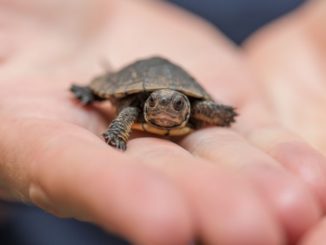
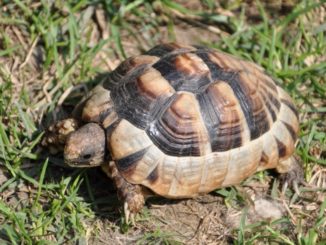
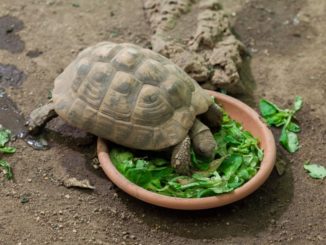
One morning the class was visited by a 7-inch-long box turtle and its owner. The owner introduced the whole class to the animal and then spent ten minutes with groups of four children. The following narrative comes from videotape of one such group:

The turtle starts walking toward Billy. He gets up and goes behind Ivy, then moves to one side as the turtle approaches Ivy, who moves away backwards. Ivy: "Oh oh, he's coming at me." Mr. Lloyd (the owner) and Benson talk about dropping the turtle. Mr. Lloyd tells Benson that turtles' shells could break if dropped. The turtle moves toward Ivy, who retreats, scooting backwards. Sam moves up for a better view, reaches for the turtle, and turns him toward Billy, who pulls back even farther. Benson turns him also. Ivy moves so as to be in front of the turtle. Benson turns him again to point him to Mr. Lloyd. Billy gets up and moves away entirely. Ivy moves in front of the turtle and looks at him from close to the floor. Benson turns him again. He faces Ivy.

Aside from Ivy's comment about the turtle's action and an exchange between Benson and Mr. Lloyd, this 35-second observation is dominated by nonverbal activity. It contains two patterns of moves which were very common. We can view these patterns objectively as series of moves. In the first pattern, the child retreated as the animal approached him or her (in at least one instance above, a child also approached the turtle). In the second, the child interrupted the animal's activity and physically lifted and/or turned the animal, which then moved itself again. In the first case, the animal's action came first, initiating the series where the next move was the child's response. In the second, the child's move was first. In both cases the interaction is complementary (Hinde, 1976); that is, an action by one organism elicited a different but linked action by the other.

Complementarity is a form of contingency; specifically, responses are contingent on, but do not resemble, actions of the partner. (Cases of reciprocal contingent actions, characterized by resemblance, have special relevance for inferences about intersubjectivity, but are not considered here.) In the two types of cases above it is clear that children experience this contingency from the positions of both initiators and responders with animals. The children's apparent anxiety when the animal approached them, and the brevity of their contact with the turtle when turning him, suggest that they regarded his actions as only moderately contingent, but significant--that is, as unpredictable but consequential. These same crisp behavioral buffers in space or time which children created around the turtle's possible actions, however, were themselves quite predictable (see Shapiro's [1989] description of the reading of partners' potential bodily moves). From these characteristics of interaction with the animal we infer that children experienced the turtle as possessing agency , an underpinning of the "meaningfulness" of animals' actions. In almost all interactions with animals, children regard them as agentic.

A transcript such as the above provides little talk from which to adduce children's beliefs about the specific meanings of animals' actions. One could argue, however, that the pattern of moving away from the turtle was a response to adult instructions. Mr. Lloyd had reminded them to be gentle, but he said little to make them fearful--in fact three times he had reassured them that this turtle would not biteindeed, he lived in their home, and was not wild. Yet children spontaneously voiced concern that several of the animals which visited might bite. One reason may be repeated cautions from parents. But biting is also linked to (or expresses) the animal's agency. Later in the transcript begun above Ivy put her face close to the turtle, and soon after touched its nose with her finger. These actions evince less fear, but each move was shaped with regard to the animal's agency. The cognitive knowledge to be careful lest the animal bite is too general to dictate every subtlety of actual interaction--much of which must rest on moment-to-moment contingency.

Turning the turtle could be construed as assimilating him to the category of inanimate object. But even a much less active animal--such as a slug--could interrupt this frame, if indeed the children were imposing it on the interaction. In one example, the teacher instigated a game of "circus" with tiny slugs in the play-lot, holding them up by their slime trails. The slugs' activities were sufficient to shape the children's responses, making them adjust the height and positions of their hands. Seeing this depends merely on reversing our habitual human-centered "parsing" of events (Watzlawick, Beavin, and Jackson, 1967, pp. 54-56) and acknowledging the difficulty of predicting the animal's actions in detail.

Another interpretation would be that a cultural frame governed the interaction, perhaps one about dangerous animals, or about a popular cartoon animal. However, when several boys did treat the turtle as if he were a "Ninja" turtle (using motions and words typical of child-child play on this theme), the situation looked quite different:

Billy moves his fists in a tight circular motion, leaning toward the turtle. Billy: "Let's cut it up. I got your turtle, I got the turtle on his back." He reaches around to show where on his own back. Benson: "Pucchhh!--"he thrusts his fist toward the turtle twice. Billy: "Bang!--"making a hitting motion.

Throughout, the turtle was quiet on the floor, and the boys' motions were unrelated to his activity. The cultural theme totally overrode the immediate animate features of the animal. But far more often it was these features to which children responded. This is not to say, of course, that the animal stands outside cultural meanings, nor that agency is unaffected by social forces and definitions. But for young children the animal's agency is sufficiently primary that most of the time they take it into account first.

Indeed, even in the above example, the turtle's status as an agent may be a precondition for the excitement gained by pretending to attack it. Agency may be prior not only to cultural scripts but also to psychodynamic processes. To take an example without familiar referents in children's culture, some individuals delighted in chasing common urban animals like pigeons and squirrels. After such episodes, children occasionally reported, "I made it fly" or "I scared it." This activity underscores the child's assertiveness and need for power--motivations often tied to psychodynamic conflicts. From many perspectives, animals serve important psychological functions, as in their frequent roles in pathology and therapy. But the contention here is that they can only do so because their agentic nature means their responses confirm the child's own agency. Freud thought animals symbolized features of the child's intrapsychic conflicts, (1900/1965, 1909/1955). Such meanings do occur, and as often observed, animals' differences from humans allow comfortable distance. But the precondition for such meanings is that animals symbolize the basic properties of animates discussed here, such as agency. Indeed, "symbol" must mean something new here, as opposed to the self-referential notions prevalent in psychoanalytic discourse, or the simple and imposed meanings of some cultural anthropology. What animals "stand for" are not just externally attributed qualities, but qualities that they embody as living animates. Especially, an animal can "symbolize" agency for the child with the same immediacy and vividness that its agency is apprehended in the examples of interaction above. The same is true for the other properties discussed below.

A final competing variable in determining a child's behavior with an animal is the child's simultaneous interaction with other humans present. Certainly the children's focus was sometimes each other, with animals as vehicles or facilitators of humor, learning, friendship, and so on. But I learned to be suspicious of how easy it was to "understand" interactions without taking the animal into account. Here is one instructive example. On the day Ms. Nol brought a ball python to the class I observed the children acting scared. Ms. Nol suggested that my presence might be cuing the children to act out fearful responses since they had been calm before I arrived. Upon reviewing the videotape, this proved to be an astute observation: they were skittish when I was there. Were they trying to please me with dramatic reactions? No, this interpretation ignored the snake's movements. During the period of the children's calm attention, the snake's head was toward its keeper. When I was present the snake happened to be positioned with its head outward, and the children's avoidant movements occurred precisely when its head was pointed at them. Indeed, before I arrived, the three other exceptions to the calm mood each occurred at moments the snake's head was pointed at a child.

In sum, these examples do not prove that factors such as human-human interaction, cultural frames, instruction, projection, or cognitive categories are not present in children's relations with animals. But the examples do show that even when we might suspect otherwise, the animal's own agency is a more salient factor to the child than each of the others listed. It is the first basic dimension of child-animal interactive processes to emerge from this study.

We can further note that children responded differently to different animals' agentic qualities. Most obviously, whole patterns of response to the dog differed greatly from those to insects. But every animal, to the individual, offers different contingencies for interaction, as children revealed in moment-to-moment behavior. The child's capacity to respond to agentic action is flexible, and can encompass other species. This pattern, encountered also in the dimensions discussed below, argues against the idea that children are rigidly anthropomorphic, at least in the understandings of animals implicit in their interactions.

Bodily Contact and Wholeness: Coherence

Young children are concretely oriented in their approach to animals (as noted by Margadant-van Arcken 1984, 1989; and consistent with a Piagetian perspective). Petting an animal is culturally framed but it also provides a tactile sense of the animal. It is a sought-after activity, and children asked to touch the animals that were brought to class. When they were not allowed, furtive pettings took place. Children commented on surface textures they felt when petting the animals, such as softness or smoothness.

Some petting or observation focused on parts of the animals. Children remarked on the differentiations of animals' bodies, such as teeth, feet, and so on. Benson touched the turtle's hind foot and remarked, "I touched his claws and he didn't scratch me." The dog's tail also drew attention, for its sweeping motion:

Drew pointed to the dog: "Look [what] it's doing; it's sweeping the floor." Solly suggests its name should be "Sweeper.". . .Shortly, Mindy moved close to Toby and the dog's tail; Dimitri and then Rosa also approached, and all put their hands under the dog's tail as he wagged it.

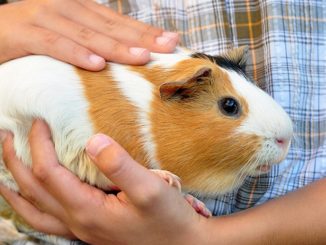
The body parts children remarked on in this way stand out from the whole animal. The whole animal possessed an unmarked primary coherence , revealed by how children readied themselves to hold an animal. Children could hold and pet small animals in the classroom, enabling them to touch the entire animal, and giving a concrete sense of its bodily unity. This sense is reflected in Dimitri's comment while feeding the guinea pig. Holding her on a towel between his legs for a long time, he told her several times, "I got you." Dimitri had created a space for the small, calm, and furry guinea pig between his legs. Readiness to hold an animal reflected the specific shape and character of the animal. On the other hand, one animal literally held the children. Ms. Nol helped Yasmin hold the large snake, and cope with its way of holding her:

Yasmin: "I want to do, could you do that to me?". . . Ms. Nol puts the big snake around Yasmin; she is calm, and laughs. Ms. Nol: "It's got 'ya. It's just holding on tight." Yasmin: "It's just squeezing me." Ms. Nol: "It's got its tail under your arm, just holding on--it probably thinks you're a tree." Yasmin: "Maybe." Ms. Nol: "A good solid branch to hold onto so he won't fall--she, she." Yasmin: "It touches. Please don't touch." She keeps her hands away from the snake: "Make it unravel by itself." Ms. Nol lifts it off.

Ms. Nol's commentary seemed lost on Yasmin, who was anxiously focused on the snake. The large, mobile snake embraced Yasmin (and other children) as it constantly extended and changed its position--tracing, as it were, not only her own, but also the child's characteristic shape and unity.

Whether by noticing textures, shapes, components, or the whole of an animal, young children experience it as possessing coherence as an other. As discussed elsewhere (Myers, 1994), animals' lack of language may also reinforce this impression. The cultural practice of naming animals, avidly engaged in by these young children (again, as also found by Margadant-van Arcken, 1984, 1989), underscores the animal's particularity and uniqueness--qualities which presume coherence. And as with agency, children at least implicitly register variations in coherence as they touch and hold different animals' bodies. This was explicit in children's comments about animals, and even in some names they gave them, such as the tactile "Furry" for a ferret, or "Sweeper" for the dog, indexing its unity of agency and anatomy.

Patterns of Arousal: Animals' Varying Vitality Affects

Affectivity is the third major parameter organizing nonverbal child-animal interaction. The important type of affects for our study are not the "categorical" affects, such as happiness, sadness, and anger. Detecting these depends on tenuous inference even with humans where species-specific facial musculature and cultural narrative structures provides strong cues. This is not to say children may not attribute such affects to animals, though they seldom did in this study. But "vitality" affects don't pose such difficulties, although they also are surely subject to "mis-reading." Vital affects are similar to moods, but are better seen as patterns of arousal over time such as a "rush" of excitement, a "buoyancy" of activity, or a "plodding" sequence of moves. Vitality affects can be conveyed across all expressive modes, and so are plausibly trans-specific, including between humans and other social animals.

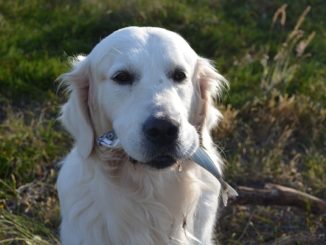
Children's reading of animals' vitality affects was revealed most clearly by variations in affective responses. As a simple example, in videotaped episodes with the dog, the children were invited to throw the ball for him. The dog's excited and expectant vitality affects were conveyed to the children by both motion--its quick pacing and turning and its alert face--and by its non-directed, non-threatening barking. The children's response showed recognition of the mood--they were very excited. Further, the excitement wasn't demonstrated only in wanting to throw the ball, which could be interpreted as the governing cultural frame of the interaction. That a deeper level of vitality affect was operating was shown in the variety of responses showing a similar affect. For example, two girls scrambled around and clung to each other. But they smiled and verbally denied that they were scared, revealing they were seriously afraid. The qualities and temporal contours of their arousal followed (and at the same time complemented) the dog's excitement, illustrating the idea that vitality affects are invariants which can occur across sensory modalities and can be expressed or experienced in a variety of concrete qualities of action.

Another level of variation--in children's affective responses across different species--underscores the importance of vitality affects. The ferrets provided a contrast to the dog's affect. They were initially too active to be let free and had to be held, the children taking turns feeding them with a bottle. Being held and fed a cloying oil-vitamin mixture, the ferrets became lethargic, a vitality affect reinforced by the way they relaxed when the presenter held them by their neck skin, a standard way to carry them. Reflecting this predominant vitality affect, the whole session ended up being one of the most low-key of all the sessions. The affect during much of time with the snake was also calm--consistent with its slow movement. But as we saw, this was punctuated by moments of intense anxiety when the snake faced a child, and perhaps accentuated by the quick flicking of its tongue.

The above are examples of children's affects that matched animals' apparent vitality affects. Such examples roughly resemble mood contagion observed in much younger children, but the question of how such reciprocal patterns relate to the various meanings of empathy or inter-subjectivity will not be addressed here. For now, the main points are that affect is an organizing dimension across a wide variety of child-animal interactions, and that this process is sensitive to the differences animals present as affective others.

Histories of Interaction: Relationship and Continuity

Interacting with an animal over an extended time allows the child to experience regularity in the agency, coherence, and affect of the animal, and can transform interactions into a patterned relationship that provides the dimension of continuity . Among children in the class, about half were new in the class (mean age 4y, 4m), and half were returning for their second year (mean age 4y, 11m). The latter group knew the guinea pig from the previous year. They accounted for 61% of the ad hoc observations of a child interacting with the guinea pig in the first part of the year, and 85% of these children took part in such episodes. On the other hand, only 39% of interactions were by new children, accounting for only 58% of this group. These data may indicate more well-established and personally significant patterns of relationship between the more experienced children and the guinea-pig.

Different children exhibited different patterns of interacting with the guinea-pig. Some children typically babied her; others teased her; some were very interested in her and others not very much so. Some of these patterns were culturally expected for child-animal relations, and some not; some were gender-typical, and others were not. The guinea-pig herself had been in the room several years and could accommodate to different styles of being handled, fed, caught, and so on; she was thus an important factor in continuity. These considerations together suggest that the importance and patterns of children's relationships with this animal were as determined by the dimensions of particular histories of child-animal interaction as they were by extrinsic factors.

Discussion: The Animate Other in Developmental Context

Developmental Precursors

Are there developmental precursors to the young child's ability to accommodate conduct in interactions with animals? On the face of it, there must be, since evidence now shows that infants distinguish animals as a distinct category. One of the earliest relevant studies was Bregman's (1934) attempt to replicate Watson and Rayner's conditioning of a fear response of an infant ("Little Albert") to a live rat. However, Bregman paired a loud noise not with a live rat but with wooden blocks and pieces of cloth. After numerous attempts with 15 infants, she found no evidence of conditioning. Ross (1980) found a distinct category for representations of animals by 12 months. Golinkoff and Halperin (1983) found similar affective reactions to most animal as opposed to non-animal stimuli in one eight-month-old boy. Although only one living animal was used, they also concluded the boy possessed a preverbal category for animal. Using an habituation paradigm, Roberts and Cuff (1989) placed at age nine months the ability to discriminate basic level categories including bird , and at 15 months the superordinate category animal . Kidd and Kidd (1987b) studied 250 infants at ages six, 12, 18, 24 and 30 months, and found an increase across this range in proximity-seeking and contact-promoting behaviors directed to the family companion animal as compared with a novel battery-operated toy dog or a stuffed toy kitten that purred when handled. From 12 months on, babies smiled, vocalized, and maintained interactions longer with the companion animal; however, extension of this finding to animals in general may be limited by the familiarity of the companion animal. Ricard and Allard (1993) found differentiated patterns of response to a novel rabbit versus either a stranger or a mechanical toy at ages nine to 10 months. The authors concluded, "the spontaneous familiarization behaviors [infants] resort to when confronted with an unfamiliar yet unfrightening animal suggest that they do not confound this class of objects with people or with inanimate toys" (p. 14).

What might underlie their specific findings? We argue that the features of animals as interactants to the child discovered here have early developmental bases that can account for the salience of animals to humans from the early months onwards. The dimensions of agency, vitality affect, coherence, and continuity as invariants of self and other are available to infants in interaction beginning as young as three months. Stern (1985) argued that these dimensions are continuously present in interaction and give rise to the earliest sense of self and other, one which lasts through life. This claim rests on discoveries of the last 20 years demonstrating a degree of pre-preparedness of the infant to integrate and globally represent invariant features of sensory experience that would astonish those of the "booming buzzing confusion" school of associationism, who thought learning must precede the baby's experience of an organized world and self. For example, Stern reported that neonates compare information across sensory modalities, and that they distinguish self- versus other-initiated actions. By three months, the subjective experience of the self as an agentic, coherent, and affective entity emerges from cues (both internal and external) discovered repeatedly across many interactions. There are similar prospects for a sense of the other, whose comings and goings, for example, the infant controls indirectly and incompletely, and in degrees varying with the other's social responsiveness.

Specific abilities relevant to each dimension identified above continue to emerge in recent research. With reference to affectivity, infants use others' emotions to understand behavior (Spelke, Phillips and Woodward, 1995). As has been long known regarding human stimuli, infants clearly distinguish animate from inanimate motion. New evidence suggests that by age seven months they distinguish people from objects by their interactive traits. Two aspects of social others related to agency--the use of another's gaze to determine attention, and memory of another's actions based on the other's goal orientation--have also been shown to emerge before the second year (Woodward, Phillips and Spelke, 1993; Woodward, 1995).

Infants probably notice consistent variations in these characteristics, giving rise to their grasp, shown above, of animals as discrepant social others. By early childhood, the exploration of these various interactive possibilities is in full swing. Cognitive evidence shows agency continues to be salient into early childhood. Gelman and colleagues asked children to judge whether videotaped unfamiliar objects and animals which moved across a surface were moved by an external cause (a person moved it), an internal cause (something inside it), or an immanent cause (it moved by itself). Some children saw all the target objects being carried by a human hand; others saw them all moving without any apparent human help. Surprisingly, the researchers found that four-year-olds "consistently deny any external cause to explain the biological events, even when a human bodily carries an animal. Rather, biological events are viewed as resulting from immanent causes. Children regularly appeal to intrinsic factors even without knowing the internal mechanism" (Gelman, Coley and Gottfried, 1994, p. 349). Researchers are now discussing the possibility of an innate domain of "biological knowledge" (Hirschfeld and Gelman, 1994); the suggestion from the research reported here is that certain "biological" concepts may develop specifically as a result of interactive experience with other species.

Self and Animate Other

But the implications of this study go beyond cognitive development. James (1890) argued that the experience of having a subjective self or I is characterized by senses of agency, wholeness, and continuity. Similarly, we argue that when an interactant's behavior provides invariant evidence of agency, coherence, affectivity, and continuity, it will confirm the person's sense of basic selfhood. Further, the other that does so will be perceived as a core other also. Thus we argue that the child experiences the animal as a compellingly immediate subjective other. This does not at all mean that the animal's subjectivity is experienced as either shared or transparent, but such is only sometimes the case even between humans. It does mean that animals' behavior is not the empty, flat behavior of behaviorists, but that it is apprehended as rich in implicit meaning. Such meaning may not be conscious or articulated, but it nonetheless determines important features of moment-to-moment interaction, and patterns of relationship that emerge from histories of such interaction.

Conclusion

This examination of children's interactions with animals as cases of interactive processes supports important generalizations about the roles of animals in social development, and also about the nature of children's interactive abilities. First, children's interactions with animals demonstrate responsiveness to the same set of features that are hallmarks of social interaction. At least for children of the ages in this study, a basic sense of self forms in relation to the available interspecies community of early development, rather than the strictly human community. Second, responses by children were differentiated across animal interactants and also vis-a-vis human patterns of interaction. The fact that interactions are conducted with sensitivity and active accommodation to self-other variation in these features in animals shows that children are not completely projective or anthropomorphic. Animals as others for young children are socially interactive, immediately subjective, and optimally discrepant.

Two broader kinds of questions are possible at this point. Both indicate the importance of studying human-animal interactions. First, we have shown that nonverbal, "merely" embodied, aspects of interaction are meaningful in ways important to mental phenomena such as the developing self. This has significance not only for human-animal studies, but even more profoundly for general psychology. Certain very basic properties of animates appear to be simultaneously perceptible and intelligible, similar to dance or music (cf Grene, 1968, pp. 124-5). This runs counter to the classical division between notions like natural and non-natural meaning (Grice, 1957), body and mind generally, as well as the discontinuities in experience presumed to stem from these. These divisions run parallel to rigid presumed distinctions of the nonhuman and the human common in social theory (Sanders and Arluke, 1993). Studying child-animal interactions is thus one way to understand continuities between body and mind.

This latter observation raises the second hunch, which pertains to the developmental course of the capacities discovered here. We argued that the processes discussed have some degree of primacy over other factors, including linguistically-conveyed cultural meanings. Might verbal meanings be constrained by the dynamics of animate-level interactions? The indication is that meanings are not acquired in a simple pattern-imposition manner; animate interaction has its own formative patterns. How do children's understandings implicit in embodied interactions with animals become explicit insights, and receive further elaboration? These questions have great relevance for our understanding of social development within the world of other human subjects also. Because animals vary from humans and from each other in the features they present as interactants, and yet are social partners to children on the animate level, they offer researchers key comparisons for such questions.

References

Bertenthal, B. (1993). Infants' perception of biomechanical motions: Intrinsic image and knowledge-based constraints. In C. Granrud (Ed.), Visual perception and cognition in infancy (pp. 175-214). Hillsdale, NJ: Lawrence Erlbaum.

Bregman, E. (1934). An attempt to modify emotional attitude of infants by the conditioned response technique. Journal of Genetic Psychology , 45, 169-198.

Freud, S. (1965). The interpretation of dreams (J. Strachey, Trans). New York: Avon/Basic. (Original work published 1900)

Freud, S. (1955). Analysis of a phobia in a five-year-old boy "Little Hans." In J. Strachey (Ed. & Trans.), Case histories, Vol. 1 (pp. 165-312). Middlesex: Pelican. (Original work published 1909)

Gelman, S., Coley, J., & Gottfried, G. (1994). Essentialist beliefs in children: The acquisition of concepts and theories. In L. Hirschfeld, & S. Gelman (Eds.), Mapping the mind: Domain specificity in cognition and culture (pp. 341-365). Cambridge: Cambridge University.

Golinkoff, R., & Halperin, M. (1983). The concept of animal: One infant's view. Infant Behavior and Development , 6 , 229-233.

Grene, M. (1968). Approaches to a philosophical biology . New York: Basic.

Grice, H. P. (1957). Meaning. Philosophical Review , 66 , 377-388.

Hinde, R. A. (1976). On describing relationships. Journal of Child Psychology and Psychiatry , 17 , 1-19.

Hirschfeld, L., & Gelman, S. (Eds.). (1994). Mapping the mind: Domain specificity in cognition and culture . Cambridge: Cambridge University.

James, W. (1890). The principles of psychology . New York: Dover.

Kidd, A., & Kidd, R. (1987a). Seeking a theory of the human/companion animal bond. Anthrozoös , 1 (3), 140-157.

Kidd, A., & Kidd, R. (1987b). Reactions of infants and toddlers to live and toy animals. Psychological Reports , 61 , 455-464.

Margadant-van Arcken, M. (1984). "There's a real dog in the classroom?": The relationship between young children and animals. Children's Environment Quarterly , 1 (3), 13-16.

Margadant-van Arcken, M. (1989). Environmental education, children and animals. Anthrozoös, 3 (1), 14-19.

Mead, G. H. (1962). Mind, self and society from the standpoint of a social behaviorist . Chicago: University of Chicago. (Original work published 1934)

Myers, O. E., Jr. (1994). Young children's sense of connection to animals: The developmental basis of an ecological self. (Doctoral dissertation, University of Chicago, 1994). Dissertation Abstracts International , 55 (4), 1619B.

Nielsen, J. A., & Delude, L. A. (1989). Behavior of young children in the presence of different kinds of animals. Anthrozoös , 3 (2), 119-129.

Ricard, M., & Allard, L. (1993). The reaction of 9- to 10-month-old infants to an unfamiliar animal. The Journal of Genetic Psychology , 154 (1), 5-16.

Rizzo, T., Corsaro, W., & Bates, J. (1992). Ethnographic methods and interpretive analysis: Expanding the methodological options for psychologists. Developmental Review , 12 , 101-123.

Roberts, K., & Cuff, M. (1989). Categorization studies of 9- to 15-month-old infants: Evidence for superordinate categorization? Infant Behavior and Development , 12 , 265-288.

Ross, G. (1980). Categorization in 1- to 2-year-olds. Developmental Psychology , 16 , 391-396.

Sanders, C., & Arluke, A. (1993). If lions could speak: investigating the animal-human relationship and the perspectives of nonhuman others. Sociological Quarterly , 34 (3), 377-390.

Shapiro, K. (1989). Understanding dogs through kinesthetic empathy, social construction, and history. Anthrozoös , 3 (3), 184-195.

Spelke, E., Phillips, A., & Woodward, A. (1995). Infants' knowledge of object motion and human action. In D. Sperber, D. Premack & A. Premack (Eds.), Causal cognition: A multidisciplinary debate (pp. 44-78). Oxford: Clarendon.

Stern, D. (1985). The interpersonal world of the infant . New York: Basic.

Watzlawick, P., Beavin, J. H., & Jackson, D. D. (1967). Pragmatics of human communication: A study of interactional patterns, pathologies and paradoxes . New York: Norton.

Woodward, A. (1995, June). Infants' encoding of the goal of an action . Paper presented at the Meeting of the Piaget Society, Berkeley, CA.

Woodward, A., Phillips, A., & Spelke, E. (1993). Infants' expectations about the motion of animate versus inanimate objects . Paper presented at the Cognitive Science Society Meetings, Boulder, CO.

For abstracts of all issues, including the most current, click Article Abstracts

To order Society & Animals Journal, go to our secure online ordering page

You can Search the online issues of Society & Animals, as well as the entire Society & Animals Forum (formerly PSYETA) website,
for topics and keywords of your interest:

Google

Search Our Site


Society&Animals Forum
Violence Link
Animals in the Classroom
Publications
Resources & Educational Material
About
How You Can Help