
The
"Disgusting" Spider: The Role of Disease and Illness
in the Perpetuation of Fear of Spiders
Graham
C. L. Davey 1
The City University, London
Recent studies
of spider phobia have indicated that fear of spiders is closely
associated with the disease-avoidance response of disgust.
It is argued that the disgust-relevant status of the spider
resulted from its association with disease and illness in
European cultures from the tenth century onward. The development
of the association between spiders and illness appears to
be linked to the many devastating and inexplicable epidemics
that struck Europe from the Middle Ages onwards, when the
spider was a suitable displaced target for the anxieties caused
by these epidemics. Such factors suggest that the pervasive
fear of spiders that is commonly found in many Western societies
may have cultural rather than biological origins, and may
be restricted to Europeans and their descendants.
One of the most common
phobias in Western cultures is fear of spiders (Costello, 1982;
Cornelius & Averill, 1983; Kirkpatrick, 1984), and over
the past twenty years psychologists have explained this fear
by arguing that it is a result of evolutionary selection: that
is, since some spiders are venomous, this acted to select for
a disposition to fear such animals (Seligman, 1971; Öhman,
1986). However, a number of recent studies have demonstrated
that there is a close relationship between some common animal
fears and the food-rejection response of disgust. There is evidence
that fear of spiders is also associated with the disgust response,
and that the development of spiders as a focus for fear may
have resulted from this animal's historical association with
disease and infection particularly in Europe.
Traditional
Explanations of Fear of Spiders
In studies conducted
on adult populations in the United Kingdom and the Netherlands,
the spider was one of the top five most feared animals (Bennett-Levy
& Marteau, 1984; Merckelbach, van den Hout & van der
Molen, 1987). In a study of 261 adults in the UK, 32% of females
and 18% of males reported that spiders made them feel either
anxious and nervous or very frightened (Davey, 1993a).
It has generally been
accepted that fear of spiders is an example of a biologically
prepared fear. The theory of biological preparedness assumes
that most feared objects (such as spiders) are those which had
been hazardous for our pretechnological ancestors (other hazardous
stimuli would include snakes, darkness, heights, etc.). The
selection pressures generated by these hazardous stimuli had
then resulted in the evolution of phylogenetically-based predispositions
to associate these pretechnologically "prepared" stimuli
with traumatic consequences (Seligman, 1970, 1971). Since at
least some spiders are lethally venomous, the implicit assumption
is that this is the selection factor which generated a biological
predisposition to associate spiders with fearful consequences.
Studies which have
paired pictures of spiders with aversive consequences (normally
a mild electric shock) have found that the fear which becomes
conditioned to spider pictures in such procedures is significantly
more resistant to extinction than fear that is conditioned to
fear-irrelevant stimuli such as pictures of flowers or houses
(McNally, 1987; Öhman, Dimberg & Öst, 1985). Such
findings suggest that, once acquired, fear of spiders may be
relatively difficult to shake off.
However, while consistent
with the biological preparedness explanation of spider fear,
such findings are not necessarily confirmation of it (cf. Davey,
1992a). Recent studies have suggested that the ability of spider
pictures to become strongly conditioned to aversive consequences
is not necessarily superior to the ability of ontogenetic fear-relevant
stimuli to become conditioned to aversive consequences (e.g.
Honeybourne, Matchett & Davey, 1993). Ontogenetic fear-relevant
stimuli are those stimuli which have potential selection pressure
but are too recent in the history and experiences of humans
to have generated genetically-mediated predispositions (e.g.
guns, electric outlets). This suggests that the strong conditioning
effects found with spiders are not necessarily confined to phylogenetic
fear-relevant stimuli, and thus their tendency to become the
foci for fear reactions might be explained by processes other
than genetically-encoded predispositions.
Fear
of Spiders and Disgust Sensitivity
Davey (1992b) found
no consensus among spider phobics as to the frightening features
of spiders. However, they did show an increased tendency to
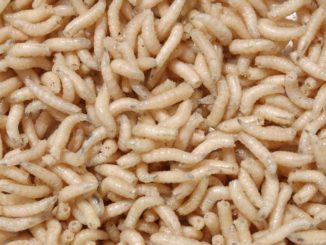
fear other animals that are normally disgust-evoking (e.g. slug,
snail, worm, maggot). Subsequent studies have demonstrated that
fear of spiders does covary with fear of other animals that
exhibit a disgust-evoking status (Ware, Jain, Burgess &
Davey, 1993). Ware et al. (1993) labeled this category of animals
"fear-relevant" because they evoke fear without being
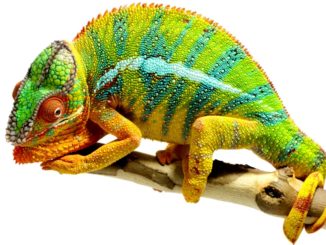
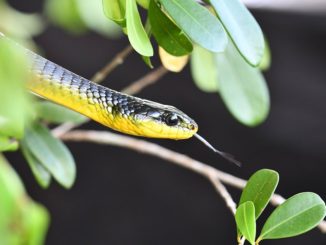
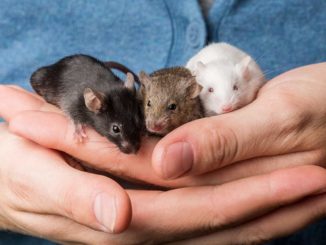
predatory other animals in this category include bat,
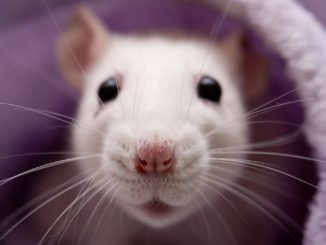
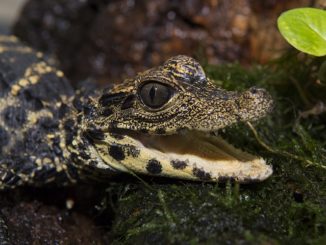
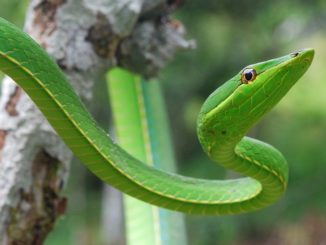
lizard, rat, slug, leech, snake, mouse, eel, cockroach. The
fact that fear of these animals covaried suggests that a single
major variable underlies fear to all "fear-relevant"
animals. It is unlikely that this single underlying factor is
an evolutionary predisposition to fear either venomous or harmful
animals, because it is difficult to conceive of the selection
pressures that would have selected for fear of some of the animals
in this covarying group (Davey, 1992b). It is unlikely that
our ancestors ever had to avoid packs of predatory slugs or
snails!
The fact that there
is no consensus among arachnophobes as to the frightening feature
of spiders also indicates that the primary reason for their
fear is probably hidden. In a study of the relationship between
disgust sensitivity (a measure of the strength of an individual's
disgust response, and their sensitivity to dirt and contamination)
and animal phobias, Matchett & Davey (1991) found that the
strength of fear to "fear-relevant" animals was directly
related to subjects' levels of disgust sensitivity and was not,
as many other phobias appear to be, significantly related to
their levels of trait anxiety (a measure of generalized anxiety).
Subsequent surveys have shown that there is a significant correlation
between self-report measures of spider fear and levels of disgust
sensitivity (Davey, Forster & Mayhew, 1993). This suggests
that a significant percentage of the variance in individual
ratings of their own spider fear can be predicted by that individual's
level of sensitivity to disgust and contamination.
Furthermore, while
it has been known for some time that spider fear tended to run
in families (Cornelius & Averill, 1983; Davey, 1992b), it
had usually been assumed that this was a result of a biological
predisposition being strengthened by intrafamilial modeling
of spider fear. However, a study by Davey, Forster & Mayhew
(1993) suggested that intrafamilial spider fear may not be determined
by the direct transmission of spider fear from parents to offspring.
They found that the only significant predictor of offspring's
spider fear was the disgust sensitivity level of the parents
not the level of spider fear in the parents. This study
again indicated that the relationship between disgust and spider
fear was important, and implied that the transmission of spider
fear within families may be rather complex and indirect.
This raises the question
of how disgust sensitivity levels are transmitted between parents
and offspring. Although a genetically inherited process cannot
be ruled out, there are a number of theories which allude to
cultural and social transmission of the disgust response (e.g.
Rozin & Fallon, 1987; Davey, 1993b). These emphasize the
role played by the imitation of facial expressions, social facilitation
processes, and the learning of cognitive schema related to disgust
and disgusting objects (e.g. Rozin & Fallon, 1987). Thus,
given the acceptability of these theories, it is likely that
spider fear is transmitted within families as the result of
the social learning of the nature and intensity of disgust reactions
and one particular disgust stimulus is the spider.
While there is clearly
considerable evidence linking spider fear with disgust sensitivity,
this still begs the question of how spiders might have acquired
their disgust-evoking status. Disgust is a food-rejection response
consisting of a distinctive physiological manifestation (nausea),
a distancing of the self from the disgusting object (avoidance),
and a sensitivity to contamination from, or oral incorporation
of, the offensive object (Rozin & Fallon, 1987). The adaptive
benefit of the disgust response appears to be the prevention
of oral incorporation of disgusting objects, and thus the prevention
of the transmission of disease (Davey, 1993b).
Davey (1992b) outlined
at least three ways in which fear-relevant animals associated
with the disgust reaction might have acquired their disgust-evoking
status: (1) by being directly associated with the spread of
disease (e.g. rats, cockroaches); (2) by possessing features
which resemble primary disgust-evoking stimuli such as mucus
or feces (e.g. animals that are perceived as slimy such as snakes,
lizards, slugs, worms, frogs); and (3) by being contingently
associated with dirt, disease or contagion, or acting as signals
for infection or diseased food (e.g. maggots).
The
Historical Relationship Between Spiders and Disease and Illness
At first sight, the
spider does not appear to fit easily into any of these three
categories. However, the relevant literature reveals that historical
association between spiders and disease and infection dates
from the Middle Ages. For instance, in most of Europe during
the Middle Ages spiders were considered a source of contamination
that absorbed poisons in their environment (e.g. from plants).
Any food which had come into contact with a spider was considered
infected. Similarly, if a spider fell into water that water
was then held to be poisoned (Renner, 1990). In Central Europe
during the Great Plagues, spiders were also seen as harbingers
of the plague and death, and this association was subsequently
used as the basis for Jeremias Gotthelf's famous story, "The
Black Spider" (Renner, 1990).
Until the late seventeenth
century many European spiders were thought to be "poisonous"
in the sense that their bites caused a variety of illnesses.
For example, from the eleventh century the bite of some species
of spider was associated with a mass hysterical reaction that
came to be known as "tarantism" (Russell, 1979; Gloyne,
1950). Sufferers of tarantism believed that a spider bite caused
an illness whose symptoms included dizziness, stomach pains,
nausea and heart constriction. Various forms of tarantism have
been described in Sicily, Spain, parts of Germany, Persia, Asia
Minor, America and Albania (Russell, 1979), but it became most
famous between the thirteenth and eighteenth century among the
people of Apulia in Italy. It was not until the 1770s that it
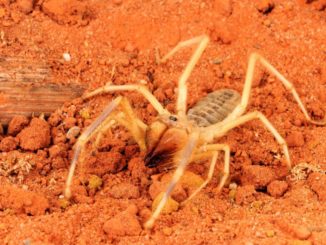
was concluded that the "apulian tarantula" ( Lycosa
tarentula ) was harmless and that the sickness was caused
by the systemic reaction from the bite of a completely different
spider (Lewis, 1991) or merely by the heat of the midday sun
(Katner, 1956)! Russell (1979) concludes that, "Excluding
the toxic effects of the true bite of a scorpion or tarantula,
it must be said that tarantism, like the dancing mania of the
Middle Ages, is a hysterical phenomenon in which folklore, prejudice,
superstition, and local cultural influences play a big part."
(Russell, 1979, p. 422).
Although the association
between spiders and illness is clearly laid out in these examples,
it remains to be established how this legendary association
came about especially since in reality spiders are usually
neither poisonous nor the agents of the illnesses they were
thought to be. One suggestion has been that the spider's bite
was one way of explaining the causes of the many terrible epidemics
of plague and disease that swept across Europe from the Middle
Ages onward (Gloyne, 1950). While not fatally venomous, many
European spiders do possess bites which cause a painful systemic
reaction (cf. Bristowe, 1958), and these bites have been known
to become opportunistically associated with causally unrelated
diseases and illnesses (Renner, 1990; Gloyne, 1950; Hecker,
1846). Gloyne (1950) suggests that the hysteria exhibited by
the tarantists could be explained by the anxieties generated
by the regularity with which serious and inexplicable epidemics
were crossing Europe at the time. The most frequent type of
displacement in anxiety hysteria is to project anxieties onto
a specific, externally-perceived danger. Gloyne argues that
in this way anxieties about the many inexplicable and devastating
contemporary epidemics became projected onto the spider as a
plausible external cause, and the deep-rooted fears of disease
became manifested as a significant hysterical reaction to the
spider.
During the Middle
Ages, spiders were also perceived as harbingers of the Great
Plagues that swept across Europe from the tenth century onwards
(Renner, 1990). Apart from the spider's tendency to be associated
with illness because of the systemic reaction occasionally caused
by its bite, spiders were also found in profusion in those parts
of a house also occupied by the black rat (e.g. thatched roofs).
It was in fact the black rat that carried the fleas which spread
the plague, but this was not established until the nineteenth
century (McNeill, 1976).
It is still perhaps
somewhat perplexing that it appears to be the spider and not
some other animal, more obviously associated with disease, contamination
and illness, that has become a primary focus for contemporary
animal fears in Western societies. However, the prominence of
arachnophobia may well be the result of the attention given
to it in more recent years in a variety of media, including
popular children's stories and modern horror and thriller films
such as the American movie Arachnophobia . Controlled
surveys of animal fears suggest that fear of other disgust-relevant
animals which have a clear and obvious relationship to disease
and contamination (such as cockroaches and rats) is more prevalent
than fear of spiders (Davey, 1993a; Merckelbach, van den Hout
& van der Molen, 1987; Bennett-Levy & Marteau, 1984).
Cultural
Differences in the Perception of Spiders
It is possible, of
course, that the historical association between spiders and
illness might merely represent a rationalization of naturally
selected fear of spiders the real causal factors of which
have long since disappeared. However, if this were the case,
we would expect fear of spiders to be a relatively universal
phenomenon since it should be an inherited feature of the human
gene pool independent of individual cultural traditions. Nevertheless,
fear of spiders and the association between the spider and disease,
infection, and illness found in European tradition is not shared
by many communities in other areas of the world.
For instance, in many
areas of Africa the spider is revered as a wise creature and
its dwelling places are cleaned and protected by the local people
(Renner, 1990). In many areas of the world, including Indo-China,
the Caribbean, and Africa, and among the Native Americans of
North American and the aborigines of Australia, spiders are
frequently eaten as a delicacy (Bristowe, 1932, 1945). In some
of these areas, those spiders that are trapped and eaten represent
some of the most lethally venomous to humans. Native American
children in Brazil frequently keep spiders as pets (Renner,
1990). Finally, many cultures consider spiders to be symbols
of good fortune rather than fear, e.g. Hindus in eastern Bengal
collect spiders to release at weddings as a symbol of good luck,
and in Egypt it is common practice to place a spider in the
bed of a newly married couple (Bristowe, 1958).
This evidence suggests
that fear of spiders may not be a pervasive phenomenon. It may
be restricted to Europeans and their descendants (the latter
having inherited through cultural transmission the traditions,
values, and superstitions of their ancestors from the Middle
Ages). Unfortunately, there are no cross-cultural studies of
animal fears available which would substantiate this prediction,
but the author is currently involved in such a survey covering
European, American and Asian populations.
Conclusion
Recent studies of
spider phobia indicate that fear of spiders is closely associated
with the disease-avoidance response of disgust. It is not immediately
clear how spiders might have become associated with this response,
although examination of the relevant historical literature does
indicate a close association between spiders and illness in
European cultures from the tenth century onward. The development
of this association between spiders and illness appears to be
closely linked to the many devastating and, at the time, inexplicable
epidemics that crossed Europe from the Middle Ages onwards.
In many areas of Europe, the spider appears to have been a suitable
target for the displaced anxieties caused by these constant
epidemics; in other cases, its proximity to the real causes
of the epidemics may have fostered opportunistic associations
between spiders and disease.
The tendency of Europeans
and their descendants to be fearful of spiders does not seem
to be shared by people in many non-European cultures, and this
is not consistent with those evolutionary accounts of spider
fear which suggest that spider fear should be a common feature
of the human gene pool regardless of culture (e.g. Seligman,
1971). However, it is consistent with the present thesis which
argues that spider fear developed as a result of the association
between spiders and disease in Europe after the tenth century.
Notes
1. Correspondence should
be sent to Graham Davey, Ph.D., Professor of Psychology, Department
of Social Science, The City University, Northampton Square,
London, EC1V 0HB, UK. The author is grateful to Peter de Jong
for drawing his attention to some of the original source material
quoted in this paper.
References
Bennett-Levy,
J. and Marteau T. (1984). Fear of animals: What is prepared?
British Journal of Psychology , 75 , 37-42.
Bristowe,
W.S. (1932). Insects and other invertebrates for human consumption
in Siam. Transactions of the Entymological Society of London
, 80 , 387-404.
Bristowe,
W.S. (1945). Spider superstitions and folklore. Transactions
of the Connecticut Academy for Arts and Science , 36
, 53-90.
Bristowe,
W.S. (1958). The world of spiders . London: Collins.
Cornelius,
R.R. and Averill J.R. (1983). Sex differences in fear of spiders.
Journal of Personality & Social Psychology , 45
, 377-383.
Costello,
C.G. (1982). Fears and phobias in women: A community study.
Journal of Abnormal Psychology , 91 , 280-286.
Davey,
G.C.L. (1992a). An expectancy model of laboratory preparedness
effects. Journal of Experimental Psychology: General ,
121 , 24-40.
Davey,
G.C.L. (1992b). Characteristics of individuals with fear of
spiders. Anxiety Research , 4 , 299-314.
Davey,
G.C.L. (1993a). A survey of self-reported fears to common indigenous
animals in an adult U.K. population. Submitted.
Davey,
G.C.L. (1993b). Disgust. In V.S. Ramachandran (Ed.), Encyclopedia
of human behavior . San Diego: Academic Press.
Davey,
G.C.L., Forster L. and Mayhew G. (1993). Familial resemblances
in disgust sensitivity and animal phobias. Behaviour Research
& Therapy , 31 , 41-50.
Gloyne,
H.F. (1950). Tarantism: Mass hysterical reaction to spider bite
in the Middle Ages. American Image , 7 , 29-42.
Hecker,
J.F.C. (1846). The epidemics of the middle ages. Translated
by B.G. Babington, London: George Woodfall & Son.
Honeybourne
C., Matchett G. and Davey G.C.L. (1993). Expectancy models of
laboratory effects: A UCS-expectancy bias in phylogenetic and
ontogenetic fear-relevant stimuli. Behavior Therapy ,
24 , 253-264.
Katner,
W. (1956). Das ratsel des tarentismus. Eine atiologie der italiensischen
tanzkrankheit. Nova acta leopoldina , 124 ,
1-115.
Kirkpatrick,
D.R. (1984). Age, gender and patterns of common intense fears
among adults. Behaviour Research & Therapy , 22
, 141-150.
Lewis,
I.M. (1991). The spider and the pangolin. Man , 26
, 513-525.
Matchett,
G. and Davey G.C.L. (1991). A test of a disease-avoidance model
of animal phobias. Behaviour Research & Therapy ,
29 , 91-94.
McNally,
R.J. (1987). Preparedness and phobias: A review. Psychological
Bulletin , 101 , 283-303.
McNeill,
W.H. (1976). Plagues and peoples . London: Penguin.
Merckelbach,
H., Van den Hout M.A. and Van der Molen G.M. (1987). Fear of
animals: Correlations between fear ratings and perceived characteristics.
Psychological Reports , 60 , 1203-1209.
Öhman,
A. (1986). Face the beast and fear the face: Animal and social
fears as prototypes for evolutionary analyses of emotion. Psychophysiology
, 23 , 123-145.
Öhman,
A., Dimberg U. and Öst L.G. (1985). Animals and social
phobias: Biological constraints on learned fear responses. In
S. Reiss & R.R. Bootzin (Eds.) Theoretical issues in
behavior therapy , New York: Academic Press.
Renner,
F. (1990). Spinnen: Ungeheuer sympathisch . Kaiserslautern:
Verlag.
Rozin,
P. and Fallon A.E. (1987). A perspective on disgust. Psychological
Review , 94 , 23-41.
Russell,
J.F. (1979). Tarantism. Medical History , 23 ,
404-425.
Seligman,
M.E.P. (1970). On the generality of the laws of learning. Psychological
Review , 77 , 406-418.
Seligman,
M.E.P. (1971). Phobias and preparedness. Behavior Therapy
, 2 , 307-320.
Ware,
J., Jain K., Burgess I. and Davey G.C.L. (1993). Factor analysis
of common animal fears: Support for a disease-avoidance model.
Behaviour Research & Therapy , in press.
For
abstracts of all issues, including the most current, click
Article
Abstracts
To order Society &
Animals Journal, go to our secure online
ordering page
You
can Search the online issues of Society & Animals, as well
as the entire Society & Animals Forum (formerly PSYETA)
website,
for topics and keywords of your interest:
|