Society & Animals Journal of Human-Animal Studies
Logo - Society and Animals Journal
Volume 12, Number 2, 2004

It’s a Dog’s Life: Elevating Status from Pet to “Fur Baby” at Yappy Hour

Jessica Greenebaum


ABSTRACT

Nonhuman animals always have played a significant role in people’s lives. Lately, the technological and market economy has anthropomorphized dogs to human-like behavior, particularly to status of family member or child. This qualitative study expands upon the current studies on consumption and animals and society by exploring how human-canine relationships are anthropomorphized at the family excursion to “Yappy Hour” at Fido’s Barkery. The type of person who attends Yappy Hour on a weekly basis has a unique and special type of connection with their dog that goes beyond most people’s relationships with dogs. Most of the dog lovers interviewed do not perceive their dogs as dogs; they are family members, best friends, and “fur babies.” These dog lovers also do not perceive themselves as dog owners; they see themselves as mothers and fathers. The social and market environment of Fido’s Barkery not only reinforces their relationship with their dog, it shapes community, friendships, and personal identity.

Only dog lovers can understand. Nestled in the suburbs of Hartford, Connecticut lies Fido’s Barkery, a bakery that sells treats that look good enough for humans to eat, but are for dogs. When people come into the store for the first time, they smile and marvel at the amusing concept. After all, a dog bakery is not located on every street corner. Anyone who likes animals cannot help but be happy in a store devoted to dogs. The first thing one notices when entering the store is the pastry cases full of treats, freshly baked and dipped on the premises, reminiscent of a European pastry shop. Many pet stores have “biscuit bars” filled with bulk dry cookies, but they cannot compare with the fresh and refrigerated pastries at the bakery.


One case is full of dry cookies and the other case consists of refrigerated gourmet cakes and pastries. All the cookies, cakes, and pastries are made with natural, wholesome ingredients without the use of sugar, salt, animal fats, or artificial preservatives. Most of the cookies are dipped in carob (a chocolate substitute) or peanut butter. The cakes are topped with buttermilk-yogurt frosting mixed with peanut butter or carob. The treats look so delicious, that many first-time customers cannot believe the treats are made for dogs, rather than humans. Nothing is too indulgent for these pampered pets, including the high quality toys, collars, beds, and bowls that also sell for premium prices. Anita, a counselor in her early 50s and an owner of four Japanese Chins, talks about the reaction she had the first time she walked into the store:

I couldn’t believe it. I really could not believe it. The first thing I saw was the counter full of these delectable looking treats and that they were actually made for dogs. And I thought it was just hilarious and really wonderful. Being a dog lover, you figure, hell, they deserve it, why not?

Between 6 and 8 o’clock on Thursday nights, these dog lovers are at “Yappy Hour” with their best friends and fur babies. Yappy Hour is a social hour for dogs and their human companions. When the door closes, the leashes come off and the games begin. The dogs run back and forth from the front to the back of the store. The front of the store is where the dogs play and get attention from people. The back of the store is where the dogs get cake and the humans get wine or soda from Frank, the owner and “barktender.”

Shelly and Richard, caretakers of two Wheaton Terriers, are in their mid 50s and are partners in an advertising and public relations firm. Due to their careers, they can really appreciate the unique and funny concept of Yappy Hour and a bakery for dogs. Shelly states, “the concept is something that could really appeal to people who want to demonstrate their relationship with their dog and their willingness to do anything, like buy special food.”

This study expands upon the current studies on animals and society. It explores how the regular customers of Yappy Hour anthropomorphize their relationship with their dogs by engaging in this family outing. Thursday night Yappy Hours become a leisure-time activity that elevates dogs into the family structure. The type of person who attends Yappy Hour on a weekly basis has a unique and special type of connection with their dog. Most of the dog lovers interviewed do not perceive their dogs as dogs; they are family members, best friends, and fur babies. These dog lovers also do not perceive themselves as dog owners; they are parents.

In addition, the social self is constructed through the presentation of self at Yappy Hour. According to Goffman (1959), individuals work to create an image of themselves. This performance can involve a team of actors “whose intimate co-operation is required if a given projected definition of the situation is to be maintained” (Goffman, p.104). Sanders (1993) and Twining, Arluke, and Patronek (2000) studied how human and non-human animals work as teams to manage stigma of bad behavior and breed stereotypes.

Attending Yappy Hour is one form of impression management where regulars can distinguish themselves from the typical dog owner and reinforce their standing as “parents” (Goffman, 1959). Through this activity, the dog and dog owners become a team in constructing an image of a family. Similar to the image of soccer moms who drive their kids to games and social events, these parents take their fur babies to a weekly activity where they can play. The parents socialize with each other while encouraging their fur babies to play nicely. Just as children tend to have personalities similar to their parents, these fur babies also reflect the personalities of the parents. As a result, the dog becomes an extension and reflection of the self. Not only are the dogs elevated to the status of children, but the dogs also elevate the status of dog owners to parents. The dog becomes anthropomorphized through this leisure activity that promotes family life.

Literature Review

Research on animals and society has been conducted for the past 20 years, including work on the role of pets in the lives of the elderly (Franks & Hart, 1993; Sanders, 1993; Siegel, 1993), the bereavement process following the death of a pet (Archer & Winchester, 1985), understanding the thought process of pet dogs (Sanders), and the role of pets in promoting social interaction among strangers in dog parks (Robins, Sanders, & Cahill, 1991; Wolch & Rowe, 1992). In addition, there also has been a lot of research on the social significance of pets in the lives of their human companions, particularly how they have become anthropomorphized into family members and surrogate children (Albert & Bulcroft, 1988; Belk, 1996; Belk, 1998; Cain, 1985; Gillespie, Leffler, & Lerner, 2002; Hirschman, 1994; Sanders, 1999; Veevers, 1985).

Veevers’ (1985) study on companion animals focused on the three functions of pets:
1. the projective, or the “symbiotic extension of self,” in which the dog and the treatment of the dog reflect upon the human self;
2. the sociability, in which the dog plays a role in inviting or preventing interaction with others; and
3. the surrogate, which allows individuals to pamper their animal like a child.
Buying gourmet treats and accessories are ways for humans to pamper their pets and for individuals to pamper themselves. If, as Veevers (1985) claims, animals function to reflect the symbiotic extension of the self, to function as a surrogate loved one, and to function as a means of interaction with others, then the ability for animals and humans to play out their roles as family members will be enhanced by leisure time activities.
Shopping is a leisure activity that shapes family life and identity (Allen, 1999; Belk, 1988; Crawford, 1992; De Vault, 2000; Hirschman & Holbrook 1982; Holbrook & Hirschman, 1982; Lury, 1996; Murphy, 2000). Today, increasing numbers of people are shopping for their animals as a means of constructing pets as family members (Belk, 1988; Hirschman, 1994). However, there has been a lack of research on how the technological and market economy has anthropomorphized dogs and other pets to human-like behavior, particularly to the status of family member or child. The marketplace has responded to this change by producing luxury goods for people to lavish on their pets. While companies filled the gap in the marketplace, they simultaneously created new needs for consumption as a way for individuals to express love for their pets. Today, consumers can watch television channels devoted to animals, send their dog to a pet psychic, bring their dog to doggie daycare, or hire a dog walker so the family pooch does not have to be alone while the family is away. Consumers also can buy treats for their fur baby and attend a social gathering at Yappy Hour.
In 2003, annual pet spending was expected to reach $31 billion, according to the American Pet Product Manufacturers Association (2003). Although the majority of the money is spent on veterinary care, other major expenses in American pet households are for food and supplies. The change in marketplace highlights the transforming role of animals in our society. In a consumer society, people show affection and care through the consumption of goods for family members, particularly children. This research suggests that dogs have become child substitutes, particularly for young adults in their late 20s and early 30s and empty nesters. For the childless young couple or single adult, the dog becomes a trial for parenthood, in which they can experiment with the idea of becoming parents. For the single or married empty nester, the dog is treated as a child or, perhaps, a spoiled child-grandchild. Both groups have extra time to spend on family outings with their dogs and have spare income to spend on their dogs.

Research Methodology

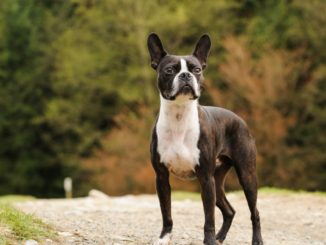
The first time I entered Fido’s Barkery I fell in love with Goliath, the store dog. This Giant Schnauzer, whom I call the “gentle giant,” greeted me by lying on the floor and demanding a belly rub. At the time, I did not have a dog and I adopted Goliath as my own. I would visit him on a weekly basis and buy him a treat. I decided to work part-time at the dog bakery, partially to supplement my professor’s salary, partially to do research, but mostly because I love dogs and believe in the store’s concept. For the past two years, I have had my best friend and “fur baby,” Thurston, an 11-pound Boston terrier (or the “Boston Terror,” as the store affectionately calls him), working by my side. Goliath’s and Thurston’s jobs as “tasters” and “greeters” make them much more than your average dog--they become human-like in status.

Watching the dogs play is fun and entertaining, but after working at Yappy Hour for a couple of months, I realized that this is a sociological study. I conducted 11 interviews with 16 people who regularly attend Yappy Hour. I also had numerous discussions with Frank, the owner of Fido’s Barkery. I used a reference guide of questions to help focus the interviews; yet, all the interviewees had the opportunity to discuss issues that I may not have addressed. I tape-recorded and transcribed all the interviews and developed a system for coding during and after data collection.

I interviewed eight married couples, one divorced man, and two single women who each are in long-term relationships. All the people interviewed are white and heterosexual. Three of the couples have adult children. The ages range from 23 to 51, during or after prime childrearing years. This is significant because empty nesters and young couples without children tend to treat their pets as surrogate children (Albert & Bulcroft, 1988; Hirschman, 1994). One person has a working-class vocation, another has a lower-middle class job, and the rest are in professional or business fields. Confidentiality has been assured, and all human names and dogs’ names have been changed, although I received permission from the individuals to identify the breeds of their dogs. Of the 20 dogs included in the study, all but three were pure-breeds. Because pure-breed dogs are expensive, usually only members of the middle to upper-middle class can afford them. That most of these dogs are pure-breeds is also important because these parents spent the time and money to find a breed that easily would become an extension of the self. Finally, it is significant to report that the middle class has historically used the domesticated pet as a status symbol or child surrogate (Phineas, 1974; Sanders, 1999).

Becoming Fur Babies

The animal lovers who attend Yappy Hour on a regular basis perceive their dogs as more than mere pets; they are integrated family members who are treated like children. Carol, a mechanical engineer in her 40s and a caretaker of two mixed-breeds says:
I think that the type of person who goes to Yappy Hour thinks of the dog as an entity with attitude, needs, personality, thoughts, and they think enough of the dog and the dog’s position in their pack/family that they want to [go to Yappy Hour].
Jackie, who works in sales and is in her late 20s, is an owner of a Japanese Chin. She also distinguishes between people who go to Yappy Hour and people who do not.

I don’t think people love their pets any less that don’t go. But it’s almost [as if Yappy Hour people] take time out for their pets. Other people may go to a park with their dog. I think people who take time out to have a set routine or something that’s just specifically for their dog are different than people who think, I’m going to take the dog out for a walk and that’s their only interaction they’ve had outside.

Because friends and family often make fun of the people who attend Yappy Hour, Anita suggests that the people who attend on a weekly basis are “making a statement about their values.”

These dog lovers make special accommodations for their dogs because they do not see their dogs merely as pets but as family members. For many of these people, the dogs are so integrated into the family that they take on the role of “fur babies,” including one couple who has incorporated their dogs into their will. Sarah, a part-time employee at Fido’s Barkery, is in her mid 20s and has two Airedales and a Silky Terrier. She explains this unusual situation:

You know they are in our will. They have a legacy. If something happens to us they will be provided for. Its not like we’ll put them up in a penthouse, but I certainly hate for something to happen to Steve [her husband, an M.D.] and then they’d have to go to a shelter. So we have talked to certain people about taking them in. And I would not want someone to not take them because of a financial burden. So we have allowed a certain amount to be given to their care….That’s why they’re fur babies. That’s how we think about them.

And Sarah believes that most of the individuals who go to Yappy Hour also see their dogs as family members or fur babies:
I think it’s a sliding scale sort of thing. There are certainly people there that are as neurotic as I am, who get their dogs everything. They are fur babies and that’s the end of the story. I do think there are people who come to Yappy Hour who are less extreme in the levels that the dog enters as a family member versus as a pet. But yeah, I certainly think that anyone who comes to Yappy Hour is more on the side that it’s a family member than a pet

Dawn, a law student in her early 20s, gets upset when people insist that her Pugs are just dogs. Her Pugs are her babies, and, as such, she has a baby stroller for them when she travels to New York City. Beck (1996) and Tuan (1984) argue that parading one’s dog in a baby stroller can be perceived as objectifying animals and using them as a toy; but, in this case, the dog is being protected from being stepped on and is, therefore, being treated like a child.

The perception of their dogs as children is enhanced by the notion that these dog lovers feel like parents, not owners, of dogs. At the time of these interviews, none of the young couples had children, and the older couples’ children were of adult age. By transforming the role of dog into child, Yappy Hour becomes a family excursion that enables humans to play the role of parents.
Dave, a business executive in his late 20s with two Pugs, claims that he and his wife, Lisa, take on stereotypically traditional gender roles. He is the protector and playmate while she is the nurturer and primary caregiver. He claims that the dogs take Lisa more seriously because he doesn’t enforce the rules well.

Dawn also explains that she thinks her dog Angela perceives her and her boyfriend as having distinct gender roles. She cuddles and provides for the dogs on a daily basis while he is the playmate who plays rough with the Pugs:
I think of the dogs more than he does. Everyday, when I don’t have them, I’m like, what did you do with the dogs today? What did you guys play with? And I don’t think he thinks of that as much. When I come home, she cries, when she hasn’t seen me. But when he comes home, she’s excited, but it’s not the same.

Marc, a police officer in his early 30s, agrees with Dave. “Julie is the boss and I’m a big toy for [the dog] to play with. I think he thinks of me as just another dog, part of the pack.” Julie adds, “Yeah, he listens to me if I tell him no, he’ll listen. He doesn’t listen to Marc. He’s more of a buddy to him. While I’m more of the mother type.” In these families, the dogs did not listen to their “fathers” as well as their “mothers.” Since they were not home as much, their main job is to be the playmate, the leader of the pack. As the playmate, they often bend the rules during quality time, as with children.

Interestingly, not only are these dog lovers “doing family,” they also are “doing gender” (West & Zimmerman, 1987). This was particularly true for the young couples who were planning on having children in the future. By preparing to become mothers and fathers, they also were preparing to take on traditional roles of women and men. As a result, these human-animal families abide by the same set of gender expectations as traditional, male-headed households. In this traditional household, mothers are the primary caregivers while fathers are the mother’s helper. The father helps out and does what is requested of him, but the mother manages the daily household chores and activities (Coltrane & Adams, 2001). In both traditional breadwinner families and dual income families, the mother’s role as primary caregiver consists of providing emotional support, preparing meals, and managing daily activities (Coltrane & Adams, Hochschild, 1989; Larossa, 1988). Since they are more involved in the everyday activities of children, they often enforce the daily household rules (however, men often get to make more major household decisions) and are therefore relegated to the role of disciplinarian.

However, sometimes the men are perceived as the alpha because they are not home as often. Shelly believes that Richard’s absence gives him an aura of importance. Bruce, a mechanical engineer in his mid 40s, admits that the dogs respond to Carol better on a daily basis, but as the largest male with the deepest voice, he gets the final say in critical matters:
When we take them for walks and we meet other dogs and there’s some sort of disagreement, if I give a loud growl or yell, all of them listen. Our dog, their dog, it doesn’t matter. So in that sense, I’m the alpha because I’m the biggest, strongest male, with the deepest, loudest growl.

Picking breeds that the caretakers felt reflected their own personalities have also anthropomorphized the dogs (Belk, 1996; Belk, 1998; Hirschman, 1994). Because the dogs are perceived as mirroring the parents, they are elevated to child-like status and reinforce the phrase, “like father, like son.” Lisa and Dave bought Pugs because they wanted dogs with “a lot of character in a small package.” Dave, like his Pug “loves to be the center of attention.” The desire for both of them to be in the spotlight is probably because they both come in small packages (Dave is 5’7”). Dawn also picked Pugs because “they’re stubborn, very dynamic, and have a lot of personality.” Pugs are a great match for Dawn because she says, “I’m a performer and I’m used to having a lot of attention.”

Sarah says she bought Airedales because the breed traits compliment her own personality. Sarah states, “[Airdales] don’t conform, they’re difficult to train, [and] they’re very stubborn….We don’t like to conform to what other people think we should do or say. Which I think is a terrier personality trait.”

Many of the parents of purebred dogs have noticed that their dogs “take on” their owners’ quirky personalities. Shelly claims that one of their Wheaton Terriers is very pensive and quirky, much like her husband Richard.
We always say that Harry’s got a novel in the drawer that he’s working on when we’re not home. We really feel that he’s thinking something and he wants to say it. We always say to him, ‘will you just spit it out Harry.’

Even Goliath, the storeowner’s dog, reflects Frank’s personality. At 105-pounds, Goliath can be very intimidating to strangers. However, he usually is sweet and gentle, except when he barks and breaks up a fight among the dogs at play. Ben, who is married to Anita, attributes Goliaths’ personality to Frank’s own gentle nature, both of whom he describes as “gentle souls.”
I’ll tell you what struck me the most. Frank. My only sense was “what a gentle soul.” I’m so amazed by how I see the reflection of his character in that dog. The dog is generally very quiet. He can take care of business when he has too. Don’t mess with him. Treat him respectfully and you’ll be all set. And that’s kind of how I see Frank. I don’t need to have a big stick and wave it at you, I know I can take care of myself. So I’m going to choose to be pleasant and a good host but if you step out of line [watch out]. I’m very fond of people like that so I immediately was drawn to that. I don’t equate gentle with weak. Being a gentle person doesn’t mean you are a weak person. It means you’re prudent. When you need to take care of it, you take care of it. But, although the dogs often reflect their caretakers’ personalities, Anita is amazed by how, like children, they have their own personalities. She wanted a dog that would constantly give her attention and used to be upset that one of her dogs is not a lap dog. But she realized that “It’s nothing I can take personally. It’s her personality. It’s like kids. When you have more than one you start to see that their own idiosyncrasies are about them, not about you. They are all different.” By interpreting their personality as childlike, these dog lovers anthropomorphize their dogs to a human status and view themselves as parents.

Creating Family and Community in the Marketplace

Although Fido’s Barkery tends to attract an upper-middle class clientele, it is not uncommon to see members of all socio-economic classes buying treats for their dogs. According to Frank, the owner of the bakery, the customers can be broken down into four categories. These categories often, but not always, represent social class. The budget shopper is the type of customer who buys treats at the bakery on special occasion, such as a dog’s birthday or the holiday season. The budget shopper tends to buy dog biscuits from the supermarket or chain pet-store for either financial or practical reasons. Although the dog, often a mixed breed, is a loved member of the family, the dog is a dog and, therefore, does not need extravagant goods.
The status shopper is the rare customer who buys expensive products, such as Burberry style tote bags or the Swarovski studded leather collars at Fido’s Barkery or other elite department stores and specialty shops. This loved dog, usually a purebred, is a canvas to display the status shopper’s wealth and social status (Sanders, 1999).

The quality shoppers regularly shops at Fido’s Barkery because they want to give their mixed breed or purebred, quality, healthy treats. They also prefer shopping at small businesses where they and their dog get personal attention. Finally, the social shoppers have the same qualities as the quality shoppers but use the bakery as a mechanism to socialize their dogs and to gather with other dog lovers. It is the social shopper who attends Yappy Hour on a regular basis to show others and themselves their relationship with their dog as family member. Although most social shoppers also can be considered quality shoppers, these are not mutually exclusive categories. A number of people attend Yappy Hour who--since they do not buy much for their pets--could fall under the category of bargain shopper.

I argue that the parents in this study are quality and social shoppers because they believe it is their responsibility to provide a first-rate life for their fur babies. Richard explains, “I feel very strongly that its part of our responsibility to give the dog the best life you possibly can. They’re completely under your power and control. It’s your responsibility to make them have a good life.” Therefore, these parents use the marketplace to provide their fur babies with health, happiness, and the pursuit of pleasure.
Some things these caretakers have done to make sure their fur babies have the best possible health includes spending thousands of dollars providing for expensive medical care such as chemotherapy and radiation for the mixed breed suffering from cancer, acupuncture for the Airedale suffering from chronic pain, and multiple visits to an opthamologist to treat a Pug’s eye infection. Many of the caretakers are also quite concerned for the safety of the dogs, and one couple set up an alarm system with a smoke detector to protect the dogs when they were away.

Although these parents recognize that this type of treatment requires expendable time and money, they differ from status shoppers in that their motivation is to protect and please their companion animal. Sarah explains that although the money enables them to act out on their desires, the sentiment still would be there, even if they could not afford the expensive veterinary care. She states, “It definitely would change what we do, but it would not change the way we viewed them.” Richard claims he would “borrow or steal or do whatever I could” to provide for his fur babies if he did not have the money.
To insure happiness and comfort in the dog’s daily life, some of these parents buy and rent cars to transport their dogs comfortably. To make the driving experience even more luxurious, small dogs can sit in booster seats, which provide both safety and window viewing pleasure for the dog. For the dog who loves to stick his head out of the window, you can buy doggles, which are dog goggles to protect the dog’s eyes from UV sunrays and debris.

Finally, these parents bring their dogs to Yappy Hour for the pursuit of pleasure. The bakery and the individuals who attend Yappy Hour work together to create a space for people to indulge themselves and to treat their dogs like fur babies. According to Sarah, “you need to afford a lifestyle to participate in it” because going to Yappy Hour on a weekly basis is a “leisure activity” that requires time and money.

Many of the young couples who are thinking about getting pregnant are acutely aware of the expendable time needed to attend Yappy Hour on a regular basis. Dave and Lisa live 20 minutes away from Fido’s Barkery and are concerned that they will not have time to go on a weekly basis once they have a baby. However, they claim that it would not change the desire to go. Sarah claims that children also will not change the status of her fur babies: “Dakota will always be our first born.”
People go to Yappy Hour as a means to provide entertainment and socialization for their dogs. But they keep coming back week after week because of the community fostered by Frank, the friendships formed at Fido’s Barkery, and the desire to support a business based on the love of dogs.

Host of the party

All Yappy Hour attendees agree that one of the main reasons why they continue to come to Yappy Hour is due to Frank, the owner of Fido’s Barkery. All the dogs seem to love Frank, as he is the dispenser of dog treats during Yappy Hour. But the people love him too, and not because he also is the barktender. Frank is a very personable, caring man who loves dogs and his business. In fact, he gave up a lucrative career as a Health Care Administrator to open Fido’s Barkery. Shelly explains:
I think that Frank’s personality is a really big part of it. I think the concept alone isn’t enough. You have to have the right person in place. It’s a good concept, but it’s executed really, really well by Frank. He’s a wonderful man. And then it’s the community, which is the staff, some of whom were part of the community and kind of migrated to the staff. There are people who kind of come and go, but the people who come and stay are such a nice group of people. Plus, it’s an affinity group and that’s part of the concept.

Although the occupations, age, and interests differ among these parents, the relationships to their dogs draw them together. Yappy Hour becomes a social club or an in-group, in which membership is defined and community is constructed by one’s relationship with their dog and one’s attendance of this social event (Newman, 1995; Sumner, 1906). It is through the dogs that a sense of community is formed. As Wolch and Rowe (1992, p. 20) point out in their research on dog parks, “the presence of dogs clearly fosters social interaction between people and people often learn the names of each other’s dog before they learn one another’s name.”

Another reason why people love Yappy Hour is the friendships and sense of community that has developed throughout the years the event has been held. Yappy Hour is not just an important social event for the dogs; it also is a fun get-together for the human companions. Lisa, an owner of two Pugs, explains:
I know for me, Yappy Hour is just as much of a social event for me. It’s great the dogs run around and get tired out, but I enjoy seeing the people that I have something in common [with].

After Yappy Hour, many congregate at a local restaurant for drinks and food, with or without the dogs. Yappy Hour is also a time where people celebrate birthdays (both canine and human), weddings and holidays, as well as to grieve the death or illness of dog and human friends. The unexpected death of one of her dog was traumatic for Shelly; however, knowing that Frank and the others were there for her, helped her survive this heartbreaking tragedy.

Frank was away when my dog died. I just really wanted to tell Frank, I wanted to talk to him. And he was away and he got stuck because of 9-11. And he didn’t get back for days. And one day I got him on the phone and then I went in. I just wanted to stop by and I told him and I just started crying. And he was so sweet about it. Everybody was. The card [that everybody from Yappy Hour signed] really helped us get through.

Because people attend Yappy Hour on a weekly basis, Mack feels that “it’s the canine equivalent to the Cheers bar: where everyone knows the dog’s name.” Before Anita discovered Yappy Hour, she was looking for a forum where she could socialize with other people who love dogs. She continues to come back week after week for the human and canine socialization. “There’s an affinity between people who love dogs and I really think there’s a special type of bond.” Yappy Hour creates an in-group membership or club (Newman, 1995; Summer, 1906), which enables people to bond with other dog “parents,” and also validate their parental-child relationship with their dog.

Supporting the Bakery

Quality and social shoppers buy gourmet delicacies for their fur babies at Fido’s Barkery because they are impressed with the wholesome treats baked on the premises. They buy exclusive goods to show that the dog is a loved member of the family. Furthermore, there is a feeling among the customers that people going to Yappy Hour should make a conscious effort to support this small business rather than buying goods at a cheaper price from a large pet shop. Ann explains:
[If] you are in there and you are using it as a way for your dog to play, then you should support the store that is letting you do those things. I don’t think you have an obligation to buy things but it’s kind of the right thing to do. There are times when I forget my wallet or whatever, and I don’t buy something every time, but as a general rule, if you’re going to be there as much as we’re there, you should buy some stuff there. When you have to get something, get it there.
Dave and Lisa buy the same assortment of treats on a weekly basis and often buy some of the high priced specialty goods to help support the business. “Maybe we’re paying a little more, but it’s a quality product and we get the entertainment,” Dave said. They feel it is important to support the business. Dave claims,
It could just be me feeling guilty because we kind of hang out, drink wine, so does everyone else, but does anyone ever buy anything? No. So we’re like, we don’t want Frank to go out of business, quick buy something.
Because it is a small business, Dave and Lisa always fear that Fido’s Barkery might go under and their weekly supply of treats and entertainment will be gone. In addition, Martha’s desire to support the bakery is the result of feeling that her dogs are actually loved and cared for by the workers. Martha believes one does not get this type of treatment at a large chain pet store, and this keeps her coming back on a weekly basis. So there is a conscious effort by many of these customers to support Fido’s Barkery emotionally, physically, and financially.

Conclusion

This research on the regulars at Yappy Hour adds to the current research on animals and society, which calls for a closer look at the relationships between pets and their human companions. Although the purpose of Yappy Hour at Fido’s Barkery is to generate business, Yappy Hour becomes a community event and a family activity that highlights the process of anthropomorphizing dogs into the child-like status of fur babies. The marketplace has created a new way of thinking about pets and has responded to the shifting relationship between humans and dogs. There is a countless number of products to buy for one’s fur baby. Once dog-loving consumers get used to the idea of a bakery for dogs, it ceases to be outrageous and starts to become an emotional and social necessity. Yappy Hour stimulates business by creating a warm and welcoming place for social and quality shoppers to consume. It also is a social function that creates community and friendships.

For the most part, the dogs in this study were purebreds who appeared to have characteristics and personalities similar to their human companions. This encouraged the dog lovers to view their dogs as more than just a pet, but a vital member of the family. As family members, the dogs are elevated to the status of children, or fur babies. By treating the dogs like children and following traditional gender roles and expectations, the dog owners’ status becomes elevated to parent, thus creating a form of impression management (Goffman, 1959). As parents, they place the needs of their dogs in the forefront of their daily lives and use the marketplace to provide luxuries for their fur babies.

If the merchandise consumers buy, the recreation consumers seek, and the lifestyle consumers achieve reflects and defines them, they are going to try to buy the best goods from the most exclusive stores. Because the family dog is an extension of the self for some, it makes sense that these dog lovers will buy freshly baked dog treats, attend Yappy Hour on a regular basis, and treat their dog like a fur baby.

Note
* Jessica Greenebaum, Central Connecticut State University


References

Albert, A. & Bulcroft, K. (1988). Pets, families, and the life course. Journal of Marriage and the Family, 50, 543-552.

Allen, E. (1999). Shopping for family: Communication studies 298. Qualitative Inquiry, 5, 147-180.

American Pet Product Manufacturers Association. (2003). Pet industry facts. http://www.appma.org/press/fact_sheets/fact_sheet_03.asp

Archer, J., & Winchester, G. (1994). Bereavement following death of a pet. British Journal of Psychology, 85, 259-272.

Belk, R. (1996). Metaphoric relationships with pets. Society & Animals, 4, 121-145.

Belk, R. (1988). Possessions and the extension of self. Journal of Consumer Research, 15, 139-168.

Cain, A. (1985). Pets as family members. In Katcher & Beck (Eds.), New perspective on our lives with companion animals (pp. 71-81). University of Pennsylvania: Philadelphia.

Coltrane, S., & Adams, M. (2001). Men’s family work: Child centered fathering and the sharing of domestic labor. In Skolnick &
Skolnick (Eds.), Family in transition (pp.101-114). Allyn and Bacon: Boston

Crawford, M. (1992). The world in a shopping mall In M. Sorkin (Ed.), Variations on a theme park: The new American city and the end of public space (pp. 3-30). Hill and Wang: New York.

Devault, M., (2000). Producing family time: Practices of leisure activity beyond the home. Qualitative Sociology, 23, 485-503.

Franks, J., & Hart, L. (1993). The role of pet dogs in casual conversations of elderly adults. Journal of Social Psychology, 133, 265-278.

Gillespie, D., Leffler, A., & Lerner, E. (2002). If it weren’t for my hobby, I’d have a life: Dog sport, serious leisure, and boundary negotiations. Leisure Studies, 21, 285-304.

Goffman, E. (1959) The presentation of self in everyday life. Anchor: New York

Hirschman, E. (1994). Consumers and their animal companions. Journal of Consumer Research, 20, 616-631.

Hirschman, E., & Holbrook, M. (1982). Hedonic consumption: Emerging concepts, methods, and propositions. Journal of Marketing, 46, 92-101.

Holbrook, M., & Hirschman, E. (1982). The experiential aspects of consumption: Consumer fantasies, feelings, and fun. Journal of Consumer Research, 9, 132-140.

Hoschschild, A. (1989). The Second shift. Viking Press: New York.

Kimmel, M. (2000). The Gendered society. Oxford University Press: New York.

Larossa, R. (1988). Fatherhood and Social Change. Family Relations, 37, 451-457.

Lorber, J. (1994). Parodoxes of gender. Yale University Press: New Haven.

Lury, C. (1996). Consumer culture. Rutgers University Press: New Brunswick, NJ:

Murphy, P. (2000). The commodified self in consumer culture: A cross-cultural perspective. Journal of Social Psychology, 140, 636-
648.

Newman, D. (1995). Sociology: Exploring the architecture of everyday life. Sage/Pine Forge Press: Thousand Oaks, CA.

Robins, D., Sanders, C., & Cahill, S. (1991). Dogs and their people: Pet-facilitated interaction in a public setting. Journal of Contemporary Ethnography, 20, 3-25.

Phineas, C. (1974). Household pets and urban alienation. Journal of Social History, 7, 338-343.

Sanders, C. (1993). Understanding dogs: Caretakers’ attributions of mindedness in canine-human relationships. Journal of
Contemporary Ethnograph, 22, 205-227.

Sanders, C. (1999). Understanding dogs: Living and working with canine companions. Temple University Press: Philadelphia.

Siegel, J. 1993. Companion animals: In sickness and in health. The Journal of Social Issues, 49, 157-167.

Sumner, W. (1906). Folkways: A study of mores, manners, customs, and morals. Ginn: New York.

Tuan, Y. F. (1984). Dominance and affection. Yale University Press: New Haven.

Veevers, J. (1985). The Social meaning of pets: Alternative roles for companion animals. Marriage and Family Review, 8, 11-30.

West, C., & Zimmerman, D. (1987). Doing gender. Gender & Society, 1, 125-151.

Wolch, J., & Rowe, I.. (1992). Companions in the park: Laurel Canyon Dog Park. Landscape, 31, 16-23.


For Abstracts of all issues, including the most current, click Article Abstracts

To order Society & Animals Journal, go to our secure online ordering page

You can Search the online issues of Society & Animals, as well as the entire Society & Animals Forum (formerly PSYETA) website,
for topics and keywords of your interest:

Google

Search Our Site


Society&Animals Forum
Violence Link
Animals in the Classroom
Publications
Resources & Educational Material
About
How You Can Help