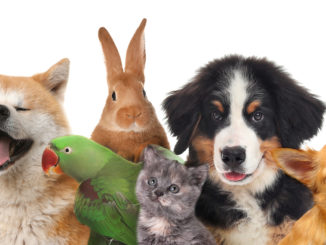
|
Anthropomorphism and Anthropomorphic
Selection Beyond the “Cute Response”
James A. Serpell [1]
We are pleased to announce the winner and three second
prize winners of the S&A Publication Award. First prize is
publication as an article in S&A and US$500. We also publish
here one-page summaries of the three second prize papers.
ABSTRACT
This article explores the origin and evolutionary implications
of anthropomorphism in the context of our relationships with
animal companions. On the human side, anthropomorphic thinking
enables animal companions’ social behavior to be construed in
human terms, thereby allowing these nonhuman animals to function
for their human owners or guardians as providers of nonhuman
social support. Absence of social support is known to be
detrimental to human health and well being. Therefore,
anthropomorphism and its corollary, pet keeping, have obvious
biological fitness implications. On the animal side,
anthropomorphism constitutes a unique evolutionary selection
pressure, analogous to sexual selection, which has molded the
appearance, anatomy, and behavior of companion animal species so
as to adapt them to their unusual ecological niche as social
support providers. Although such species undoubtedly have
benefited numerically from the effects of this process, the
consequences of anthropomorphism are less benign when viewed
from the perspective of individual animals. Indeed,
anthropomorphic selection probably is responsible for some of
the more severe welfare problems currently found in companion
animals.
KEY WORDS: Anthropomorphism, evolution, pets, animal welfare.
Anthropomorphism[2]Chere defined as the “attribution of human
mental states (thoughts, feelings, motivations and beliefs) to
nonhuman animals”Cis an almost universal trait among companion
animal caretakers (pet owners). People throughout the world feed
their animal companions on human food, give them human names,
celebrate their birthdays, take them to specialist doctors when
they become ill, mourn them when they die, and bury them in pet
cemeteries with all the ritual trappings of a human burial (Serpell,
1996a). In the United States, people dress their pets in
designer-label fashions,[3] enroll them in daycare (Louie,
2000), and provide them with renal transplant surgery (among
other high-tech veterinary procedures) at a cost of
approximately $6500 per kidney.[4] Surveys have shown that 75 %
of pet owners consider their animals akin to children, and
nearly half of the women in one survey said that they relied
more on their dogs and cats for affection than on their husbands
or children (American Animal Hospital Association, 1996).
Most previous discussions of anthropomorphism in the scientific
literature have tended to dwell on its validity (or lack
thereof) as a technique for describing and interpreting animal
behavior (McFarland, 1981; Lockwood, 1985; Kennedy, 1992;
Mitchell, Thompson, & Miles, 1997). This article will avoid, as
far as possible, the whole question of whether or not
anthropomorphism, as I have defined it, is useful or appropriate
when studying or interpreting the behavior of animals and
concentrate instead on the ways in which it explains, in
evolutionary terms, both the benefits and harms of pet
ownership.
Genesis
Anthropomorphism appears to have its roots in the human capacity
for so-called “reflexive consciousness”Cthat is, the ability to
use self-knowledge, knowledge of what it is like to be a person,
to understand and anticipate the behavior of others (Humphrey,
1983). Quite when this ability expanded outward to encompass
nonhumans is anybody’s guess, although archaeologist Mithen
(1996) claims that anthropomorphism is one of the defining
characteristics of anatomically modern humans (Homo sapiens
sapiens) and that it probably evolved no more than 40,000 years
ago. Mithen bases this claim on archaeological evidence of a
sudden change in human attitudes toward animals and the natural
world coinciding with the Middle/Upper Paleolithic transition.
This period was associated with a great variety of other
important cultural and technological advances: the invention of
boats, the use of bows and arrows; the first tools made from
stone flakes rather than cores, the first appearance of
decorative and representational art, and the first unequivocal
evidence of ritual burial and other religious practices.
Mithen (1996) attributes these revolutionary changes to a
relatively sudden and radical alteration in the functional
architecture of the human mind. He argues that the minds of
early humans prior to about 40,000 years ago were distinctively
modular in structure with different specialized domains of
intelligence operating largely independently of each other:
A “social intelligence” module designed to deal with the
complexities of social interactions, and capable of using
self-knowledge or personal “insight” to understand and
anticipate the behavior of others; A “natural history
intelligence” module adapted to processing information
concerning the availability and distribution of biological
resources, including the activities and behavior of other
species such as predators or prey; A “technical intelligence”
module focused on physical aspects of the material world and
including techniques for manipulating and constructing objects
such as tools and weapons; and A “general intelligence” module
concerned with general-purpose problem-solving and
decision-making. According to Mithen (1996), this inherent
modularity severely limited the rate of cultural evolution of
early humans by preventing the different domains of intelligence
from talking to each other. Each had its own specific area of
expertise, and there was little or no flow or exchange of
knowledge and information between them. Around 40,000 years ago,
however, he postulates the evolutionary emergence of what he
calls “cognitive fluidity” or the ability of the different
modules to begin speaking to each other for the first time,
resulting in a cultural explosion of unprecedented magnitude and
creativity.
Anthropomorphic thinking, in Mithen’s (1996) view, emerged at
this time as a direct consequence of a new dialogue between the
social and the natural history intelligence modules of the
ancestral human brain. This dialogue became possible through the
agency of reflexive consciousness, which spread out of its point
of origin in social intelligence and into the other domains.
This allowed modern humans to apply their sophisticated social
skillsCtheir ability to make inferences about the mental
experiences of conspecificsCto their interactions with other
animals and the natural world. The effect of this merger was
dramatic. Neanderthals and their predecessors no doubt viewed
animals and the workings of nature as objects or phenomena of
great practical interest; but, if Mithen is correct, they were
entirely incapable of using self-knowledge to infer comparable
mental states in other species or of interpreting the behavior
of other animals in the light of this inference. Modern humans,
in contrast, seem to have great difficulty thinking about
animals except in anthropomorphic terms. From earliest
childhood, it seems, we instinctively view other animals as
social subjects (Myers, 2002) and imbue them with human-like
intelligence, desires, beliefs, and intentions.
Anthropomorphic thinking evolved and spread, Mithen (1996)
argues, because it had enormous survival value. The
archaeological record shows that the Neanderthals and their
forerunners, who probably lacked the capacity for
anthropomorphic thinking, were certainly effective hunters but
that they were strictly opportunistic in their choice of prey
and very limited in their methods of hunting. The evidence from
Upper Paleolithic sites, in contrast, indicates that
anatomically modern humans were preoccupied with the habits and
behavior of animals and engaged in far more complex hunting
strategies that required forward planning and the ability to
make accurate predictions about the movements and behavior of
the species hunted. In other words, it appears that
anthropomorphic thinking helped Homo Sapiens sapiens to become a
super-predator by providing him with a specialized weapon for
penetrating and exposing the minds of his prey.
Anthropomorphism also had other far-reaching consequences.
Enabling our ancestors to attribute human thoughts, feelings,
motivations, and beliefs to other species opened the door to the
incorporation of some animals into the human social milieu,
first as pets, and ultimately as domestic dependents (Serpell,
1989; Mithen, 1996). According to Mithen, without
anthropomorphism, neither pet keeping nor animal domestication
would ever have been possible.[5]
Pet keeping, Health, and Quality of Life
Of course, merely stating that anthropomorphism made pet keeping
possible does not help to explain why this practice has
persisted for at least 14,000 years and possibly far longer.
From a purely evolutionary standpoint, pet keeping appears to be
an anomalous activity (Archer, 1997). It is easy to explain, for
example, why people keep chickens, pigs, or sheep: These animals
are worth at least their own weight in eggs, meat, hide, or
fiber. But what possibly could be the adaptive value of keeping
Siamese Cats or Miniature Schnauzers? Natural selection, we
know, favors individuals who behave in ways likely to maximize
their own survival and reproductive success and/or that of their
own close relatives (Hamilton, 1964). Even the theory of
reciprocal altruism, developed by Trivers (1970), requires that
we only should help other unrelated individuals when there is a
reasonable likelihood of that help being reciprocated at some
point in the future (Trivers, 1971). Because pets do not belong
even to the same speciesCmuch less the same kin groupCand are
surely incapable of remembering and returning past favors, it is
difficult to imagine how pet keeping evolved or why it persists.
Pet keeping, moreover, is expensive. About 800,000 people
require medical treatment for dog bites each year in the United
States (Sacks, Sinclair, Gilchrist, Golab, & Lockwood, 2000);
and, according to recent estimates, Americans spend around $11.6
billion a year on prepared pet foods (more than they spend on
baby food) and $11 billion a year on pet health care (James,
2000).
A common response to this evolutionary puzzle, and one that
keeps being regurgitated in the literature, is the idea that
pets are simply social parasites who have perfected the art of
releasing and exploiting our innate parental instinctsCthe
so-called “cute response” (Lorenz, 1943; Gould, 1979; Archer,
1997; Budiansky, 2000). Parallels sometimes are drawn with the
phenomenon of brood parasitism in birds in which the parasite’s
nestling seems to exaggerate many of the host’s care-soliciting
aspects, thus insuring that the nestling is fed assiduously to
the detriment of the foster parents and siblings. The
superficially infantile appearance of some lapdogs lends support
to this idea, but it should be emphasized that a key difference
between people and songbirds is that the latter are presumably
unaware that they are feeding and caring for a non-conspecific
intruder. People may indeed find puppies or Pug Dogs cute, but
they certainly are never in any doubt concerning their true
provenance (Serpell, 1996a). Another longstanding and
denigrating view of pet owners portrays them as akin to users of
pornographyCthat is, individuals who are either unable or
unwilling to form “normal” relationships with fellow human
beingsCand who resort to pets as counterfeit substitutes for
unattainable reality. Accepting this notion, however, would
require us to believe that more than half of all American
householders (and about a third of European ones) are either
severely misanthropic or socially handicapped (Serpell, 1996a).
Fortunately, there also is a third, less disparaging theory of
pet ownership according to which people keep animals for
companionship for essentially the same reasons that people wear
overcoats to keep out the cold: because by doing so, they
enhance their own health and quality of life. Research on the
putative health benefits of pet ownership still is at a
relatively early stage of development, but already it has
yielded a variety of interesting findings. Pet owners, for
instance, have been shown to possess fewer physiological risk
factors (high blood pressure, serum triglycerides, and
cholesterol) for cardiovascular disease than non-owners, as well
as exhibiting improved survival and longevity following heart
attacks (Garrity & Stallones, 1998; Friedmann, Thomas & Eddy,
2000).
Pet guardians appear to be more resistant to the stressful
effects of negative life events, resulting in fewer health
problems and fewer visits to doctors for treatment (Siegel,
1990). The acquisition of a new pet also has been associated
with improvements in owners’ mental and physical health and with
sustained reductions in their tendency to overreact to stressful
situations (Serpell, 1991; Allen, Blascovich, Tomaka, & Kelsey,
1991). Significantly, pet owners who report being very attached
to their pets tend to benefit more from pet ownership than those
who are less attached, and dog owners tend to do better than cat
owners, perhaps because the attachment for dogs, on average, is
stronger (Ory & Goldberg, 1983; Freidmann & Thomas, 1995).
Interpreting such findings often is difficult, but most
authorities now agree that these results are what one would
expect if pets were serving as a form of social support (Serpell,
1996a; Garrity & Stallones; Collis & McNicholas, 1998).
Cobb (1976) defined social support as “information leading the
subject to believe that he is cared for and loved, esteemed, and
a member of a network of mutual obligation [italics added]” (p.
300). More recent authors have tended to distinguish between
“perceived social support” and “social network” characteristics.
The former represents a largely qualitative description of a
person’s level of satisfaction with the support he or she
receives from particular social relationships, while the latter
is a quantitative measure incorporating the number, frequency,
and type of a person’s overall social interactions (Eriksen,
1994). In practice, both kinds of social support tend to be
broken down into different components:
Emotional support: the sense of being able to turn to others for
comfort in times of stress; the feeling of being cared for by
others; Social integration: the feeling of being an accepted
part of an established group or social network;
Esteem support: the sense of receiving positive, self-affirming
feedback from others regarding one’s value, competence,
abilities or worth; Practical, instrumental or informational
support: the knowledge that others will provide financial,
practical or informational assistance when needed; and
Opportunities for nurturance and protection: the sense of being
needed or depended upon by others (Collis & McNicholas, 1998, p.
115).
However we choose to define it, the importance of social support
to human well being has been acknowledged implicitly throughout
history; within the last 10 years, an extensive medical
literature has emerged confirming a strong, positive link
between social support and improved human health and survival.
In particular, social support has been shown to protect against
cardiovascular disease and strokes, rheumatic fever, diabetes,
nephritis, pneumonia, and most forms of cancer, as well as
depression and suicide (Eriksen, 1994; Esterling, Kiecolt-Glaser,
Bodnar, & Glaser, 1994; House, Landis, & Umberson, 1988;
Sherbourne, Meredith, Rogers, & Ware, 1992; Vilhjalmson, 1993).
The precise mechanisms underlying these life-saving effects of
social support still are the subject of some debate, but most
experts seem to agree that the principal benefits arise from the
capacity of supportive social relationships to buffer or
ameliorate the deleterious health effects of prolonged or
chronic life stress (Ader, Cohen, & Felten, 1995). In theory,
this salutory effect of social support should apply to any
positive social relationship; any relationship in which a person
believes that he or she is cared for and loved, esteemed, and a
member of a network of mutual obligations. The socially
supportive potential of pets, assuming it exists, should
therefore hinge on their ability to produce similar effects by
behaving in ways that make their owners believe that the animal
cares for and loves them, holds them in high esteem, and depends
on them for care and protection.
What evidence exists that pets actually may fulfill this role?
Surprisingly, very few of the many studies that have
investigated the health effects of pet ownership during the last
20 years have considered the behavior of the pet, or the owner’s
perception of the behavior of the pet, as an important factor in
all of this. Rather, pets have been treated as a sort of uniform
variable that either is present or absent, as if all pets were
equivalent regardless of species, breed, temperament, or
behavior. But if pet ownership can be conceptualized usefully as
another kind of social relationship, analogous to marriage or
friendship, then clearly these relationships should be studied
as dyadic interactions in which both participantsChuman and
animalCplay important parts (Serpell, 1989b). Only a handful of
studies have attempted this, and their findings are revealing.
In one, it was found that people’s professed attachments for
their pets were strongly influenced by their evaluations of the
animal’s behavior. Pet owners, it seems, have a good idea of the
kinds of behavior they do and do not want from their pets, and
they appear to respond to a good match between what they want
and what they get from the animal by becoming more attached to
the pet (Serpell, 1996b). More recently, researchers in New
Zealand investigated whether the degree of behavioral matching
or “compatibility” between the pet and owner affected the
owner’s health. They found that owners who reported a high
degree of behavioral compatibility between their pets and
themselves were not only more attached to their animals but also
experienced better overall mental health, enhanced feelings of
well-being, less distress, more positive affect, less anxiety,
and fewer physical symptoms of ill-health than did those with
less compatible pets (Budge, Spicer, Jones, & St. George, 1998).
To examine the kinds of human-animal interactions involved in
these assessments, Bonas, McNicholas, and Collis (2000) at
Warwick University in England recently used a survey instrument
called the Network of Relationships Inventory as a means of
getting people to describe and evaluate the different kinds of
social support they derive from both their human and nonhuman
relationships. They found that, although human relationships
scored higher overall in terms of aggregate social support, pet
dogs actually scored higher than humans on a number of specific
social or “relational provisions”: specifically “reliable
alliance,” “nurturance,” and “companionship.”[6] Cats ranked
lower than dogs and higher than other pets, overall, although
even cats rivaled humans in terms of their ability to provide
“reliable alliance” and “nurturance.” Humans only perform
substantially better than dogs for “instrumental aid” and
“intimacy,” both of which depend to a greater extent on either
complex cognitive capacities or language.[7] Bonas’s subjects
also reported far less conflict in their relationships with pets
compared with other people. Again, the pet’s lack of linguistic
ability was probably an important consideration. Because they
are unable to talk, pet animals are also unable to judge or
criticize their owners, lie to them, or betray their trust.
Bonas et al.’s (2000) study clearly suggests that their subjects
had no difficulty describing and evaluating their nonhuman
companions using precisely the same relational parameters as
those developed and used to describe relationships with humans.
By implication, then, these people were interpreting and
evaluating the various behavioral signals of social support they
received from their pets as if they were coming from fellow
human beings. In other words, anthropomorphismCthe ability, in
this case, to attribute human social motivations to
nonhumansCultimately is what enables people to benefit socially,
emotionally, and physically from their relationships with
companion animals. Most pet owners believe that their animals
genuinely “love” or “admire” them, “miss” them when they are
away, feel “joy” at their return, and “jealousy” when they show
affection for a third party (Serpell, 1996a). One could, of
course, argue that these people are simply deluding themselves
and that the feelings and emotions they impute to their animals
are entirely fictitious. Be that as it may. The fact remains
that without such beliefs, relationships with pets would be
essentially meaningless. Anthropomorphism rules because any
other interpretation of the animal’s behaviorCany suggestion
that the pet might be motivated by other than human feelings and
desiresC instantly would devalue these relationships and place
them on a more superficial and less rewarding footing.
Anthropomorphic Selection Beyond the “Cute Response”
Although anthropomorphism would appear to be responsible for
many of the benefits people derive from the company of pet
animals, its effects on the animals are more equivocal. In
purely numerical terms, of course, most companion animal species
now vastly outnumber their wild ancestors. Due to habitat loss
and persecution by humans, wolves (Canis lupus), the presumed
ancestors of domestic dogs, now are extinct or endangered
throughout much of their former range, while African wild cats (Felis
silvestris libyca), the progenitors of domestic cats, are much
less common now than they used to be. The genetic integrity of
many of these isolated populations of wolves and wild cats also
is increasingly threatened by interbreeding with their
free-roaming, domestic descendents (Mech, 1970; Boitani,
Francisci, Ciucci, & Andreoli,1995; Serpell, 2000). In contrast,
domestic dogs and cats now occur on virtually every island and
continent (apart from Antarctica) where there are people, and
worldwide populations have exploded to the point where it is
almost impossible to provide an accurate estimate of their
numbers. According to recent figures from the United States
alone, there may be as many as 58 million pet dogs in America
and nearly 73 million pet cats (Pet Food Institute, 2000),
although some would argue that the latter figure should be
doubled to accommodate unowned strays. Clearly, if evolutionary
success is judged entirely on the basis of numbers,
anthropomorphism has been a tremendous boon to these animals.
From an animal welfare perspective, however, the effects of
anthropomorphism are far less benign. Anthropomorphic
selection[8]Cthat is, selection in favor of physical and
behavioral traits that facilitate the attribution of human
mental states to nonhumansCimposes unusual and unique pressures
on the objects of its attentions, in much the same way that the
phenomenon of “female choice” does in sexual selection. The
extravagant plumes, crests, combs, wattles, and displays used by
the males of many polygamous bird species to intimidate their
rivals and impress prospective mates are thought to be runaway
products of arbitrary female preferences for grotesque or
elaborate physical adornments and behavior (Halliday, 1978).
Some of these excrescences may be aesthetically appealing to the
human eye; but for the males who carry them, they can become
potentially serious handicapsCimposing severe energy costs and
both attracting the attention of predators and impairing the
bearer’s ability to escape from them (Zahavi, 1975). Similarly,
many companion animal breeds effectively have become handicapped
by selection for traits that appeal to our anthropomorphic
perceptions.
Perhaps the most extreme example of this process can be found in
the English Bulldog, once a powerful, athletic animal, and now
recently described as the canine equivalent of a train wreck.
With its severely brachycephalic head, prognathous upcurved
mandible, distorted ears and tail, 222) and ungainly movements,
the Bulldog more closely resembles a “veterinary rehabilitation
project than a proud symbol of athletic strength or national
resolve” (Thomson, 1996, p. 220). In addition to the physical
deformities, most Bulldogs now must be born by caesarian
section, and the breed is crippled by multiple insults to its
nasal and respiratory system. At the Veterinary Hospital of the
University of Pennsylvania, Bulldogs even are used to study the
phenomenon of sleep apnea. The difficulty they have breathing
while asleep is so pronounced that most of them die prematurely
from heart failure due to chronic oxygen deprivation (Panckeri,
Schotland, Pack, & Hendricks, 1996). These malformations mainly
are due to a congenital defect known as chondrodystrophy, a
developmental anomaly in the formation of bones that produces
gross distortions, particularly in the craniofacial and
appendicular skeleton. It also is present, though at different
levels of expression, in most other brachycephalic breeds, such
as Pugs, Boston Terriers, Boxers, Pekingese, and in those with
abnormally stunted limbs, including the Dachshund and Basset
Hound (Thomson, 1996).
In humans, this condition causes a severe disability, and
considerable research efforts are devoted to finding a cure for
it. Yet these animals are being deliberately bred to preserve,
and even accentuate, the same disabling characteristics. If
Bulldogs were the products of genetic engineering by agri-pharmaceutical
corporations, there would be protest demonstrations throughout
the Western world, and rightly so. But because they have been
generated by anthropomorphic selection, their handicaps not only
are overlooked but even, in some quarters, applauded.
Of course, not all of what we humans do to exaggerate or enhance
the anthropomorphic appearance of companion animals is
necessarily harmful, at least from the animal’s perspective. It
is unlikely, for example, that dogs suffer to any appreciable
extent from being dressed up like dolls or from being used by
their owners as fashion accessories. One certainly could argue
that these animals are diminished symbolically by such uses, in
much the same way that human dwarves and midgets are degraded by
their use in comic theater (Tuan, 1984). But it is very doubtful
whether the animals are aware of the symbolism or that they
care. Altering an animal’s physical appearance raises more
serious ethical questions, however, when it involves deliberate
mutilation. Docking the tails of pets or surgically removing
their claws certainly could be interpreted as anthropomorphic
interventions. Humans do not possess tails or claws, and it
appears that some of us expect our pets to match our own
self-image by doing without these natural animal appendages.
Along with anatomy and physical appearance, anthropomorphic
selection also has distorted the behavior of pets. Again, some
of this is relatively harmless. The proverbial loyalty and
fidelity of dogs to their human guardians, for instance, almost
certainly is a product of anthropomorphic selection. When these
same characteristics are accompanied by abnormally accentuated
dependency, however, they result in a crippling pathology. The
second most common problem currently seen by animal behavior
specialists is the dog who becomes hysterical with anxiety
whenever left alone. These animals shred furniture and carpets,
rip holes in doors (often injuring themselves in the process),
and defecate and urinate all over the house, so great is their
distress at separation (McCrave, 1991). By selecting for animals
with exaggerated anthropomorphic (or paedomorphic) appeal, it is
probable that we inadvertently have created lines of
over-dependent dogs who fall apart emotionally when their
attachments are threatened. Regrettably, the common response to
this problem is either to contain it by incarcerating these
animals in cages while their owners are out of the house or to
subdue it with psychoactive medication (Podberscek, Hsu, &
Serpell, 1999).
Conclusion
The anthropomorphic tendency to attribute human feelings and
motivations to nonhuman animals has given rise to a unique set
of interspecies relationships that have no precedent elsewhere
in the animal kingdom. These human-pet relationships are unique
because they are based primarily on the transfer or exchange of
social rather than economic or utilitarian provisions between
people and animals. For the humans involved in these
relationships, anthropomorphism has provided the opportunity to
use animals as alternative sources of social support and the
means to benefit emotionally and physically from this. For the
animals, it has created a novel ecological niche, a set of
unusual evolutionary selection pressures, and a variety of
corresponding adaptationsCsome of which are detrimental to the
animals’ welfare. In this respect, pet keeping is no different,
and certainly no worse, than other ways of using animals for
human ends, such as farming or biomedical research. Every novel
adaptation to a new environment, whether natural or fabricated,
carries with it certain costs, and it would be unrealistic to
imagine that things could be otherwise. It is not unrealistic,
however, to question the level of cost that animals should have
to incur to participate in such relationships. Regardless of how
we use animals, there are ethical limits beyond which we should
not go, and those limits surely should disallow us from
deliberately breeding companion animals who suffer from painful,
distressing, or disabling physical or emotional handicaps or
from surgically mutilating them in the interests of fashion or
convenience.
* James A. Serpell, University of Pennsylvania
Notes
[1] Correspondence should be addressed to James A. Serpell,
Department of Clinical Studies, School of Veterinary Medicine,
University of Pennsylvania, 3900 Delancey Street, Philadelphia,
PA 19104-6010.
[2] There are various competing definitions of anthropomorphism
in the literature ranging from the attribution of any mental
state to nonhumans (Kennedy, 1992) to the attribution of
exclusively human characteristics (Noske, 1989; Shapiro, 1997).
However, as Lehman (1997) points out, these distinctions matter
primarily because of the common assumption that
anthropomorphism, however it is defined, is necessarily
erroneous or mistaken. No such assumption is intended with the
present definition, and the actual accuracy or lack of accuracy
of people’s attributions regarding their pets’ mental states is
largely irrelevant to the central arguments of this article.
[3] Numerous wholesale and retail websites now exist that
specialize in fashion wear for pets, for example: http://www.michaeljfashions.com/
[4] Figure derived from the Veterinary Hospital of the
University of Pennsylvania, January 2002.
[5] In a recent article, Hirata Yamakoshi, Fujita, Ohashi, &
Matsuzawa (2001), describe a case of a wild female chimpanzee
apparently capturing and keeping a western tree hyrax as a pet.
Such observations clearly pose a fascinating challenge to
Mithen’s (1996) claim that such behavior is distinctively human.
[6] “Reliable alliance” refers to a person’s belief that the
relationship will last; “Nurturance” refers to taking care of or
protecting others from harm, and “Companionship” is defined as
spending time with others, and doing enjoyable things together.
[7] “Instrumental aid” refers to others providing practical
help, and “Intimacy” concerns confiding in others, or sharing
private thoughts with them.
[8] It is arguable whether this phenomenon should be labeled
anthropomorphic or paedomorphic selection because much of what
is selected for in companion animals is characteristic of
juvenile or infantile appearance and behavior. Anthropomorphic
selection may be the preferable term because the putative goal
of selection is to produce animals who are more human-like, even
if their human-like features are also child-like or infantile.
References
Ader, R. L., Cohen, N. & Felten, D. (1995).
Psychoneuroimmunology: Interactions between the nervous system
and the immune system. The Lancet, 345, 99-103.
Allen, K. M., Blascovich, J. Tomaka, J., & Kelsey, R. M. (1991).
Presence of human friends and pet dogs as moderators of
autonomic responses to stress in women. Journal of Personality
and Social Psychology, 61, 582-589.
American Animal Hospital Association. (1996). National Pet Owner
Survey. Denver: AAHA.
Archer, J. (1997). Why do people love their pets. Evolution and
Human Behavior, 18, 237-59.
Boitani, L., Francisci, F., Ciucci, P., & Andreoli, G. (1995).
Population biology and ecology of feral dogs in Italy. In J. A.
Serpell (Ed.), The Domestic Dog: Its evolution, behavior, and
interactions with people (pp. 218-244). Cambridge: Cambridge
University Press.
Bonas, S., McNicholas, J., & Collis, G. M. (2000). Pets in the
network of family relationships: An empirical study. In A.L.
Podberscek, E. Paul, & J. A. Serpell (Eds.), Companion animal
and us (pp. 209-36). Cambridge, Cambridge University Press.
Budge, R. C., Spicer, J., Jones, B., & St. George, R. (1998).
Health correlates of compatibility and attachment in
human-companion animal relationships. Society & Animals, 6,
219-234.
Budiansky, S. (2000). The truth about dogs: An inquiry into the
ancestry, social conventions, mental habits, and moral fiber of
canis familiaris. New York: Viking.
Cobb, S. (1976). Social support as a moderator of life stress.
Psychosomatic medicine, 38, 300-314.
Collis, G. M., & McNicholas, J. (1998). A theoretical basis for
health benefits of pet ownership. In C.C. Wilson & D.C. Turner
(Eds.), Companion Animals in Human Health (pp. 105-22). Thousand
Oaks, CA, Sage.
Eriksen, W. (1994). The role of social support in the
pathogenesis of coronary heart disease: A literature review.
Family Practice, 11, 201-209.
Esterling, B. A., Kiecolt-Glaser, J., Bodnar, J. C., & Glaser,
R. (1994). Chronic stress, social support, and persistent
alterations in the natural killer cell response to cytokines in
older adults. Health Psychology, 13, 291-328.
Friedmann, E., & Thomas, S. A. (1995). Pet ownership, social
support, and one-year survival after acute myocardial infarction
in the cardiac arrhythmia suppression trial (CAST). American
Journal of Cardiology, 76, 1213-1217.
Friedmann, E., Thomas, S. A., & Eddy, T. J. (2000). Companion
animals and human health: Physical and cardiovascular
influences. In A. L. Podberscek, E. Paul, & J. A. Serpell
(Eds.), Companion animal and us (pp. 125-142). Cambridge:
Cambridge University Press.
Garrity, T. F., & Stallones, L. (1998). Effects of pet contact
on human well-being: Review of recent research. In C. C. Wilson
& D. C. Turner (Eds.), Companion Animals in Human Health (pp.
3-22). Thousand Oaks, CA, Sage.
Gould, S. J. (1979). Mickey Mouse meets Konrad Lorenz. Natural
History, 88, 30-36.
Halliday, T. (1978). Sexual selection and mate choice. In J. R.
Krebs, & N. B. Davies (Eds.), Behavioural ecology: An
evolutionary approach (pp. 180-213). Oxford: Blackwell.
Hamilton, W. D. 1964. The genetical evolution of social
behavior. Journal of Theoretical Biology, 7, 1-32.
Hirata, S., Yamakoshi, G., Fujita, S., Ohashi, G., & Matsuzawa,
T. (2001). Capturing and toying with hyraxes (Dendrohyrax
dorsalis) by wild chimpanzees (Pan troglodytes) at Bossou,
Guinea. American Journal of Primatology, 53, 93-97.
House, J. S., Landis, K. R., & Umberson, D. (1988). Social
relationships and health. Science, 241, 540-545.
Humphrey, N. (1983). Consciousness regained. Oxford: OUP.
James, S. 2000. Nestle-Ralston Purina deal sign of growing
population. http://www.petsforum.com/petnews/01181c.html
Kennedy, J. S. (1992). The new anthropomorphism. Cambridge:
Cambridge University Press.
Lehman, H. (1997). Anthropomorphism and scientific evidence for
animal mental states. In R. W. Mitchell, N. S. Thompson, & H. L.
Miles (Eds.), Anthropomorphism, anecdotes and animals (pp.
104-115). Albany: SUNY Press.
Lockwood, R. (1985). Anthropomorphism is not a four-letter word.
Advances in animal welfare science, 1985/86. Washington, DC:
Humane Society of the United States.
Lorenz, K. (1943). Die angeborenen Formen möglicher Erfahrung
[The innate form of possible
experience]. Zeitschrift für Tierpsychologie, 5, 235-409.
Louie, E. (2000, November 16). An indoor pet playground, with
everything but squirrels to chase. New York Times, F, p.3.
McCrave, E. A. (1991). Diagnostic criteria for separation
anxiety in the dog. Veterinary Clinics of North America: Small
Animal Practice, 21, 247-255.
McFarland, D. (Ed.). (1981). The Oxford companion to animal
behaviour. Oxford: Oxford University Press.
Mech, D. L. (1970). The wolf: The ecology and behavior of an
endangered species. Garden City, NY: The Natural History Press.
Mitchell, R. W., Thompson, N., & Miles, L. (Eds.). (1997).
Anthropomorphism, anecdotes, and animals: The emperor's new
clothes? Albany: SUNY Press.
Mithen, S. (1996). The prehistory of the mind: A search for the
origins of art, religion and science. London: Thames & Hudson.
Myers, O. E., & Saunders, C. D. (2002). Animals as links toward
developing caring relationships with the natural world. In P. H.
Kahn & S. R. Kellert (Eds.), Children and nature: Psychological,
sociocultural, and evoutionary investigations (pp. 152-178).
Cambridge: MIT Press.
Noske, B. (1989). Humans and other animals: Beyond the
boundaries of anthropology. London: Pluto Press.
Ory, M. G., & Goldberg, E. L. (1983). Pet possession and life
satisfaction in elderly women. In A. H. Katcher & A. M. Beck
(Eds.), New Perspectives on Our Lives with Companion Animals
(pp. 303-317). Philadelphia: University of Pennsylvania Press.
Panckeri, K. A., Schotland, H. M., Pack A. I., & Hendricks, J.
C. (1996). Modafinil decreases hypersomnolence in the English
bulldog, a natural animal model of sleep-disordered breathing.
Sleep, 19, 626-631.
Patronek, G. J., & Rowan, A. N. (1995). Determining dog and cat
numbers and population dynamics. Anthrozoös, 7, 199-205.
Pet Food Institute. (2000). 2000 pet incidence trend report.
http://www.petfoodinstitute.org/pet-data.cfm.
Podberscek, A. L., Hsu, Y., & Serpell, J. A. (1999). Evaluation
of clomipramine as an adjunct to behavioural therapy in the
treatment of separation-related problems in dogs. The Veterinary
Record, 145, 365-369.
Sacks, J. J., Sinclair, L., Gilchrist, J., Golab, G. C,. &
Lockwood, R. (2000). Breeds of dogs involved in fatal human
attacks in the United States between 1979 and 1998. Journal of
the American Veterinary Medical Association, 217 (6), 836-840.
Salman, M. D., New, J. G., Scarlett, J. M., & Kass, P. H.
(1998). Human and animal factors related to the relinquishment
of dogs and cats in 12 selected animal shelters in the United
States. Journal of Applied Animal Welfare Science, 1, 207-226.
Serpell, J. A. (1989a). Pet-keeping and animal domestication: A
reappraisal. In J. Clutton-Brock (Ed.), The Walking larder:
Patterns of domestication, pastoralism, and predation (pp.
10-21). London: Unwin Hyman.
Serpell, J. A. (1989b). Humans, animals, and the limits of
friendship. In R. Porter, & S. Tomaselli (Eds.), The dialectics
of friendship (pp. 111-129). London: Routledge.
Serpell, J. A. (1991). Beneficial effects of pet ownership on
some aspects of human health and behaviour. Journal of the Royal
Society of Medicine, 84, 717-720.
Serpell, J. A. (1996a). In the company of animals. Cambridge:
Cambridge University Press.
Serpell, J. A. (1996b). Evidence for an association between pet
behavior and owner attachment levels. Applied Animal Behavior
Science, 47, 49-60.
Serpell, J. A. (2000). Domestication and history of the cat. In
D. C. Turner & P. P. G. Bateson (Eds.), The domestic cat: The
biology of its behavior (pp. 180-192). Cambridge: CUP.
Shapiro, K. J. (1997). A phenomenological approach to the study
of nonhuman animals. In R. W. Mitchell, N. S. Thompson, & H. L.
Miles (Eds.), Anthropomorphism, anecdotes and animals (pp.
277-295). Albany, NY, SUNY Press.
Sherbourne, C. D., Meredith, L. S., Rogers, W., & Ware, J. E.
(1992). Social support and stressful life events: Age
differences in their effects on health-related quality of life
among the chronically ill. Quality of Life Research, 1, 235-246.
Siegel, J. M. (1990). Stressful life events and use of physician
services anmong the elderly: The moderating role of pet
ownership. Journal of Personality and Social Psychology, 58,
1081-1086.
Spencer, L. (1993). Behavioral services in a practice lead to
quality relationships. Journal of the American Veterinary
Medical Association, 203, 940-941.
Thomson, K. S. (1996, May-June). The fall and rise of the
English Bulldog. American Scientist, 220-223.
Trivers, R. L. (1971). The evolution of reciprocal altruism.
Quarterly Review of Biology, 46, 35-57.
Tuan, Y-F. (1984). Dominance and affection: The making of pets.
New Haven: Yale University Press.
Vilhjalmson, R. (1993). Life stress, social support and clinical
depression: A reanalysis of the literature. Social Science
Medicine, 37, 331-342.
Zahavi, A. (1975). Mate selection–a selection for a handicap.
Journal of Theoretical Biology, 53, 205-214.
For Abstracts of all issues, including the most current, click
Article
Abstracts
To order Society &
Animals Journal, go to our secure online
ordering page
You
can Search the online issues of Society & Animals, as well
as the entire Society & Animals Forum (formerly PSYETA)
website,
for topics and keywords of your interest:
|