
Assessment
of the Effectiveness of a Pet Facilitated Therapy Program in
a Nursing Home Setting
Ira
B. Perelle and Diane A. Granville 1
Mercy
College
In
the past twenty years Pet Facilitated Therapy (PFT) has been
used, apparently successfully, with several populations, including
nursing home residents. Studies report positive behavior changes
as a result of PFT intervention, but little effort has been
made to quantify such behavior changes. This study presents
the results of a PFT program in a nursing home setting. Results
were positive, and were measured using the Patient Social
Behavior Scale, designed for this study. Nursing home residents
showed an increase of social behaviors from pretest to midpoint
and from midpoint to post test, but these behaviors declined
four weeks after post test. Although both males and females
showed an increase in social behaviors, males' and females'
response patterns differed.
The
first recorded use of animals in therapy was by William Tuke
at the York Retreat, in England, founded in 1792 by the Society
of Friends as an alternative to the subhuman conditions of the
lunatic asylums of that time (Beck and Katcher, 1983). The basis
of treatment was teaching self-control by having the ostensibly
weaker creatures dependent on the patients. The York Retreat
became a model for the reform of other asylums of the day (Blake,
1980). The next recorded use of animals in therapy is at Bethel,
a residential treatment center for epileptics, founded in 1867
in Bielefeld, Germany. From its inception, pets were an integral
part of the treatment protocol because of the belief of Bethel's
founders that the use of animals was a common-sense approach
to treatment. The animal therapy program, still in use, has
been expanded to include farm animals and a wild game park (McCulloch,
1983; Bustad and Hines, 1984).
The
first use of animals in an organized program in the United Stales
appears to have been at the Army Air Corps Convalescent Center
in Pauling, New York, in 1944. The Center, run by the American
Red Cross, included a working farm and patients were encouraged
to interact with the various farm and pet animals. Unfortunately,
no records were kept on the effects of the human-animal interactions
and the program was discontinued after World War II (McCullough,
1983; Levinson, 1969). No further use of animals in therapy
is revealed in the literature until Boris Levinson described
his use of animals as adjuncts in his practice of psychology
(Levinson, 1962; 1969; 1975). Levinson advocated the use of
animals in cases where affection and unconditional acceptance
were indicated. He believed, "A pet can provide, in boundless
measure, love and unqualified approval. Many elderly and lonely
people have discovered that pets satisfy vital emotional needs"
(Levinson, 1969, p 368). Levinson described his introduction
of animals into the therapeutic milieu as "pet facilitated
therapy" (Levinson, 1969), and this has been accepted by
most professionals as being appropriately descriptive and accurate.
In
the past two decades Pet Facilitated Therapy (PFT) has been
used successfully with several populations: coronary patients
(Friedman, Katcher, Lynch, and Thomas, 1979), hospitalized psychiatric
patients (Corson and Corson, 1981), emotionally disturbed youth
(George, 1988), prison inmates (Lee, 1984), and the elderly,
both as outpatients (Messent, 1984) and institutionalized (
Brickel, 1979) Human-animal interactions in these programs range
from complete responsibility to once-a-week visits (See Bustad,
1990, for an overview). Several studies report positive social
behavior changes after introducing an animal into the nursing
home environment. Corson and Corson (1978) found a decrease
in patients' sense of loneliness and social withdrawal, and
an increase in patients' positive interactions to staff when
dogs were brought to a nursing home. Brickel (1979), using cats
for relatively short periods, found nursing home residents to
be more responsive to therapy and to perceive the visits to
be pleasurable. The Australian Joint Advisory Committee on Pets
in Society conducted a six month study of the interaction of
60 nursing home residents with a dog. Using pre- and post test
questionnaires they found positive behavior changes in interest
and conversation, and an increase in environment related behaviors
(Salmon, Hogarth-Scott, and Lavelle, 1982). Pet Visitation programs,
in which volunteers bring companion animals to interact with
institutionalized people on a regular schedule, seem to be gaining
in popularity (New York Times, 1984), although very few systematic
studies of the results of such visits have been reported. This
paper reports social behavior change related to a Pet Visitation
program, and the relationship between social behavior change
and residents' sex, in a nursing home population.
Method
Subjects
for this study were 53 residents of a mixed-care nursing home
in Westchester County, New York. The subjects were self-selected
for inclusion in the program after a brief description of the
program was provided by the nursing home staff. Self-selection
introduced a potential bias in the outcome of the program, but
it is difficult to determine the direction of the bias. Those
residents participating in the program were generally less active
socially; socially active residents were "too busy', or
"didn't have time" to participate. Subjects' ages
ranged from 35 years to 95 years, with a mean age of 75.39 years
(SD = 11.72 years). Included were 18 males and 35 females. The
length of residence ranged from 1 month to 165 months with a
mean length of stay of 45.82 months (SD = 40.1 months). All
of the subjects were ambulatory to some degree; most required
wheelchairs or walkers.
The
evaluation instrument for this study was the Patient Social
Behavior Scale, designed for this study, and modeled loosely
on the survey instrument used by Corson and Corson (1981) in
their nursing home studies. The instrument was designed to be
administered by the nursing home staff, therefore input was
obtained from the nursing home staff to assure the final questionnaire
would be acceptable to the staff, and to increase the probability
that the questionnaire would be reliably administered by the
staff. The questionnaire consisted of 12 questions, each with
a five point response scale requiring an evaluation of the residents'
various social and self-maintenance behaviors. Evaluation scores
ranged from I to 5, with 5 being the most positive score obtainable.
The
administration protocol required that the questionnaire (hereinafter
called "test") be administered by the nurse most familiar
with the resident on the first day of the study (pretest), during
the fifth week (midpoint), during the tenth (final) week (post
test), and one month after the final week (follow-up). The four
tests required for each subject were administered by a single
nurse. The nurses involved were trained in administration of
the test to assure an acceptably high inter-nurse and intra-nurse
reliability. Because of the nature of the research environment,
it was not possible for the nurses that administered the rests
to be "blind" as to research participants, nor was
it possible to have several nurses test a single subject so
as to assess inter-nurse reliability. There is no reason to
believe, however, that the nurses were biased either for or
against this investigation, nor that the nurses completed the
tests in any but an unbiased, professional manner.
Resident
Status Reports were completed by the nursing home administration
to provide the necessary background data for each resident.
The Status Reports included residents' age, sex (not always
determinable from residents' name), date of admission, diagnosis,
and several other variables not used in this study. There is
no reason to question the validity of the
Status
Report data
The
Pet Visitation program at the nursing home was implemented by
a team of student volunteers from a local college, under the
supervision of two psychologists and one social worker. The
volunteers were all enrolled in the college's Veterinary Technology
program and had [raining in animal handling and in the procedures
involved in the care and lifestyle of the institutionalized
elderly prior to the start of the program.
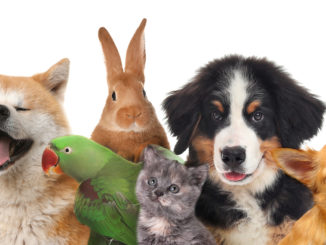
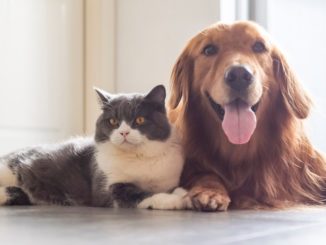
The
animals used in the program were selected for their gentleness
and cooperation when handled by strangers. The animals consisted
of four cats, two small dogs, and one rabbit. Six of the animals
were brought to the nursing home each week. The program was
conducted for ten weeks, with visits occurring once a week for
two hours each.
During
the visits, one or two students took an animal to the day room
of one of the six floors of the nursing home, with the same
students consistently assigned to the same floor. The animals
were exchanged among all floors during each visit. Residents
assembled in day rooms where they were encouraged by the student
volunteers to stroke and/or handle the animals. Student volunteers
also talked to the residents about the animals, about the residents'
pets (primarily their former pets), and answered any questions
asked by the residents.
Results
During
the course of this program 18 residents were unable to have
all four observations completed because of illness or discharge
from the facility. Therefore, complete data sets consisting
of pretest, midpoint test, post test, follow-up test, and resident
status report were received from 35 residents. As a lest of
the overall results of the animal visitation program, the scores
of questions on each subject's tests were summed, means and
standard deviations of each test were computed, and an Analysis
of Variance was performed across tests. The result of this analysis
(see Table 1) shows highly significant differences among the
means of the tests. To further analyze these differences t
-ratios were calculated between the various tests (see
Table 2).
| Table
1.
Analysis of Variance Report Across Tests |
| Source
|
DF
|
SS
|
MS
|
F-Ratio
|
Probability
|
| Tests
|
3
|
3797.714
|
1265.905
|
18.23
|
<0.001
|
| Error
|
136
|
9444.972
|
69.448
|
|
|
| Total
|
139
|
13242.690
|
|
|
|
It
can be seen that the mean score increases significantly between
the pretest and midpoint, and the midpoint and post test. It
can also be seen that the mean score decreases significantly
between post test and follow-up, although it remains higher
than the pretest mean.
| Table
2.
Means and Standard Errors of each test;
t -ratios and Probabilities Between each Test
(n=35) |
| Test
|
Mean
|
Standard
Error |
t
-ratio |
Probability
|
| Pretest
|
39.14
|
1.623
|
|
|
|
|
4.808
|
<0.001
|
| Midpoint
|
48.77
|
1.173
|
|
|
|
|
2.904
|
<0.01
|
| Post
test |
53.57
|
1.165
|
|
|
|
|
-3.146
|
<0.01
|
| Follow-up
|
47.37
|
1.589
|
|
|
|
|
3.623
|
<0.001
|
| Pretest
|
|
|
|
|
To
investigate any possible differences based on resident's sex
in response to the PFT intervention, Analyses of Variance across
tests within sex were computed. Results of these analyses are
highly significant (see Tables 3 and 4).
| Table
3.
Analysis of Variance Report Across Tests Within Males
|
| Source
|
DF
|
SS
|
MS
|
F-Ratio
|
Probability
|
| Tests
|
3
|
2696.275
|
898.7583
|
14.83
|
<0.0001
|
| Error
|
36
|
2181.100
|
60.5861
|
|
|
| Total
|
39
|
4877.375
|
|
|
|
| Table
4.
Analysis of Variance Report Across Tests Within Females
|
| Source
|
DF
|
SS
|
MS
|
F-Ratio
|
Probability
|
| Tests
|
3
|
1926.990
|
642.331
|
9.87
|
<0.0001
|
| Error
|
96
|
6245.922
|
65.062
|
|
|
| Total
|
99
|
8172.913
|
|
|
|
To
further investigate these results t -ratios were calculated
across tests within sex, and across sex within tests. An interesting
pattern emerges when the subjects are divided by sex and the
same lest scores are compared (see Tables 5 & 6).
| Table
5.
Means and Standard Errors by Sex;
t -ratios and Probabilities Within Tests Across
Sex |
| Test
|
Males
|
Females
|
t
-ratio |
Probability
|
| Mean
|
SE
|
Mean
|
SE
|
| Pretest
|
32.90
|
1.929
|
41.64
|
1.939
|
3.195
|
<0.01
|
| Midpoint
|
52.60
|
1.701
|
47.24
|
1.397
|
2.245
|
<0.05
|
| Post
test |
52.90
|
2.830
|
53.84
|
1.378
|
0.299
|
NS
|
| Follow-up
|
43.10
|
3.523
|
49.08
|
1.650
|
1.537
|
NS
|
It
is apparent that male and female subjects not only responded
to the visiting animals in rather different patterns, they were
significantly different with respect to social and self-maintenance
behaviors prior to the onset of this study; females scored considerably
higher than males in the pretest ( p < 0.01; see
Table 5). Although the introduction of visiting animals seemed
to have a significant effect on both males and females (both
males' and females' pretest to midpoint scores increased at
p < 0.001; see Table 6), males' midpoint scores
were significantly higher than females' ( p < 0.05;
see Table 5). Females' lest scores increased significantly from
midpoint to post test ( p < 0.001) while males'
scores remained virtually unchanged (Table 6). There was no
significant difference between post test scores of males and
females (Table 5). By four weeks after cessation of the animals
visits both males' and females, scores had fallen significantly
(males: p < 0.003; females: p < 0.001;
Table 6). Although the decrease in social and self-maintenance
behavior score was significant, the behavior score was nevertheless
significantly higher than before the study was implemented:
Follow-up to pretest comparisons showed follow-up scores to
be significantly higher than pretest (Table 6), with no difference
between males and females (Table 5).
| Table
6.
Means and Standard Errors of Tests by Sex;
t -ratios and Probabilities Between Tests Within
Sex |
| Sex
|
Test
|
Mean
|
SE
|
t
-ratio |
Probability
|
| Female
(n=25) |
Pretest
|
41.64
|
1.939
|
|
|
|
|
3.79
|
<0.001
|
| Midpoint
|
47.24
|
1.397
|
|
|
|
|
4.81
|
<0.001
|
| Post
test |
53.84
|
1.378
|
|
|
|
|
-5.06
|
<0.001
|
| Follow-up
|
49.08
|
1.650
|
|
|
|
|
6.19
|
<0.001
|
| Pretest
|
|
|
|
|
| Male
(n=10) |
Pretest
|
32.90
|
1.929
|
|
|
|
|
8.68
|
<0.001
|
| Midpoint
|
52.60
|
1.701
|
|
|
|
|
0.24
|
NS
|
| Post
test |
52.90
|
2.830
|
|
|
|
|
-4.04
|
<0.003
|
| Follow-up
|
43.10
|
3.523
|
|
|
|
|
2.54
|
<0.05
|
| Pretest
|
|
|
|
|
Discussion
There
is no doubt that the introduction of visiting animals into the
nursing home environment during this study did facilitate a
dramatic improvement in residents' social and self-maintenance
behaviors. The results of statistical tests both across tests
and across tests within sex indicate an immediate positive change
in behaviors, an increase that was maintained for at least one
month after termination of the study. Completely unanticipated
was the effect of sex on the outcome measures: the rapid and
sizable improvement in behaviors of males, leveling to a plateau,
versus the initially slow but steady improvement in behaviors
for females. The most probable explanation for this difference
is in the differential behavior patterns of men and women under
nonintervention conditions. Observation and interviews with
the nursing home staff both indicate that female residents interact
with each other and with staff at a far greater rate than do
males. In fact, many male residents are reclusive in behavior,
rarely interacting with anyone. This is confirmed by the extremely
low pretest scores of males, 32.90, as compared to a pretest
score of 41.64 for females ( t = 3.20; p
< 0.01). It is likely that the presence of an animal did
facilitate male social interaction with others, possibly reducing
inhibitions to interactions, providing positive reinforcement
contingent on interaction. Since males rarely socialized prior
to the introduction of animals, and since human socializing
seems to be a genetically predisposed behavior, months or years
of self-imposed isolation quickly gave way to interaction and
immediate improvement in various social behaviors. Females,
however, interacted among themselves and with staff prior to
the introduction of animals, so the animals did not provide
the same stimulus for behavior change as they did for males.
Anecdotal
accounts of individual behaviors during the study are numerous
and interesting in terms of the study. One male subject, a long
term resident, had not spoken to anyone since he was admitted
to the facility. On the last pet visiting day, for the first
time since his admission, he spoke to one of the volunteers
(who had brought a camera) requesting a picture of himself with
one of the dogs. Several residents who were never seen smiling
by staff smiled regularly when interacting with the animals.
Eleven residents had to be dressed by others prior to the start
of the study; only three had to be dressed by others at the
time of the post test. Unfortunately, this number increased
to seven at the follow-up. As can be seen in the Tables, test
scores of both male and female residents decreased significantly
from post test to follow-up, but were still significantly higher
than pretest scores. Undoubtedly scores taken later, perhaps
six months after post test, would show further decline, although
once the inter-resident social activity was initiated it very
well may continue because of the reinforcing nature of the activity.
The decline at follow-up does, however, indicate the desirability
of a resident companion animal.
Animals
have been associated with humans for at least fifty thousand
years, initially perhaps as scavengers, then as working companions,
as domesticated sources of food, and finally as pets and sources
of pleasure (Lorenz, 1965). It is reasonable to assume an evolutionary
advantage accrued to humans who maintained a beneficial relationship
with animals, that is, humans who used animals profitably may
have been able to reproduce at a greater rate than those who
did not make use of animals. Although genes involved in behavior
have yet to be mapped, if there is any genetic component of
human behavior, animal association would have been selected
for by the differential reproduction rate (Barash, 1977; Trivers,
1985) and modern humans would be genetically predisposed to
keep and derive comfort from animals. Indeed, even though vast
numbers of urban and suburban dwelling humans have no economic
need to keep animals these days, a very large proportion of
them do keep one or more companion animals. To a great many
people, animals are important members of the family (Beck and
Katcher, 1983), and to an increasingly large number of people
animals are the only other members of their family. The use
of animals as part of a therapeutic team to treat a number of
behavioral disorders or eliminate undesirable behaviors is a
natural progression in the historical human-animal relationship.
The
results of this pet visitation program were, beyond doubt, positive.
A note of caution is necessary. This study had the advantage
of an institution with a cooperative administration and start:
Experience and the literature indicate that most institutions
are not at all amenable to the introduction of animals of any
type. The volunteers who transported, maintained, and handled
the animals were consistent in their commitment to the study.
Their assistance is gratefully acknowledged. It is conceivable
that volunteers alone, without animals, would have provided
the same results, although post study conversations with the
subjects indicate this is unlikely. A two-group experiment (volunteers
only vs. volunteers with animals) would probably provide an
answer.
A
second note of caution relative to the animals is also necessary.
The animals used in this study were chosen for their gentleness
and their benign behavior towards humans. They all appeared
to enjoy associating with humans, but they were all under constant
observation of the volunteers for any sign of stress or fatigue.
If any such signs appeared the animal was immediately retired
to a quiet room where it was able to rest and quench its thirst.
It is possible that some animal visitation programs do not have
the benefit of trained and/or knowledgeable volunteers and,
therefore, allow animals to become extremely stressed and uncooperative.
This is completely unacceptable for the animal and would probably
have a negative effect on the humans whom the animal was visiting.
This study is an initial attempt to quantify the results
of a Pet Facilitated Therapy intervention, and, as such, a further
note of caution related to the design of this study must be
stated. Subject self-selection and the absence of a control
group always dilute the strength of results, and this study
is not an exception. Observations of a control group during
the program period, or base line observations for some extended
period would have made our results much stronger, but because
of the nature of the population and the institution, these measures
were not possible. The institution allowed our work with their
residents on the condition that all who wanted to participate,
but only those who did want to participate would be able to
do so. This, of course, precluded a control group. Prior base
line observations would have been helpful, but the professional
staff were not amenable to the additional work.
From
the results of this study and similar results reviewed above
it appears that animals introduced into an institutional environment
do provide The catalyst for positive social behavior change.
The animals seem to provide a unique contribution to the institutional
environment, one that reduces inhibitions against social contact
by males and, to a lesser degree, by females. This can be a
result of earlier (perhaps happier) life experiences with animals,
or perhaps some component of humans' genetic endowment is programmed
for positive association with animals.
Note
1.
Correspondence should be sent to Ira Perelle, Department of
Psychology, Mercy College, Dobbs Ferry, NY 10522.
References
Barash,
D. P. (1977).
Sociobiology
and Behavior. New York: Elsevier.
Beck,
A. & Katcher, A. (1983).
Between
Pets and People. Springfield, IL: Charles C. Thomas.
Blake,
D. S. (1980).
On
the introduction of pets for the institutionalized aging (Doctoral
dissertation, Columbia University Teachers College, 1980). Dissertation
Abstracts International, 41, (10) 3732.
Brickel,
C. M. (1979).
The
therapeutic roles of cat mascots with a hospital- based geriatric
population: a staff survey. The Gerontologist, 19, 368-371.
Bustad,
L. K. (1990).
Compassion:
Our Last Great Hope. Renton, WA: The Delta Society.
Bustad,
L. K. & Hines, L. (1984).
Historical
perspectives of the human-animal bond. In R. K. Anderson, B.
L. Hart, & L. A. Hart (Eds.), The Pet Connection: Its
Influence on our Health and Quality of Life (pp. 15-29).
Minneapolis, MN: Univ. of Minnesota Press.
Corson,
S. & Corson, E. O. (1981).
Companion
animals as bonding catalysts in geriatric institutions. In B.
Fogel (Ed.), Interactions between people and pets. Springfield,
IL: Charles C. Thomas.
Friedman,
E., Katcher, A. H., Lynch, J. J., & Thomas, S. A. (1979).
Pet
ownership and survival after coronary heart disease. Toronto,
Canada: Second Canadian Symposium on Pets and Society.
George,
M. H. (1988).
Child
therapy and animals. In C. E. Schaefer (Ed.), Innovative
interventions in child and adolescent therapy. New York:
John Wiley & Sons.
Lee,
D. (1984).
Companion
Animals in institutions. In P. Arkow (Ed.), Dynamic relations
in practice. Animals in the helping professions (pp. 229-
236). Alaceda, CA: Latham Foundation.
Levinson,
B. (1962).
The
dog as "co-therapist." Mental Hygiene, 46, 59-65.
Levinson,
B. (1969).
Pets
and old age. Mental Hygiene, 53, 3, 364-368.
Levinson,
B. (1975).
Pets
and environment. In Anderson, R. S. (Ed.), Pet animals and
society. London: Bailliere Tindall, 8-18.
Lorenz,
K. (1965).
Evolution
and modification of behavior. Chicago: Univ. of Chicago
Press.
McCulloch,
M. J. (1983).
Animal
facilitated therapy: overview and future directions. In A. Katcher
& A. Beck (Eds.), New perspectives on our lives with
companion animals. Philadelphia: Univ. of Pennsylvania
Press.
Messent,
P. R. (1984).
Correlates
and effects of pet ownership. In R. K. Anderson, B. L. Hart,
& L. A. Hart (Eds.), The pet connection: Its influence
on our health and quality of life (pp. 331-339). Minneapolis:
Univ. of Minnesota Press.
New
York Times (1984).
Therapy
with pets gains in state. July 22, 1984, p. 38.
Salmon,
I. M., Hogarth-Scott, R. S., & Lavelle, R. B. (1982).
A
dog in residence, the JACOPIS study. In The Latham Letter.
Alaceda, CA: The Latham Foundation.
Trivers,
Robert (1985).
Social
evolution. Menlo Park, CA: The Benjamin/Cummings Publishing
Company, Inc.
For
abstracts of all issues, including the most current, click
Article
Abstracts.
To order Society &
Animals Journal, go to our secure online
ordering page
You
can Search the online issues of Society & Animals, as well
as the entire Society & Animals Forum (formerly PSYETA)
website,
for topics and keywords of your interest:
|